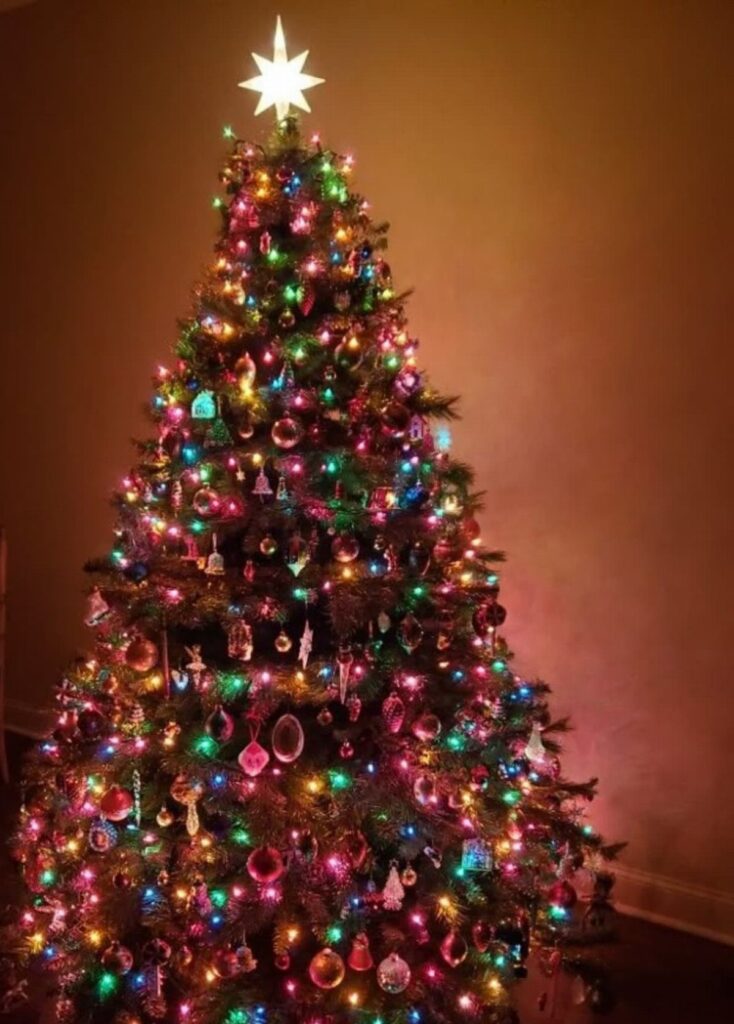
The ideas run from a single oversized ball with a velvet bow to three small potted trees flanking a door, and from a tree that needs no ornaments at all to a full jewel-toned one.
A dark palette like Chocolate Tones needs a pale room behind it, and a small box of ornaments does better with even spacing than with more purchases.
Gold, silver, tinsel and pinecones all appear below, and most of the looks depend on repeating one color or one pattern.
1. Oversized Ornaments
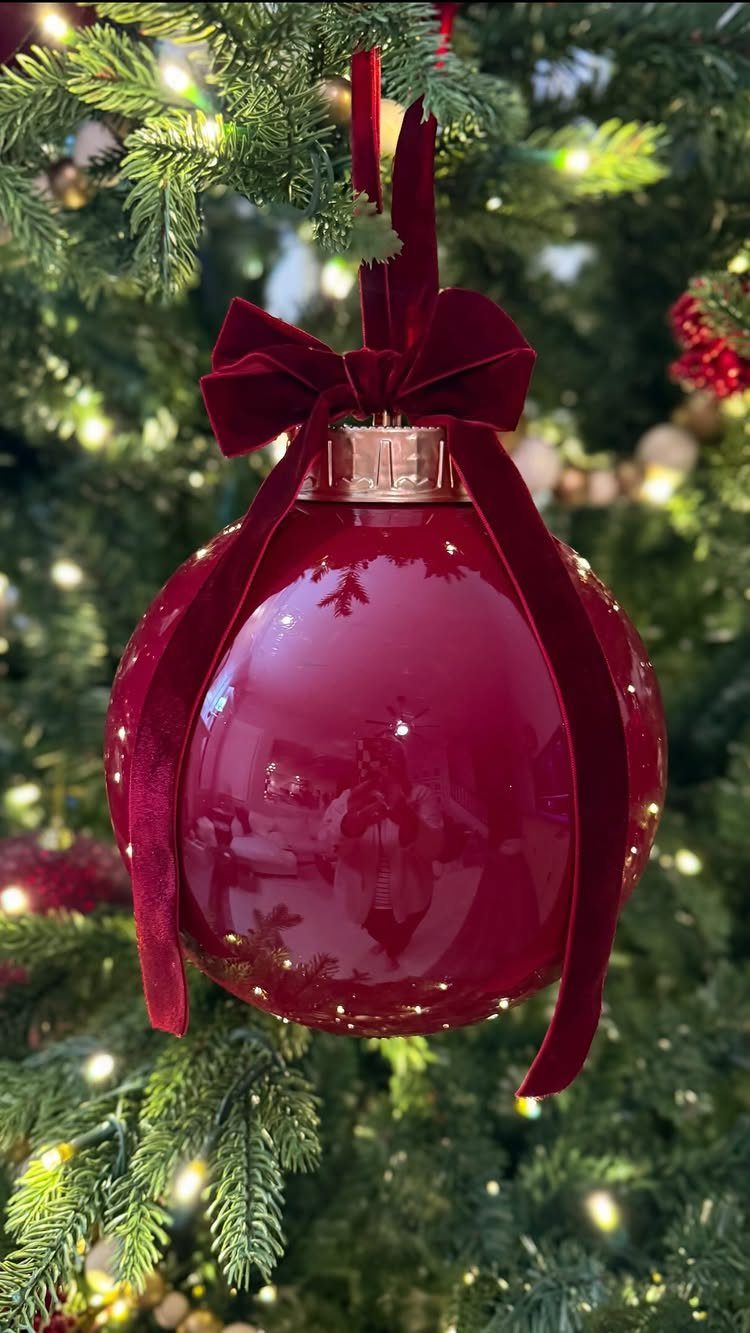
A single oversized ball with a velvet bow does the work of a dozen small ornaments.
Hang a few large pieces and leave breathing room around them. Crowding them next to small ornaments makes the big ones look like clutter instead of focal points.
2. Jewel-Tones
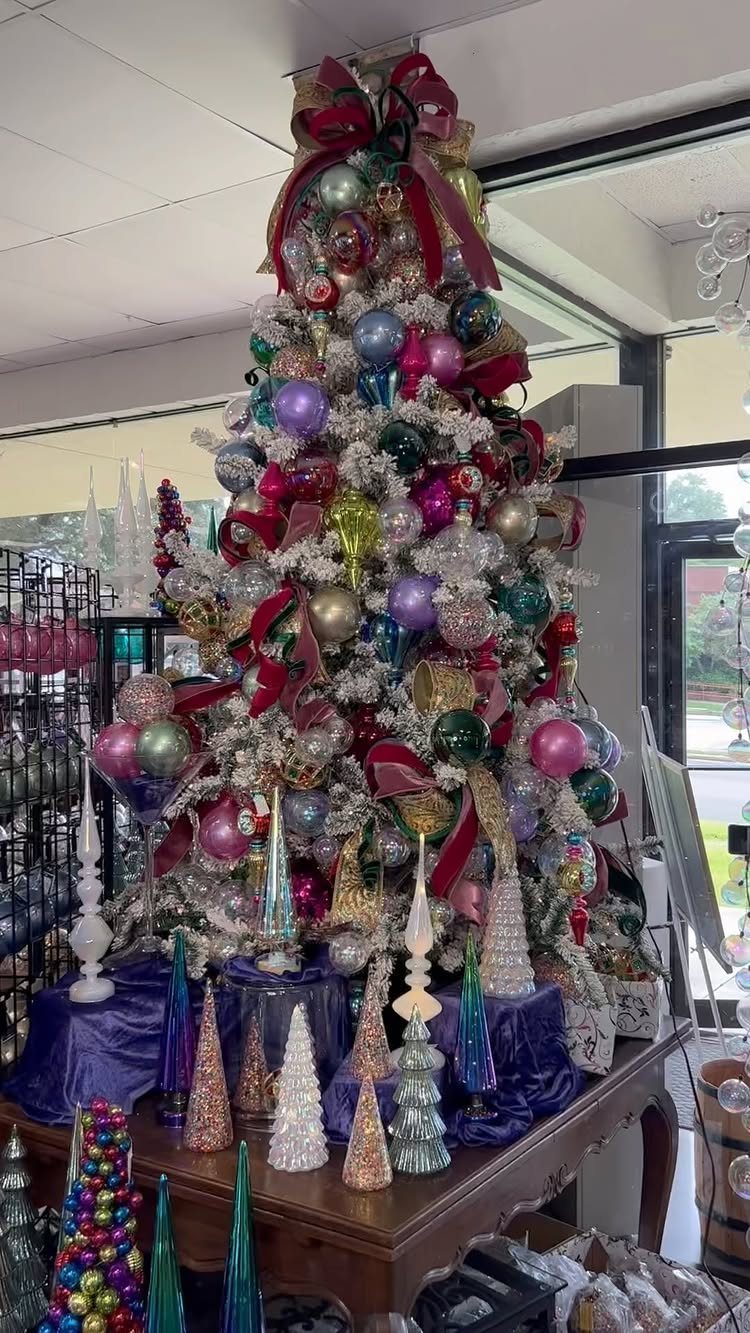
Deep, saturated color is what makes a jewel-toned tree feel rich, and red ribbon ties the mix together.
Pick a few shades and repeat each one all over the tree, so the color reads as a plan and not a pile.
A frosted tree is a smart base for this look because the pale branches let dark ornaments stand out. Budget shoppers can fill in with plain shatterproof balls in matching shades.
3. Rainbow Ombre
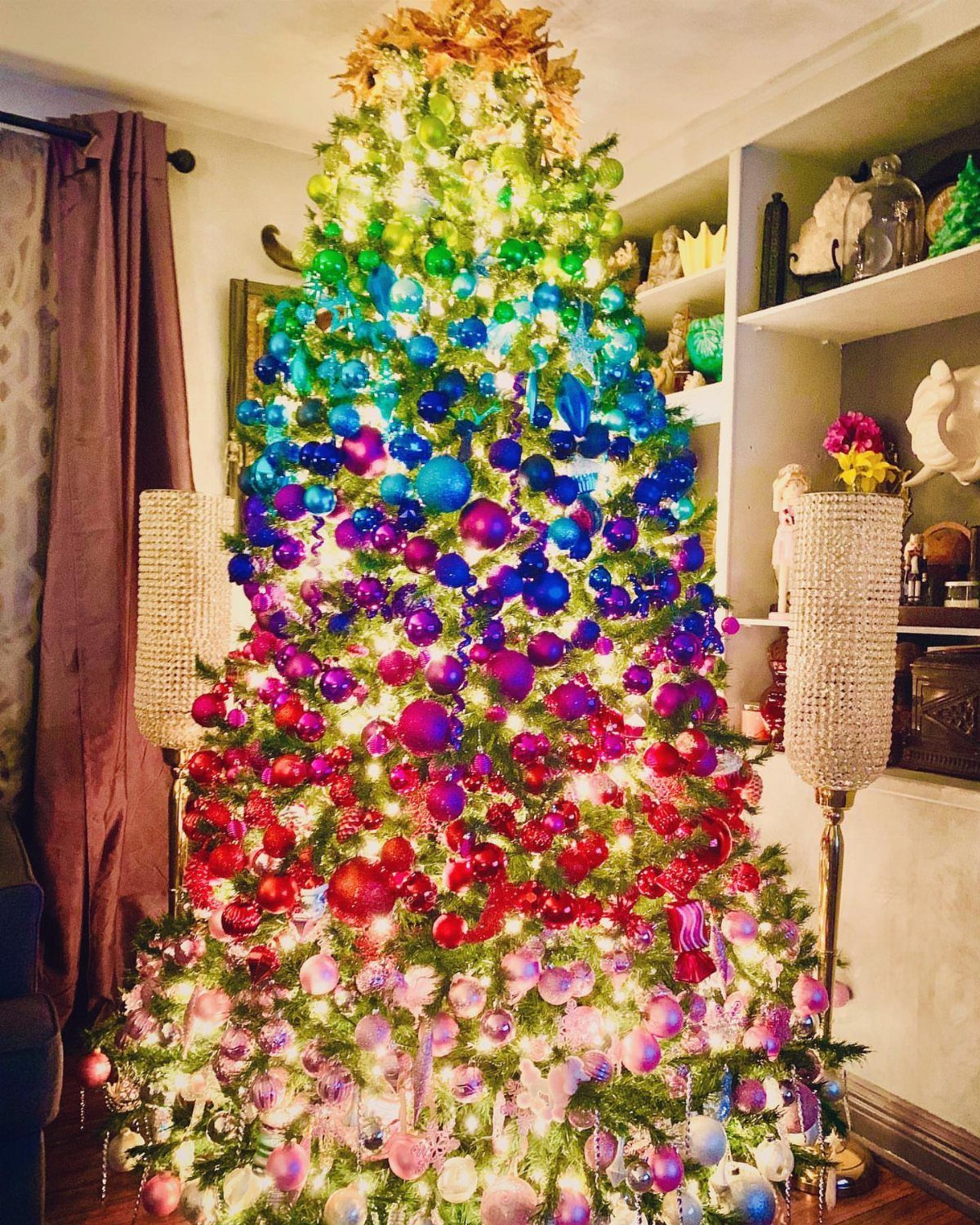
Sorting ornaments by color, in rainbow order from the top of the tree to the bottom or around it in bands, gives you a bold tree without buying anything fancy. Bright white or multicolor lights suit it well.
Group your ornaments by color on a table before you hang a single one. That shows you which shade you are short on, so you can buy only what fills the gap.
4. Traditional Red Emerald Gold and Plaid
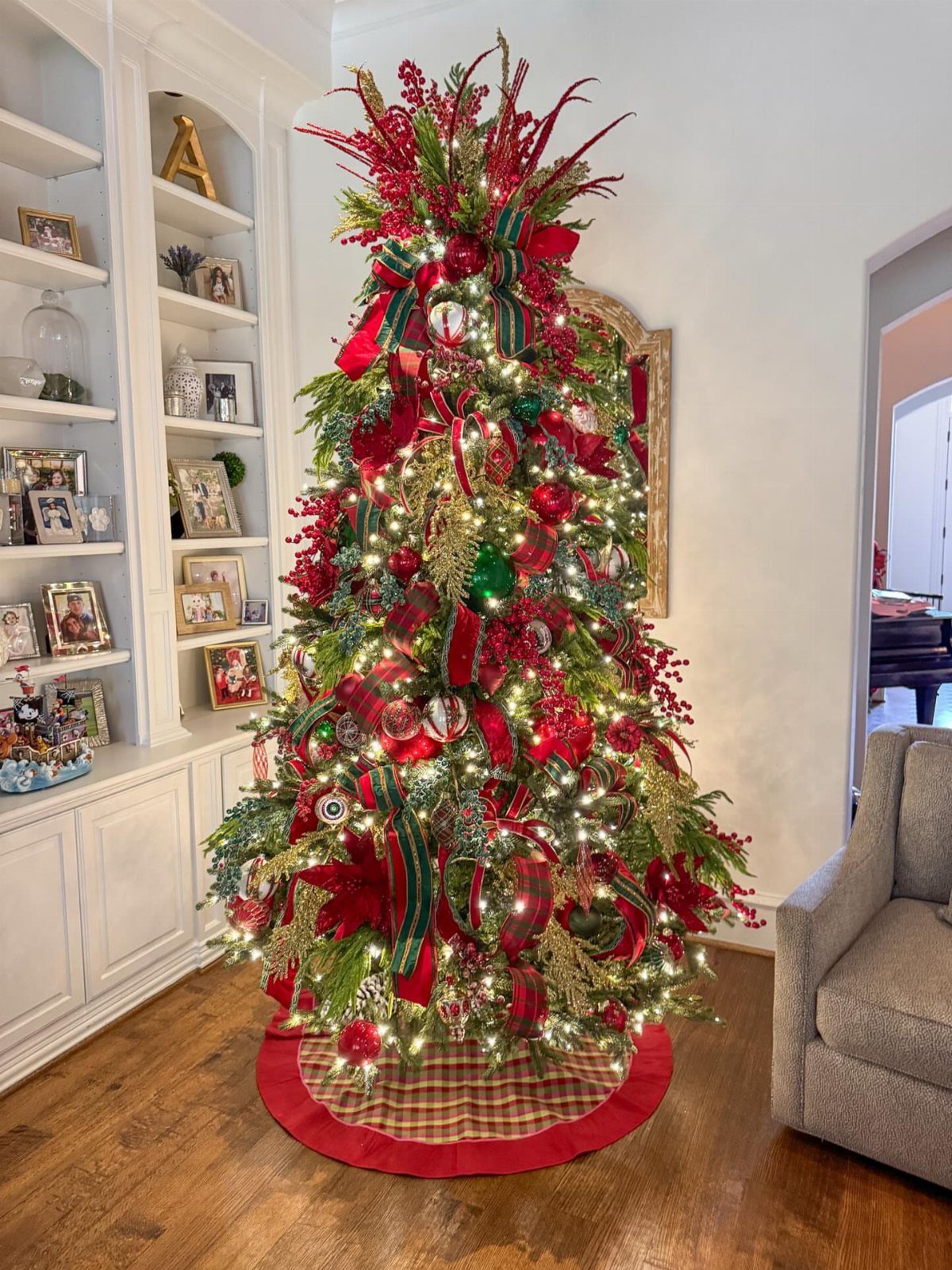
Red, emerald and gold are classic for a reason: they work together without any effort. Plaid ribbon on the branches and a matching plaid tree skirt repeat the pattern at the top and bottom of the tree.
Keep the plaid to ribbon and skirt, and let the ornaments stay solid. Too many patterns compete, while one repeated pattern looks planned.
5. Acorns and Pinecones
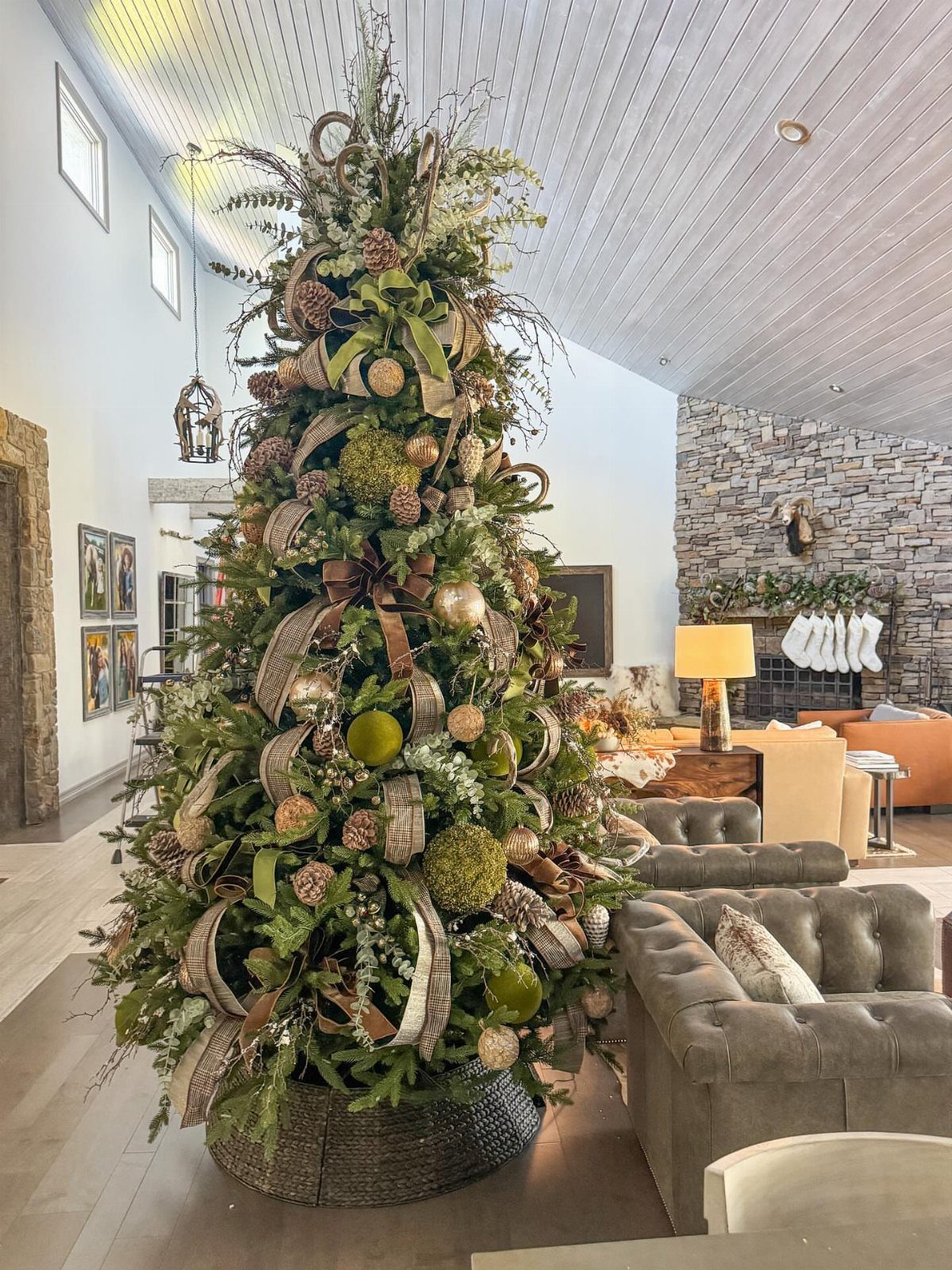
Pinecones bring a woodland feel, and gold ornaments keep it from looking rustic to the point of plain. Brown ribbon ties the natural pieces to the shiny ones.
Tuck pinecones deeper into the branches and hang the gold balls nearer the tips, so the tree has some depth.
Pinecones are a cheap way to fill space if you gather them yourself, though shaking out any bugs first is wise.
6. Chocolate Tones
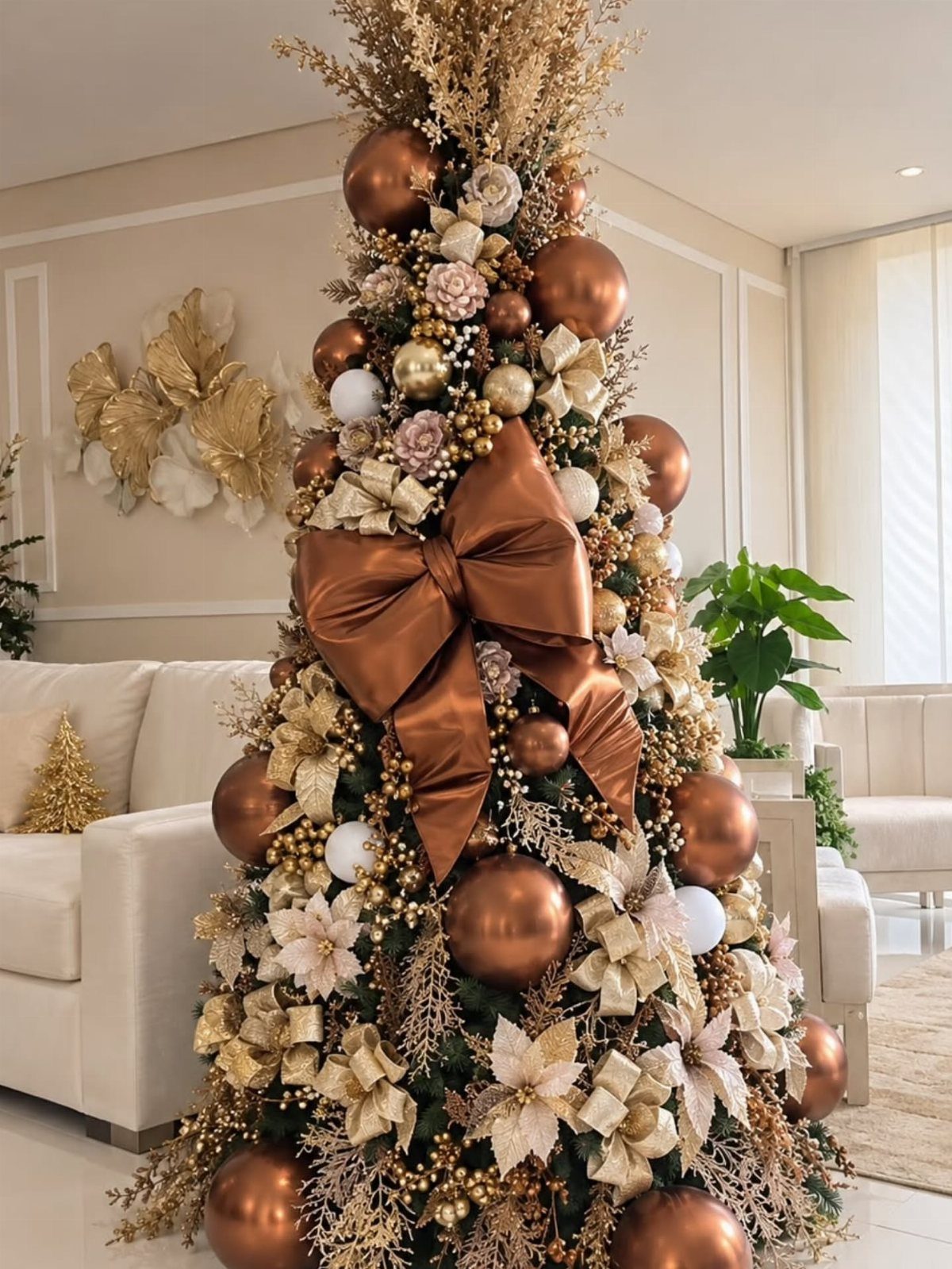
Chocolate brown with gold feels warmer and less expected than red and green. A large satin bow gives the tree one clear focal point, and flowers soften all that brown.
I like this best on a tree in a light room, where the dark tones stand out instead of sinking into the walls. Mix matte and shiny brown ornaments so the color has some variety.
7. Candy Cane Colors
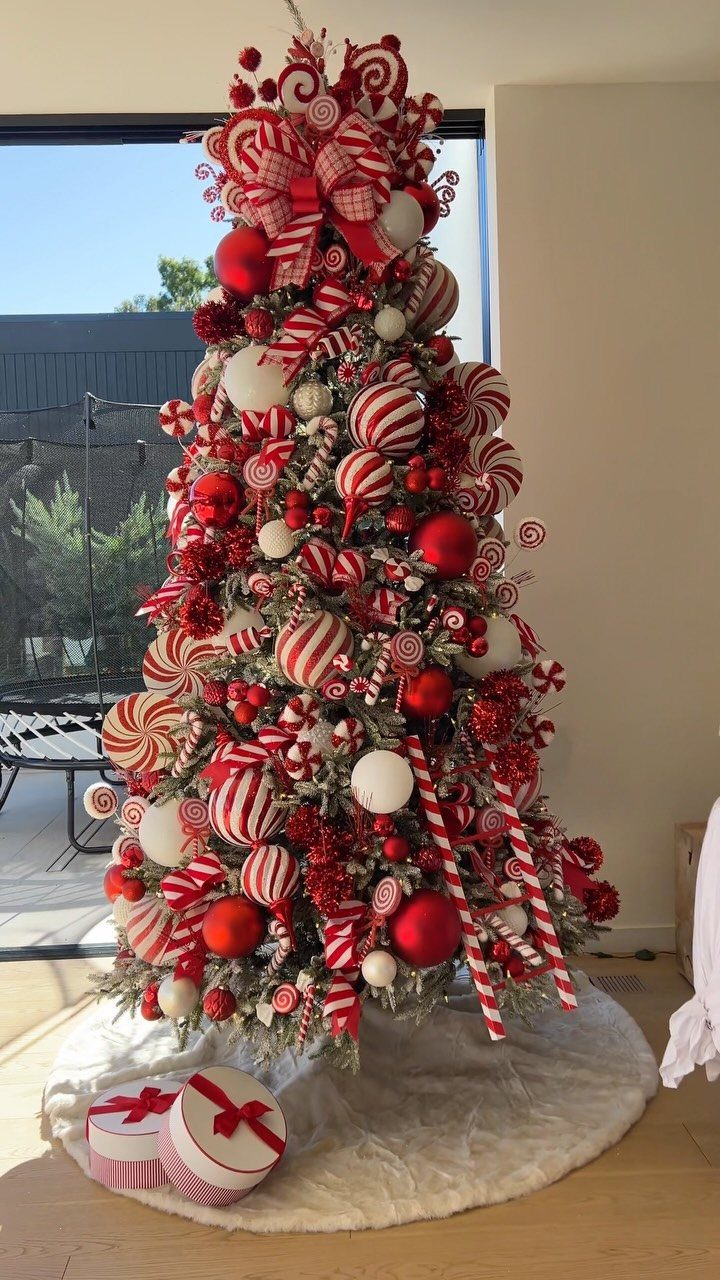
Red and white is the easiest two-color scheme to pull off, since nothing clashes. Stripes, solid balls and bows all read as candy cane, so you can mix finishes freely.
Real candy canes are the cheap filler, and hanging them by the hook end keeps them secure. A white rug or tree skirt beneath the tree finishes the look and costs little.
Stick to one red. A second shade, say orange-leaning next to cherry, shows up fast against all that white.
8. Monochrome Christmas Trees
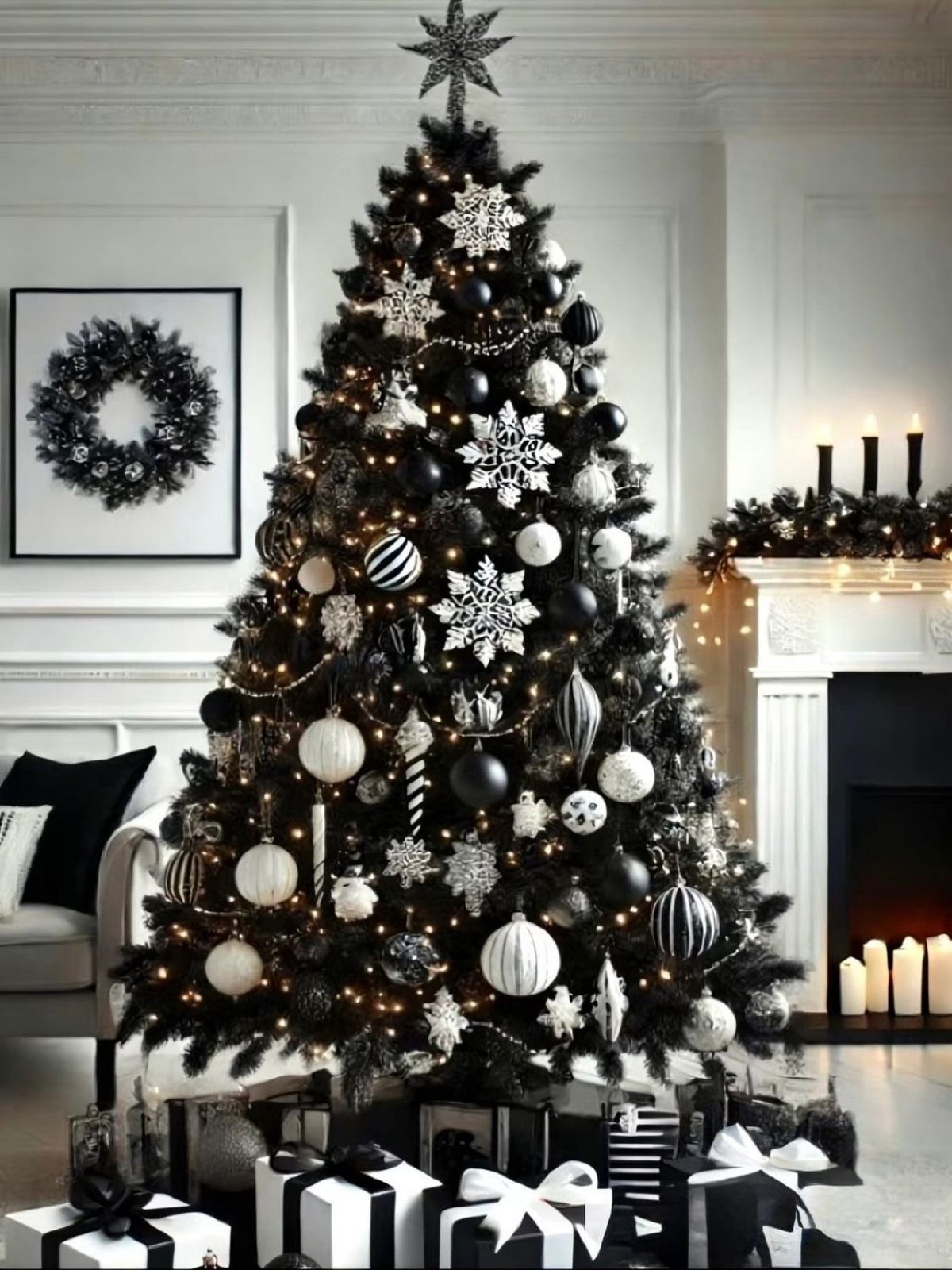
Black, white and silver make a tree that feels more like a design choice than a holiday default. Snowflakes add shape without adding color, which keeps the palette strict.
Black ornaments need a pale room behind them, whether white walls or a light neutral, or the tree turns into a dark blob at night. Silver is the bridge: it sits between the 2 extremes and softens the jump.
A star topper finishes it cleanly. Choose one in a color already on the tree.
9. Retro Tinsel and Uniquely Colored Ornaments
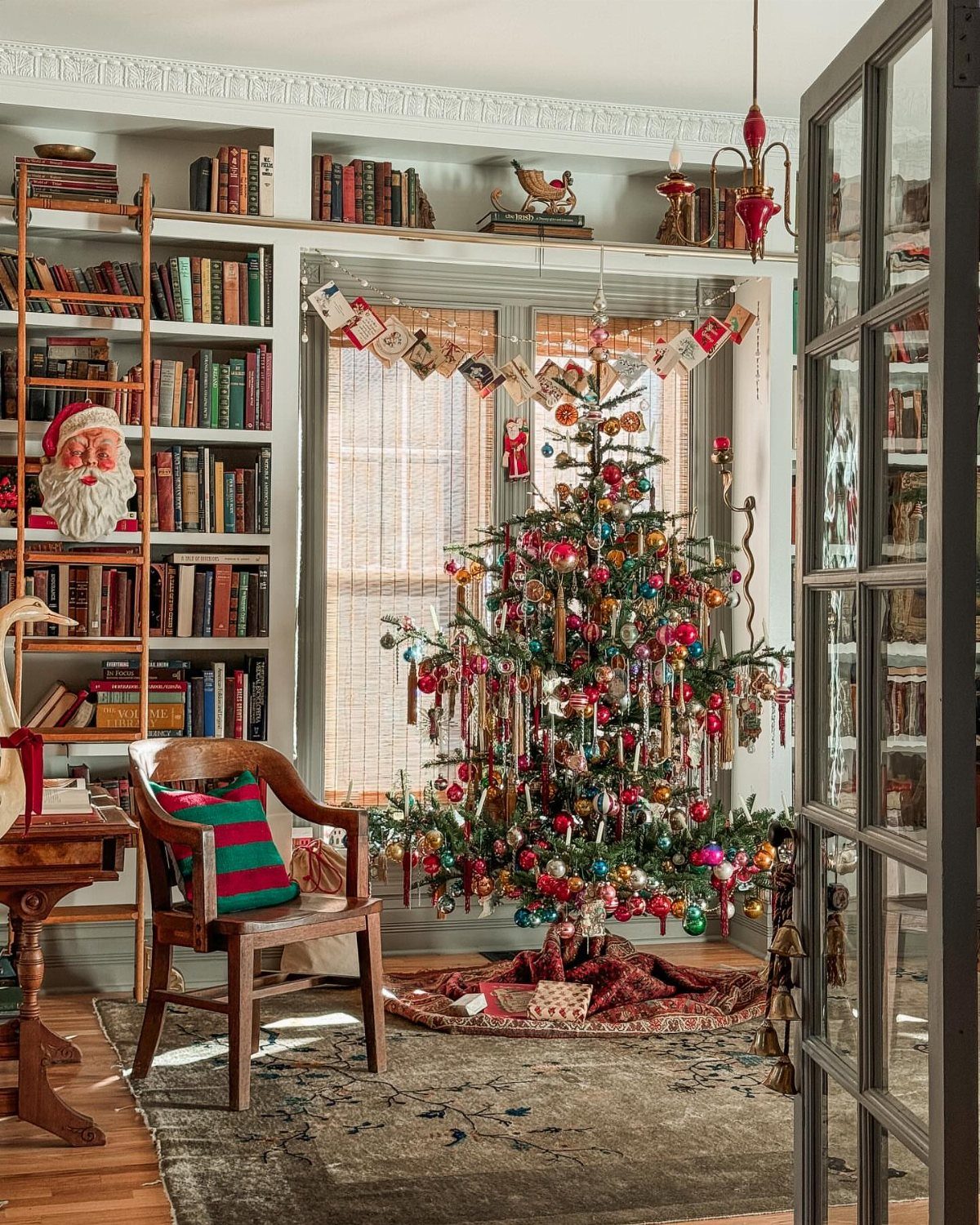
Tinsel is what gives this tree its old-fashioned character, and mismatched ornaments in odd colors keep it playful instead of staged. Drape the tinsel in loose strands rather than wrapping it tight, so it catches the light.
Thrift shops and family boxes are good sources for the unusual pieces. Because the look rewards variety, you can skip matching sets entirely.
Hang the tinsel last. It is much easier to place around ornaments that are already up.
10. Small Christmas Trees
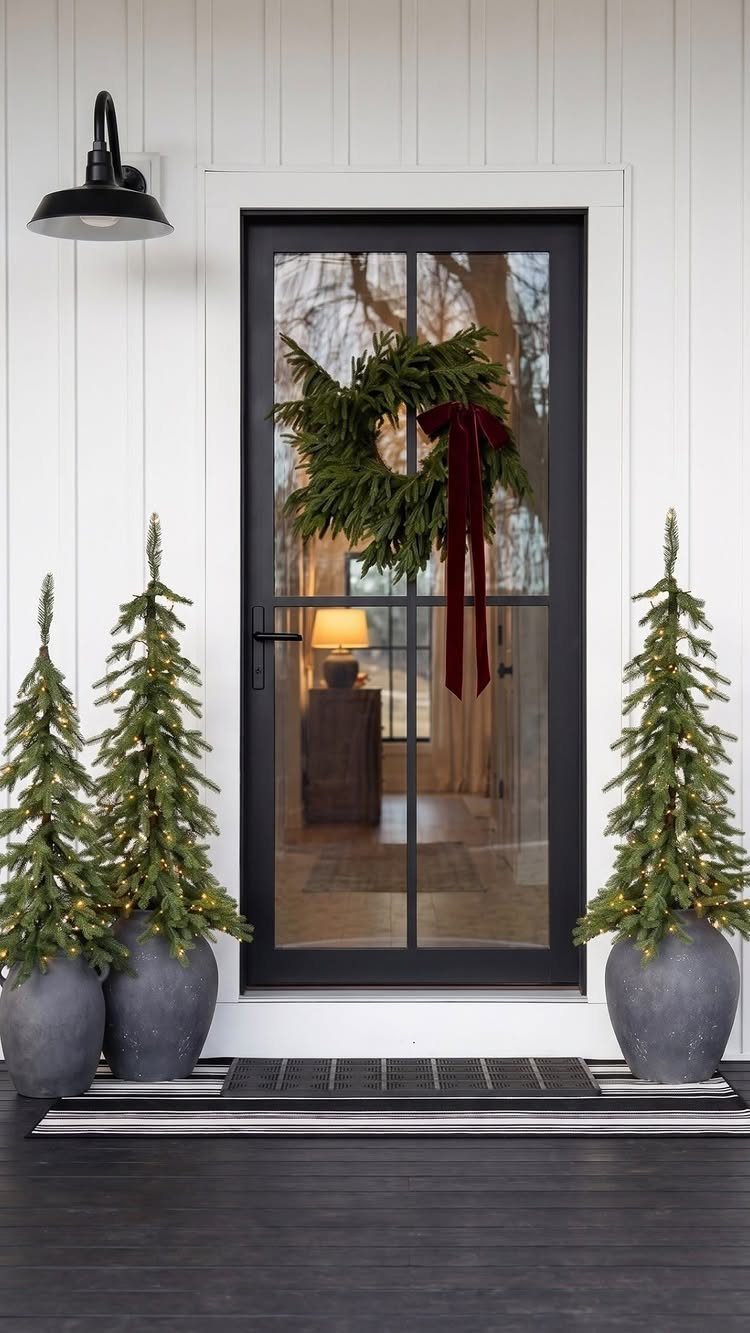
Small potted trees suit anyone short on floor space, and a set of three flanking a door looks far grander than one. Matching grey pots keep the group tidy.
Lit trees need no ornaments to look finished, which makes this the lowest-effort idea on the list. A wreath on the door ties the entrance together.
Buy pots and trees in identical sizes. Symmetry is the whole effect here, and uneven heights spoil it.
11. Floral Christmas Tree
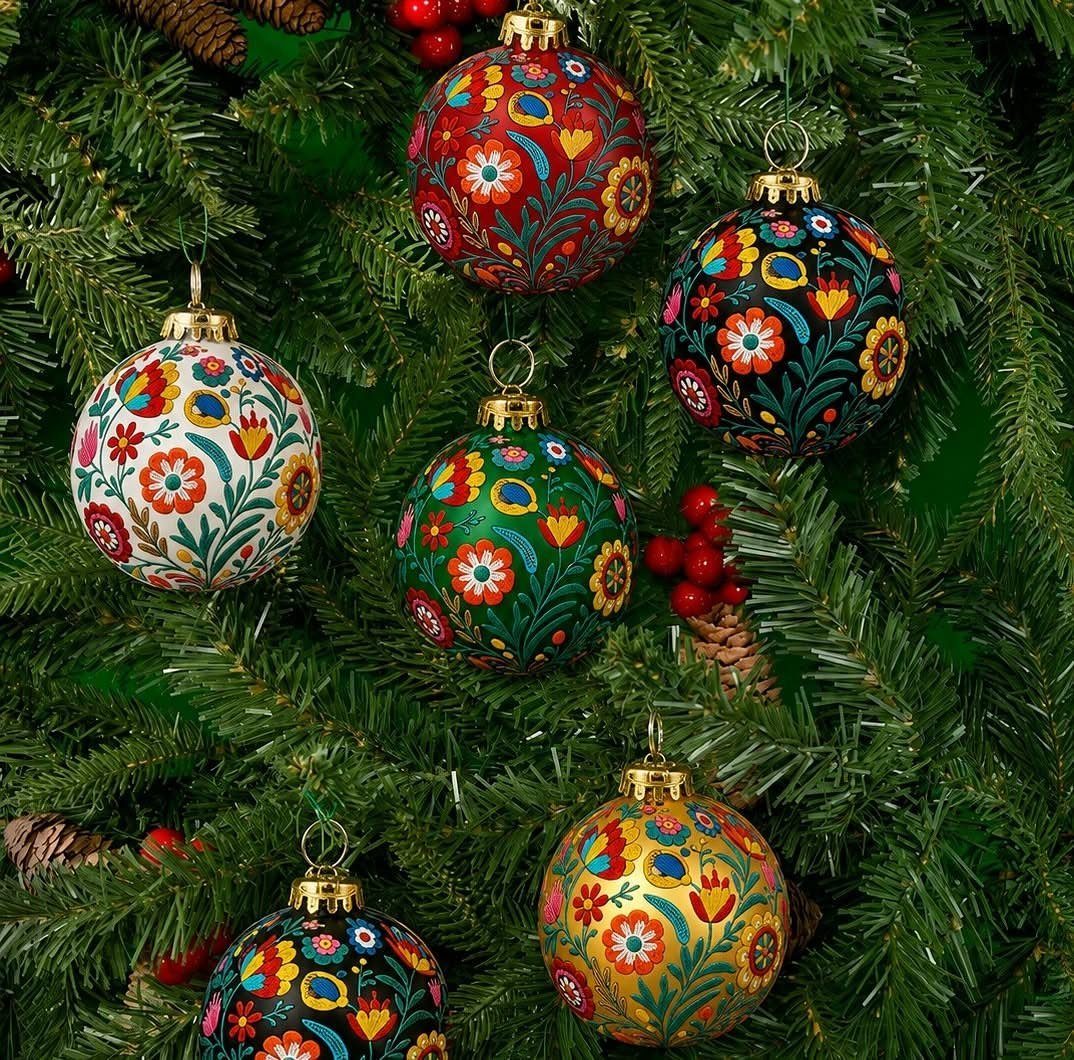
Painted floral ornaments bring a spring garden onto a green tree, and red berries and pinecones keep it from feeling out of season. The flowers do the talking, so let the rest stay simple.
If you paint your own, plain glass or shatterproof balls give you a smooth surface to work on. Hang the painted ones at eye level where the detail shows, and tuck berry picks between them.
Six or so painted pieces can carry a whole tree.
12. Elegant White and Gold
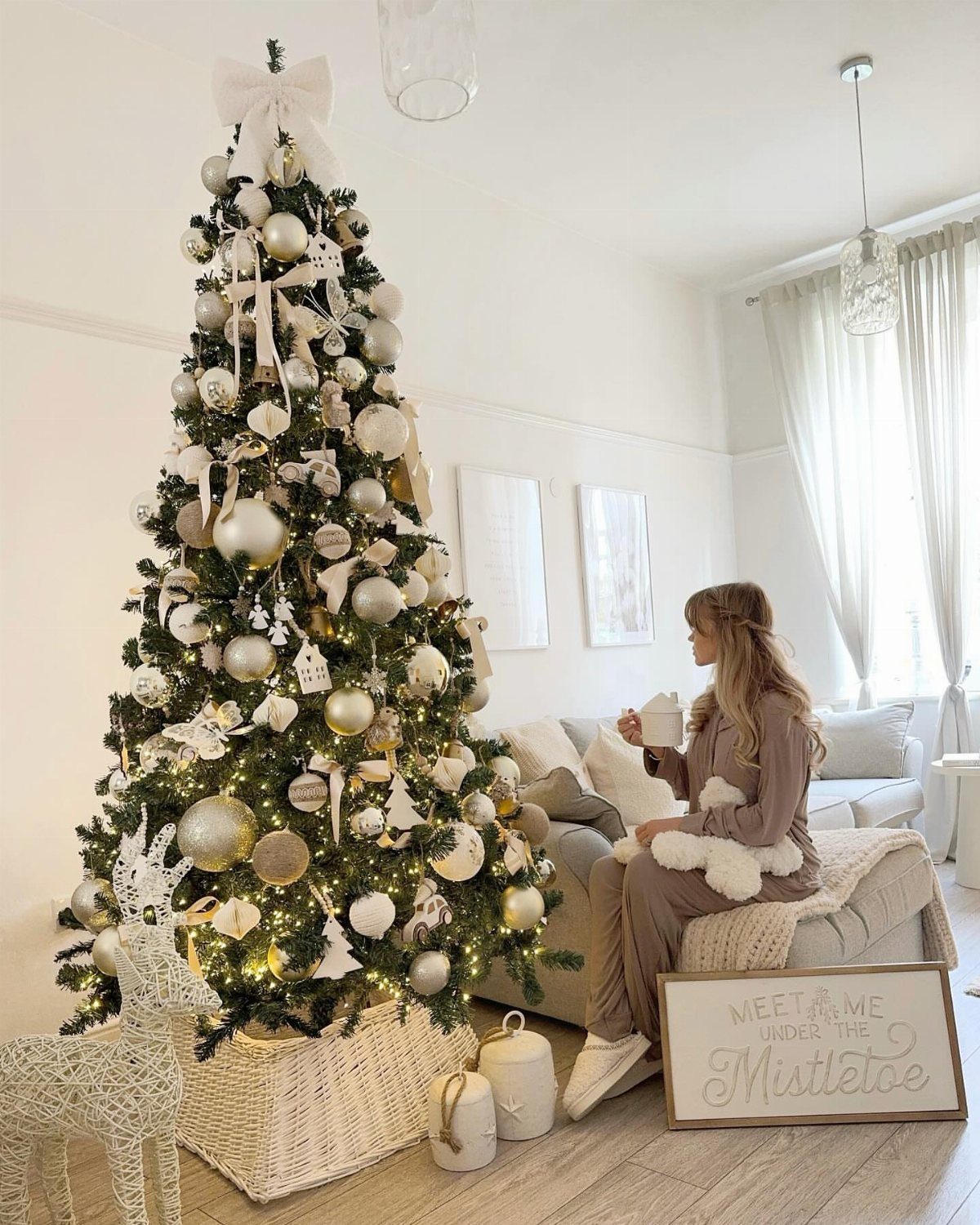
White ribbon and gold ornaments make a tall tree look polished with very little variety to buy. Warm glowing lights complete it; gold and warm white belong together.
Run the ribbon in loose vertical swoops or as bows, and keep the gold ornaments in one finish so the look stays calm. Ribbon is the budget lever here, since a few spools cover a lot of branches.
I prefer bright rooms for this one, where white and gold stay crisp.
13. Winter Wonderland Flocked Tree
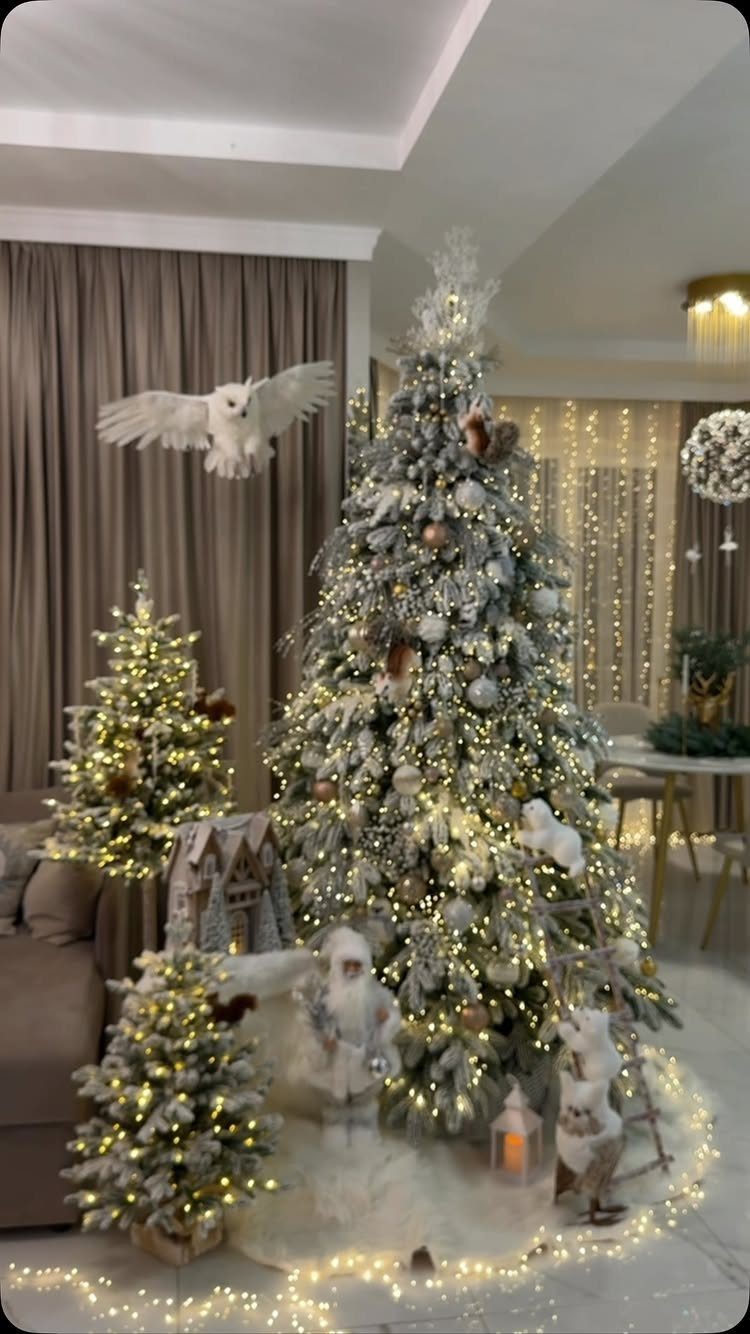
Flocking turns the branches themselves into the decoration, so the ornaments only need to add sparkle.
Silver and white pieces stay in the same cool family as the snowy finish, and warm fairy lights keep the whole thing from feeling icy.
A set of one large tree with two smaller ones beside it makes a grouping, and small figures like an owl or a gnome on a nearby shelf carry the theme further.
Keep the ornament count modest, because heavy flocking already fills the eye.
14. Dripping Silver Icicles
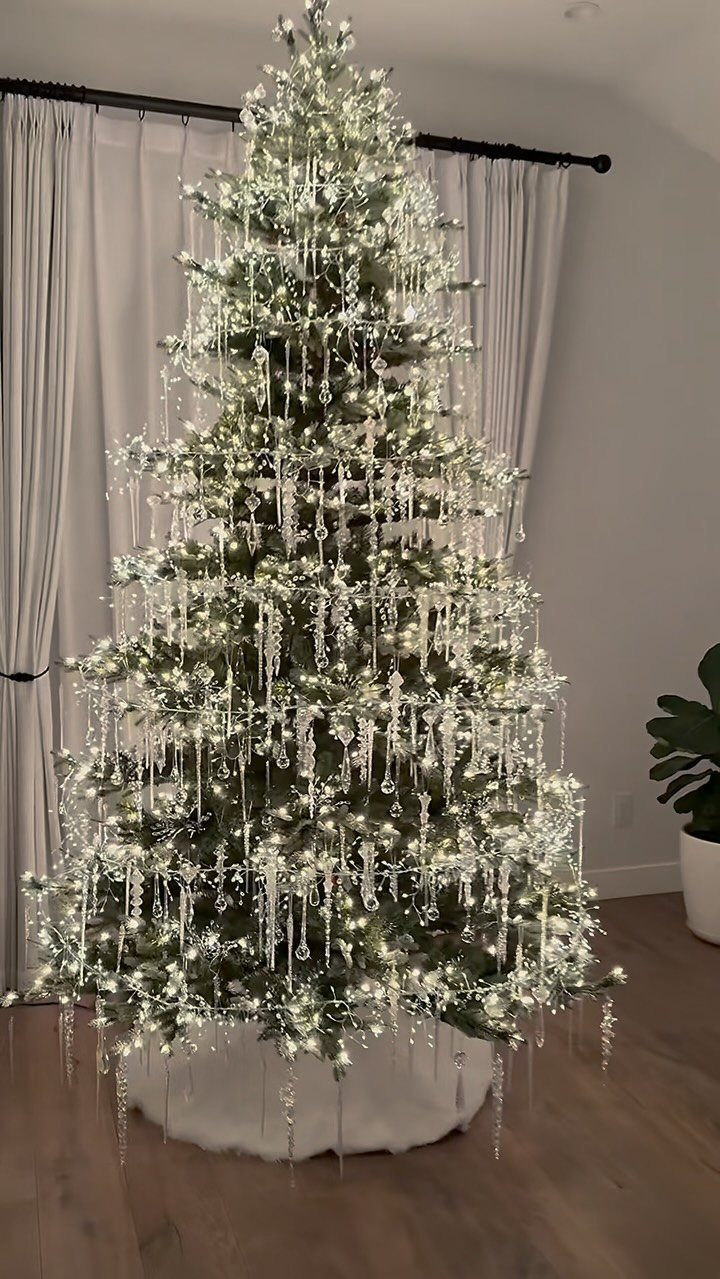
Long silver icicles hung straight down from the branches give a green tree a frosted, dripping look, and dense white lights behind them make the metal flash.
Hang them toward the branch tips, where they have room to swing and catch the glow.
Place the lights first, then add the icicles, so the strands don’t tangle in the wires.
With the green needles left bare, round ornaments aren’t required, and a few strands of silver icicles on the branch tips can carry the whole look. Icicles alone are enough to make it feel finished.
15. Natural Outdoor Lighted Evergreen
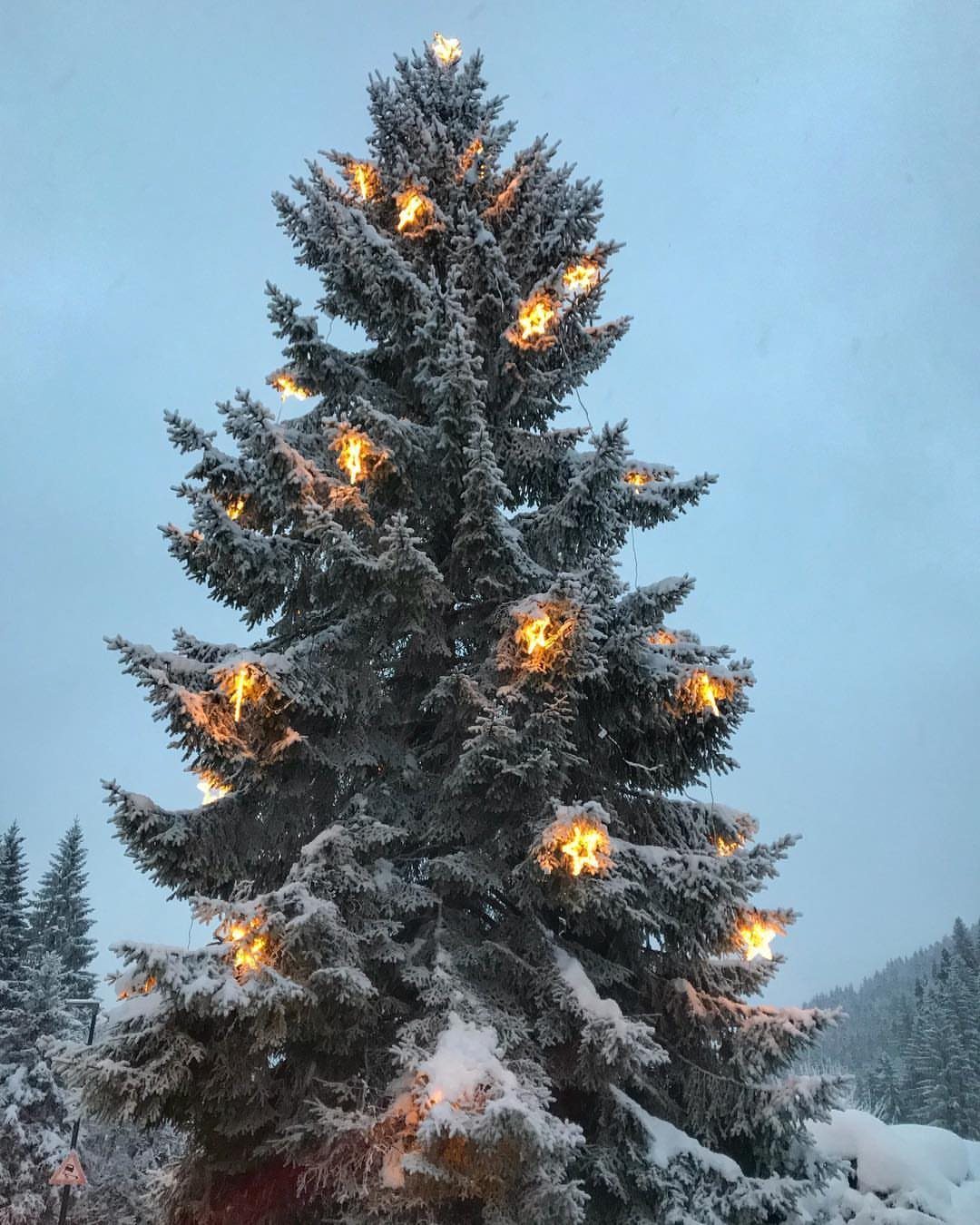
An evergreen already growing in the yard needs only warm string lights to become a Christmas tree, and snow does the rest. Warm yellow bulbs look better than cool white against a grey winter sky.
Wrap the lights from the trunk outward along the lower branches, since those are the ones you can reach. Choose strings made for outdoor use, and plan the extension cord route before you start climbing.
Placement Matters
Spacing does more for a thin collection than buying more ornaments does. Spread your ornaments evenly across the whole tree, top to bottom and around every side, so no one area ends up crowded while another sits bare.
If you can’t find half the ornaments you were sure you packed away, don’t cluster what’s left at eye level.
Stand back, squint, and look for gaps where the branches show through. Moving a single ornament from a busy spot to an empty one often fixes more than adding a new piece.
Work in rounds.
Hang the first pass with wide gaps, step back, then fill in only where the tree still looks sparse. Stopping early costs nothing, and you keep the extras for next year.
Frequently Asked Questions
What is the most popular Christmas tree color scheme?
Traditional red, emerald and gold is the classic, and jewel tones are the modern favorite. Red, emerald and gold work together with almost no effort.
What are some classic Christmas tree decorations?
Ornaments, lights, ribbon and tinsel are the classics.
Plaid, pinecones and burlap are the other traditional pieces I’d reach for, and a few big pinecones tucked into the branches do a lot of work. Warm lights suit most of these looks.