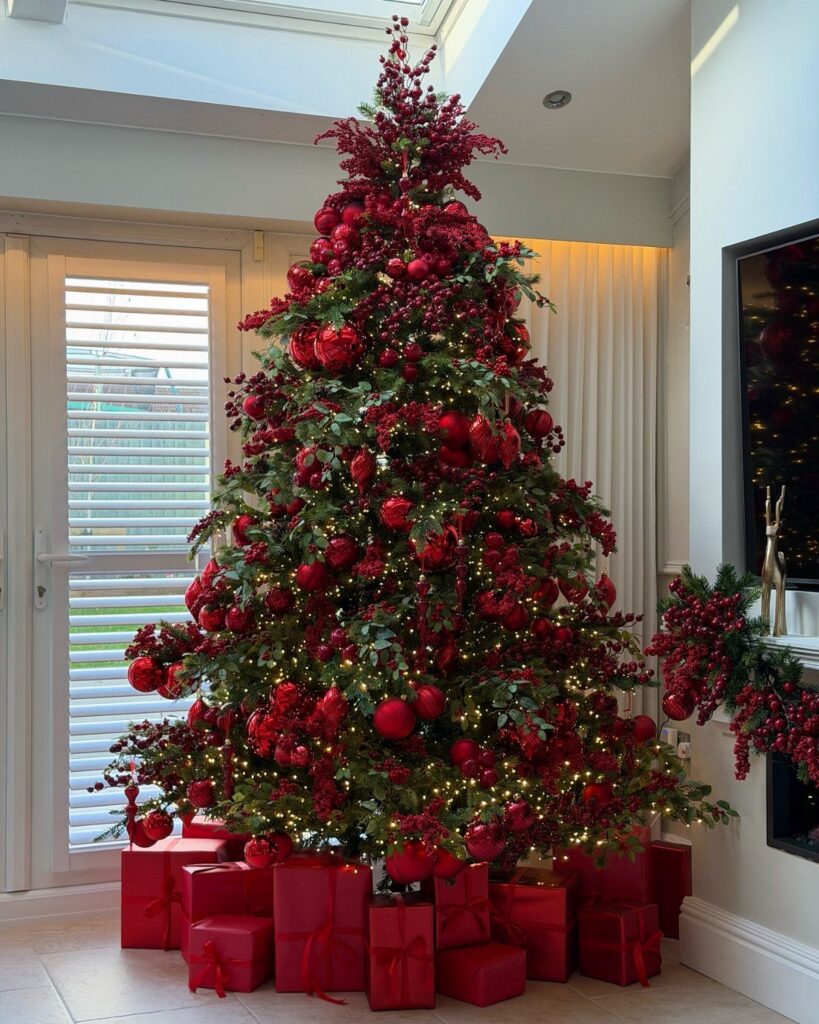
Space decides which of these trees is yours: a full-size tree wants floor room, while the Birch Logs in Christmas Tree and the Tabletop Wooden Branch Tree need only a tabletop.
The list runs from simple finishes like the Sheer Fabric Draped Tree to the Maximalist Christmas Tree, which piles on ornaments until nothing is left bare.
Palette matters nearly as much as size, and the Pretty-in-Pink, Navy Blue and Gold, and Ombré trees each hold to one metal or one color family from top to bottom.
1. Bows and Ribbon
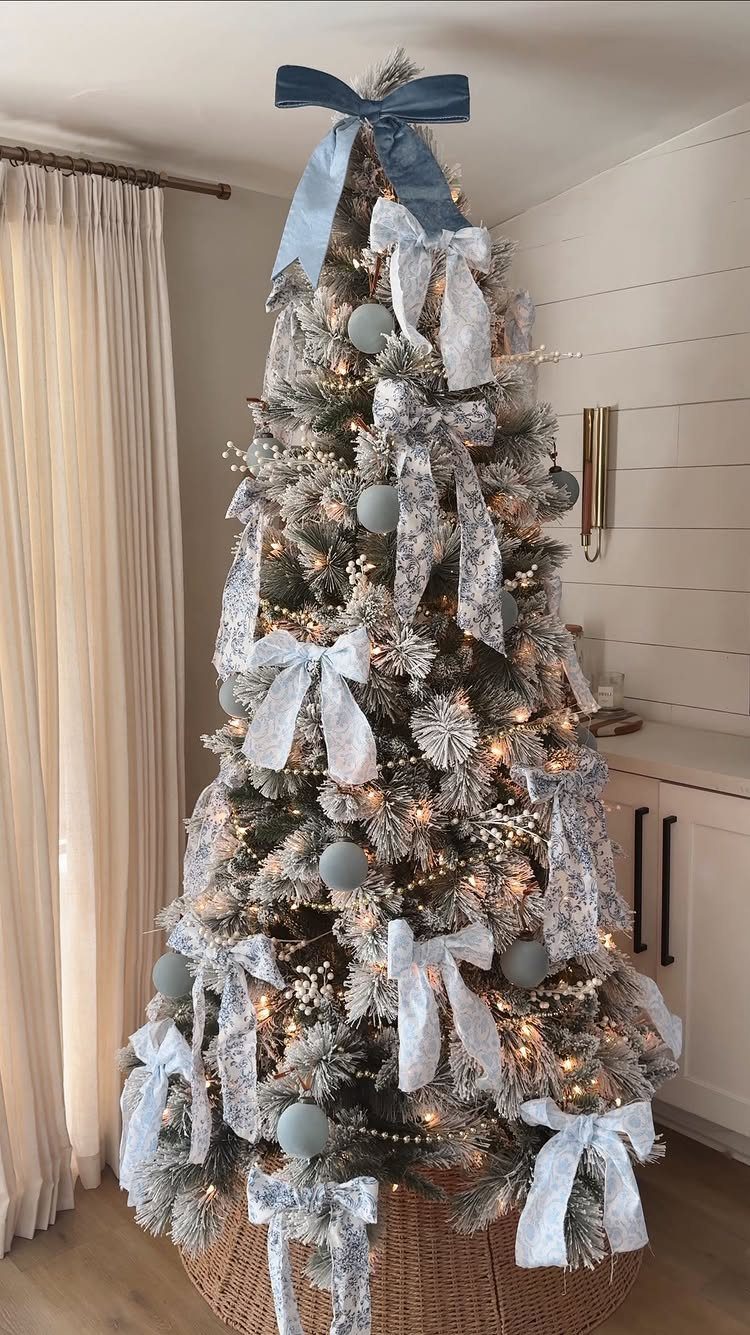
Light blue ribbon against a flocked tree is a soft, classic pairing, and the bows do most of the work. Mix a solid blue with a patterned one so the tree reads layered rather than matched.
Tuck the bows deep into the branches with trailing tails, then repeat the same blue in the ornaments. White lights keep the whole thing calm.
2. Pretty-in-Pink Christmas Tree
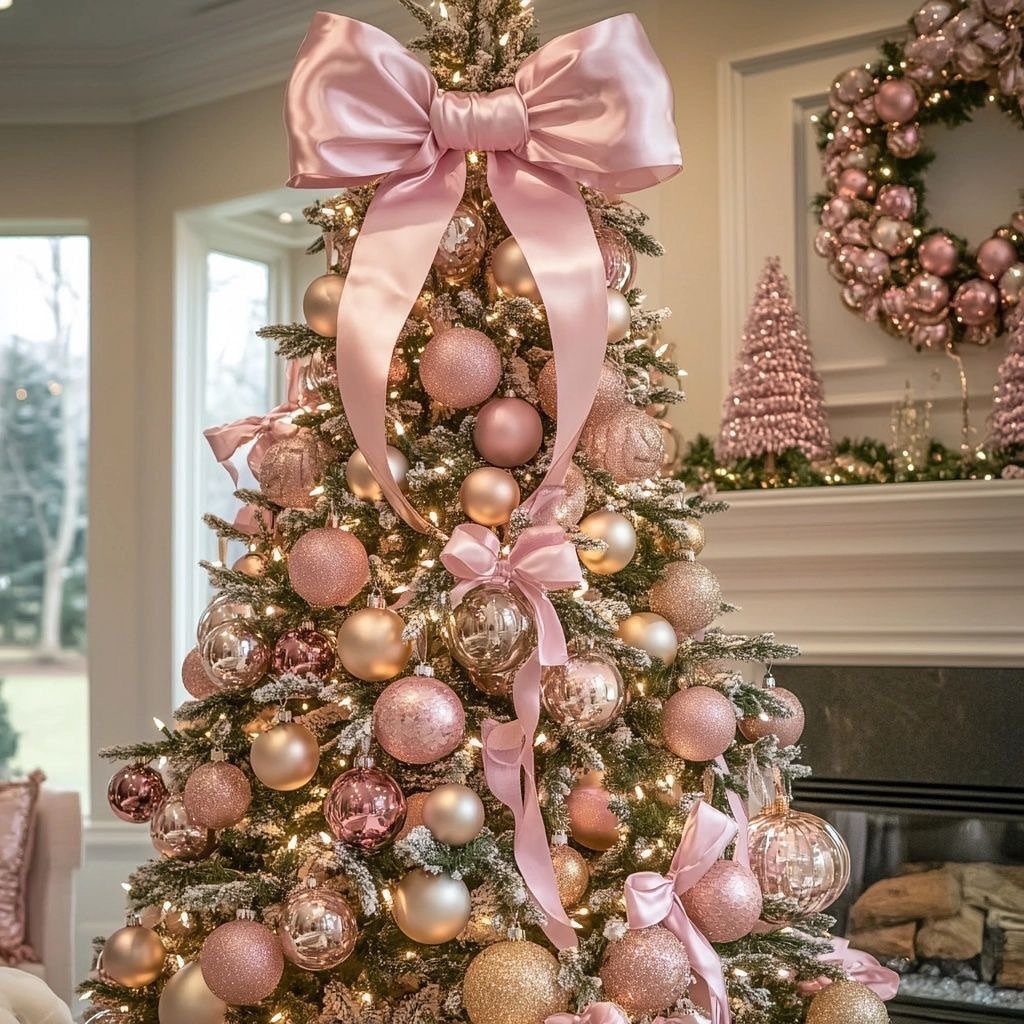
Pink usually gets treated as an accent, but a whole tree in it stands out in a room in a way red never will. Stick to one shade family, and let large satin bows carry the biggest swaths of color.
Warm lights soften the pink so it doesn’t turn candy-bright. A matching pink wreath nearby, as in this room, ties the corner together.
3. Glam Christmas Tree
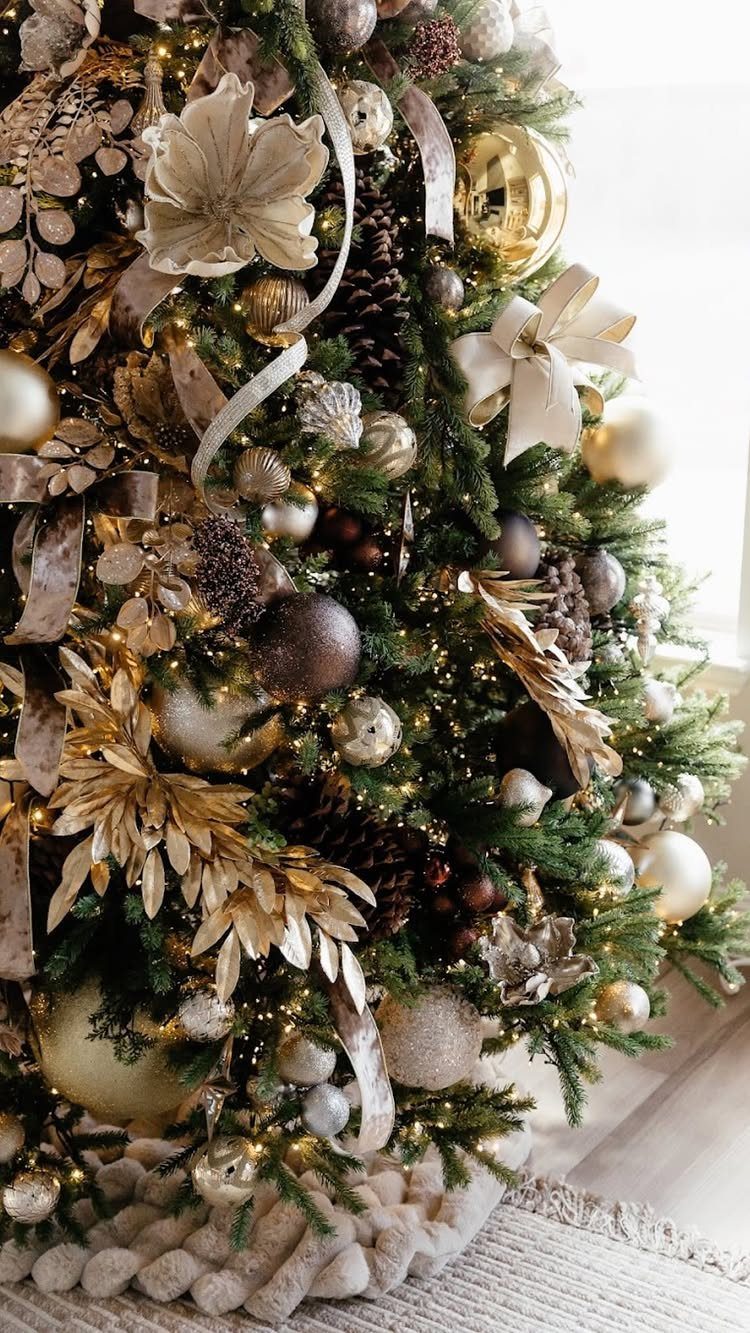
Gold, bronze and cream look expensive together, and pinecones add texture without adding cost. Keep the palette tight: warm metallics, cream flowers and ribbon, nothing cool-toned.
Warm white fairy lights flatter the metal far more than cool white does.
A chunky knit white tree skirt finishes the base, and it’s an easy swap if you’d rather not buy new ornaments.
4. Floral Tree
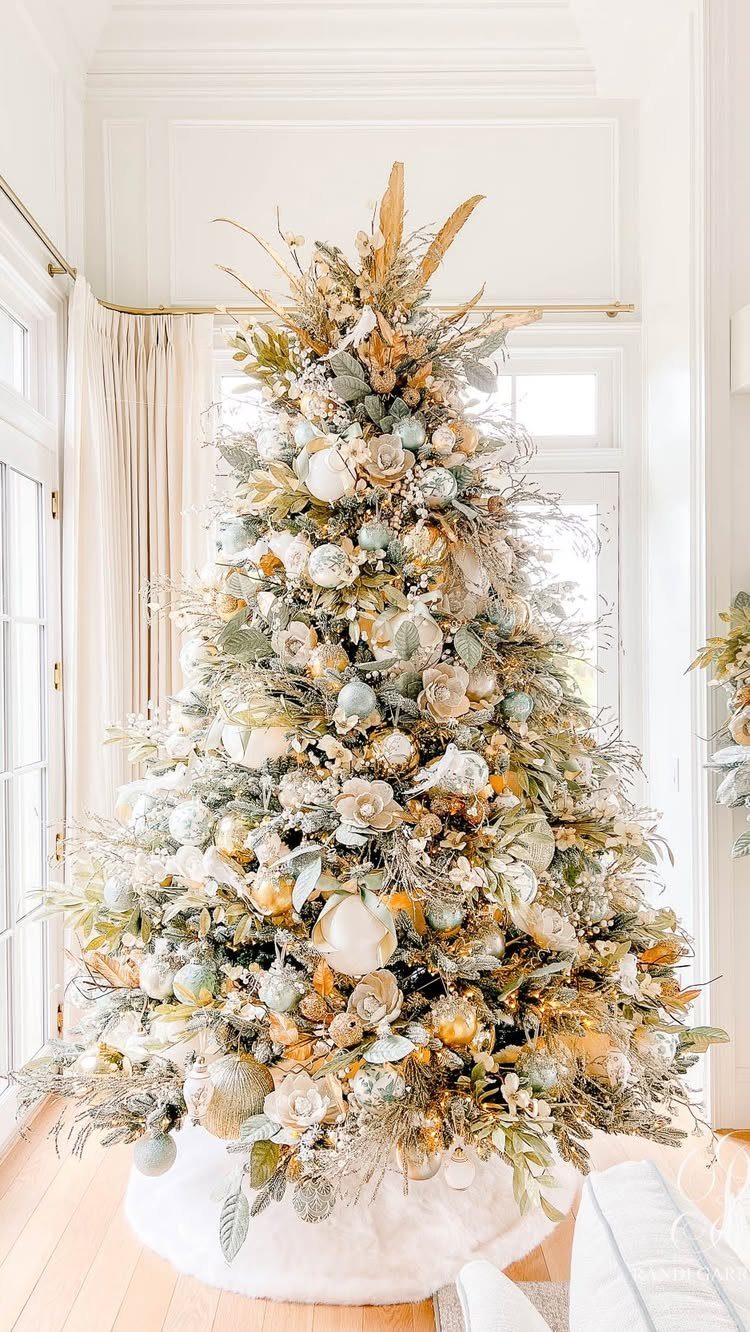
White flowers tucked into the branches make a tree feel more like an arrangement than a decoration. Pair them with gold foliage and pale blue ornaments, and the greenery stays the backdrop.
Fresh stems will wilt, so I’d use faux ones for a tree that stays up all season. Cluster them in groups of 3 rather than scattering single blooms.
5. Frozen Wonderland Tree
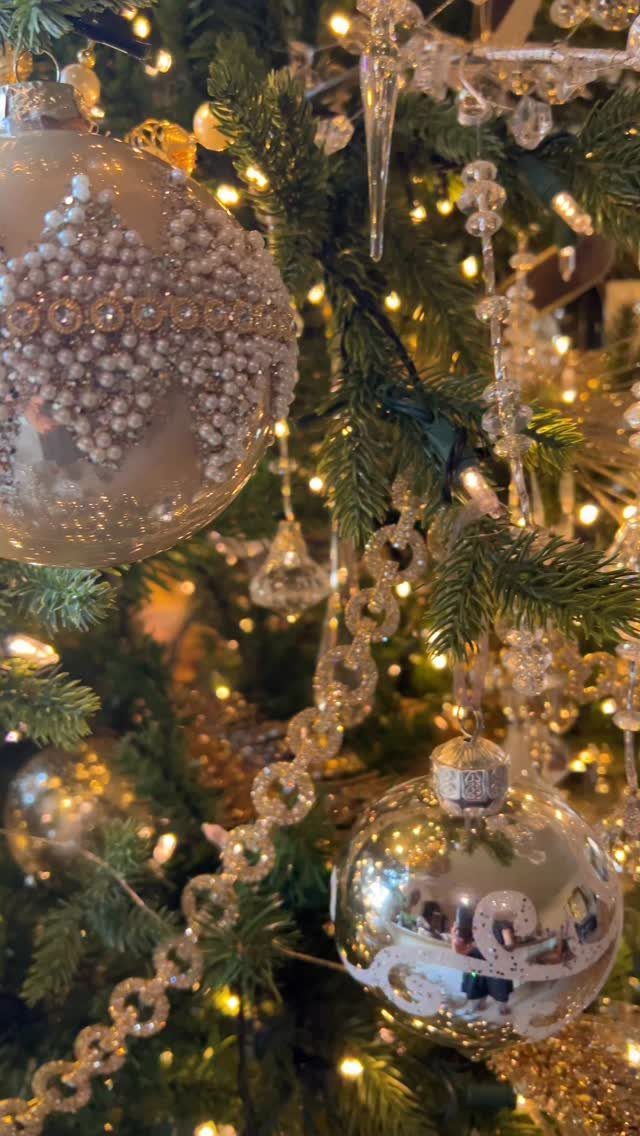
Clear icicle ornaments are what give this tree its frosty look. Hang them near branch tips so they catch the light and dangle freely.
Pearl baubles, silver ornaments and beaded garlands soften the cold look, and warm white fairy lights keep it from feeling harsh. Icicles are lightweight, so a handful of boxes goes a long way.
6. The Pom Pom Tree Topper
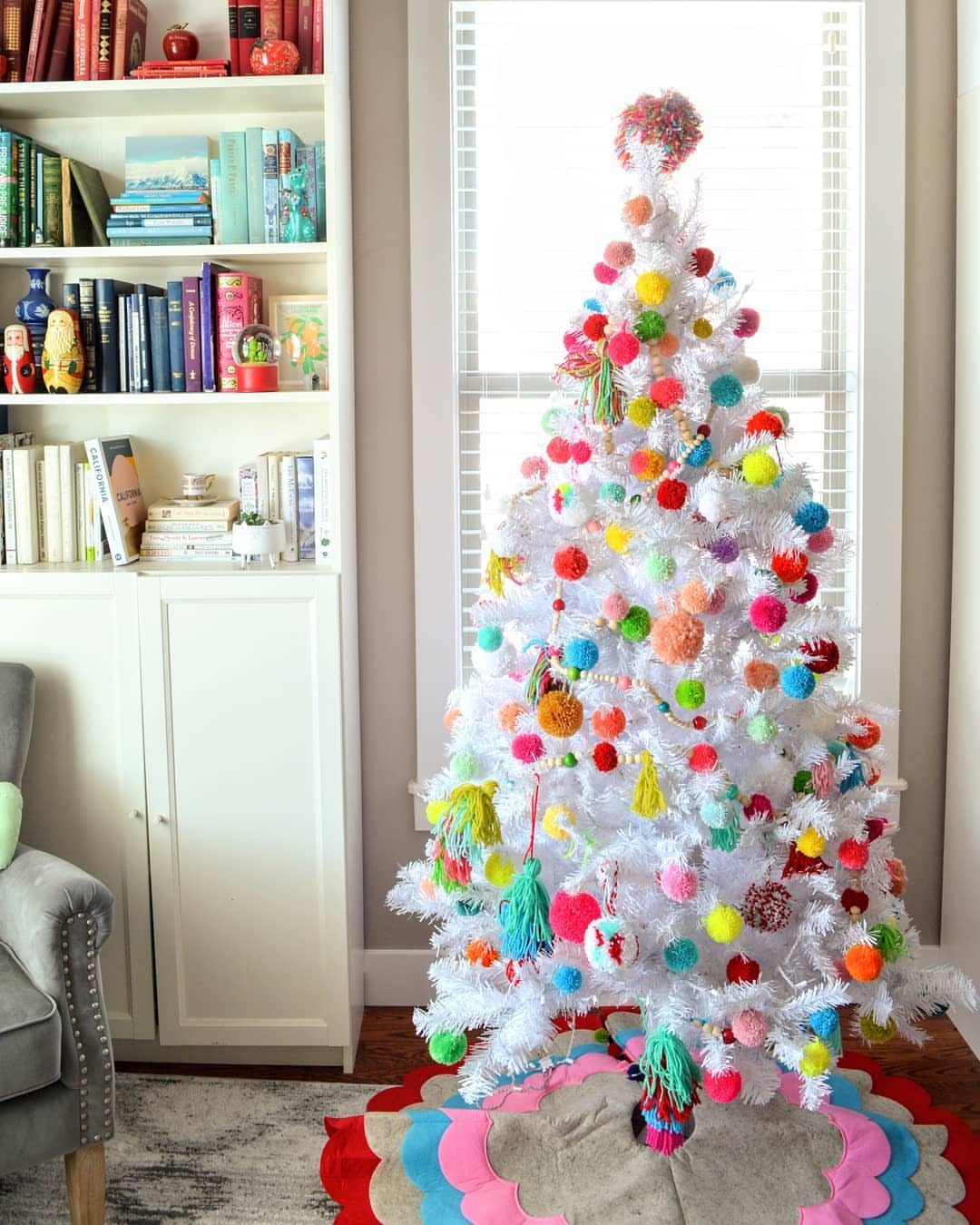
A large pom pom crowning the tree sets the tone: this one is playful, not formal. If red and green feels tired, colorful pom poms and tassels on a white tree swap the palette in one move.
Match the topper to the ornaments, so the top looks like part of the scheme rather than an afterthought. Yarn pom poms are an easy DIY, and they cost very little.
7. The White and Gold Tree
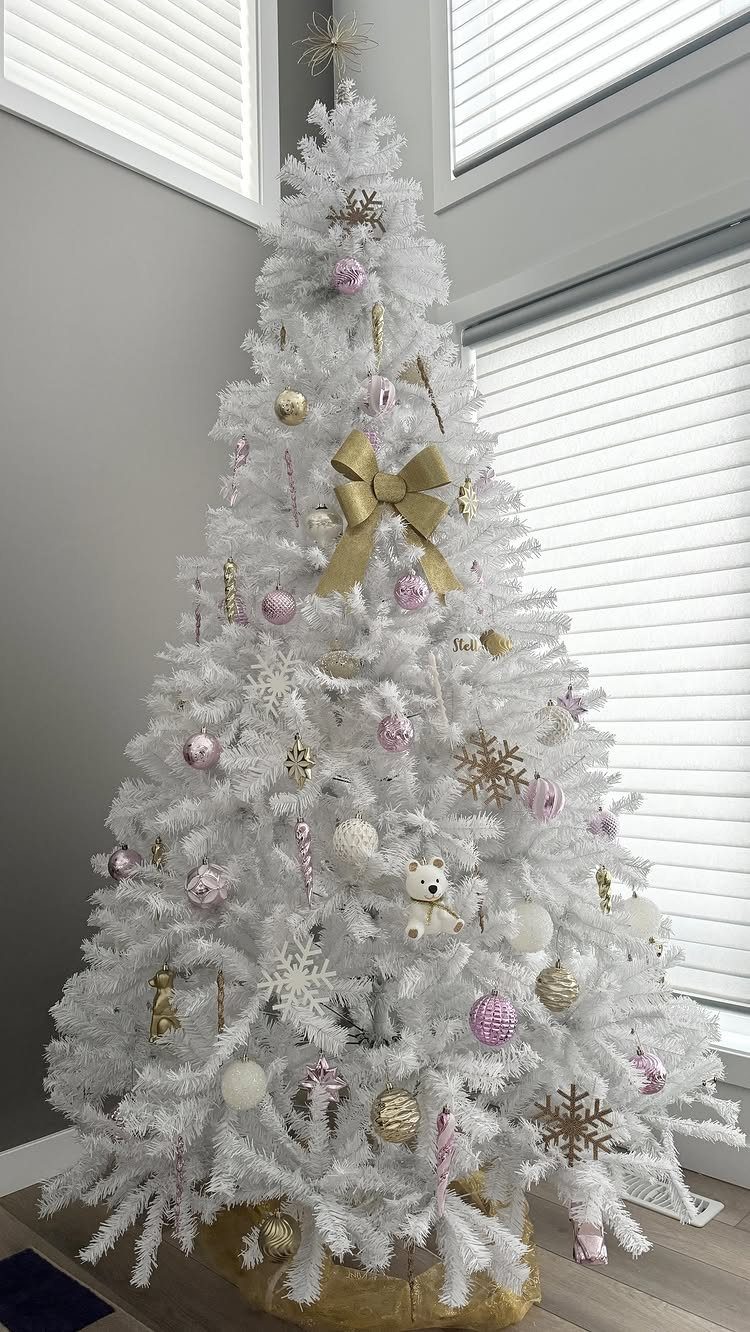
White and gold is the easiest way to bridge a traditional tree and a modern room, and the gold bows are what keep it from reading as plain.
Add pink ornaments for warmth, as this tree does, so the palette doesn’t turn stark against grey walls.
A gold tree skirt finishes the base. One creator says an artificial white tree like this cost $180, which makes it a fair buy when you’ll reuse it for years.
Repeat one gold finish across the bows and ornaments so the metal looks matched.
8. Red and Burgundy Christmas Trees
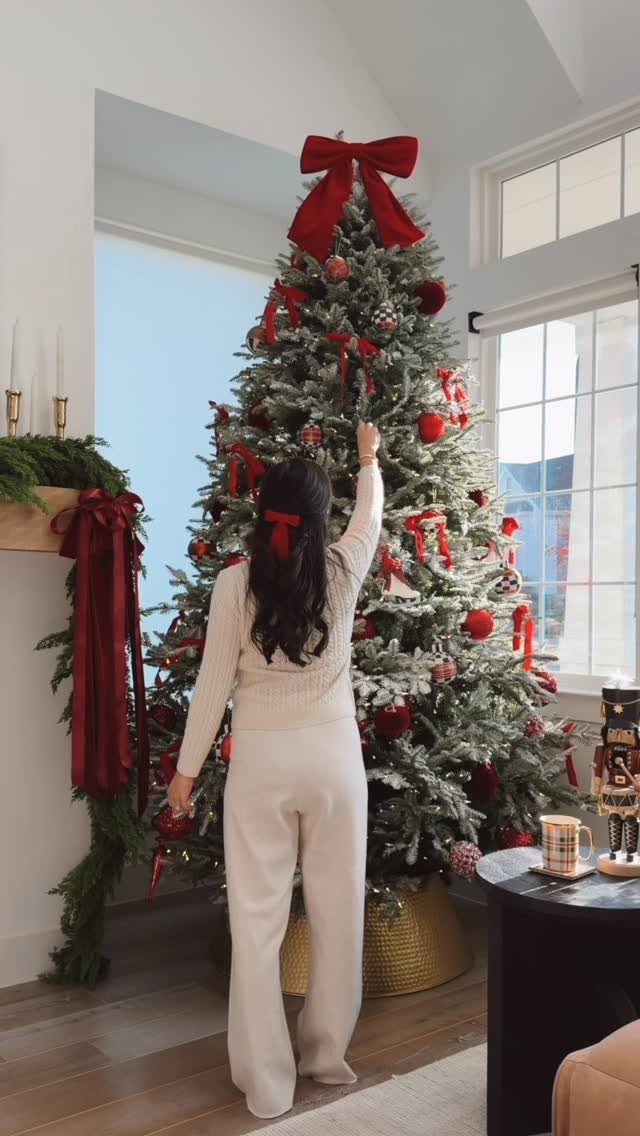
Red ornaments and wide red ribbon on a flocked tree is a classic that still suits current interiors. The white flocking lets the red look crisp instead of heavy.
I’d keep the ribbon large and the ornaments in one red family, then add burgundy for depth if you want a richer, moodier tree.
9. Woodland Wonder
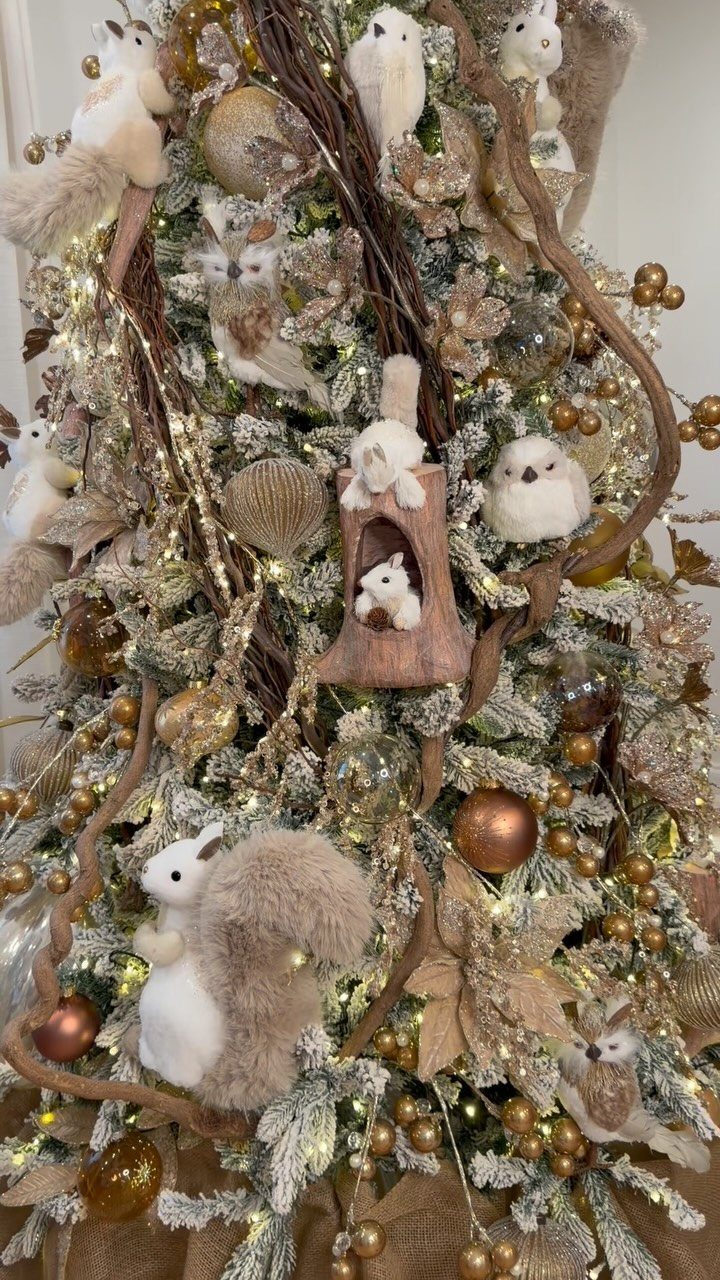
Place the creatures on sturdy branches near the trunk, where they sit without sagging. I’d choose a few larger animals over many tiny ones, so the tree reads as a scene.
10. Dried Hydrangeas
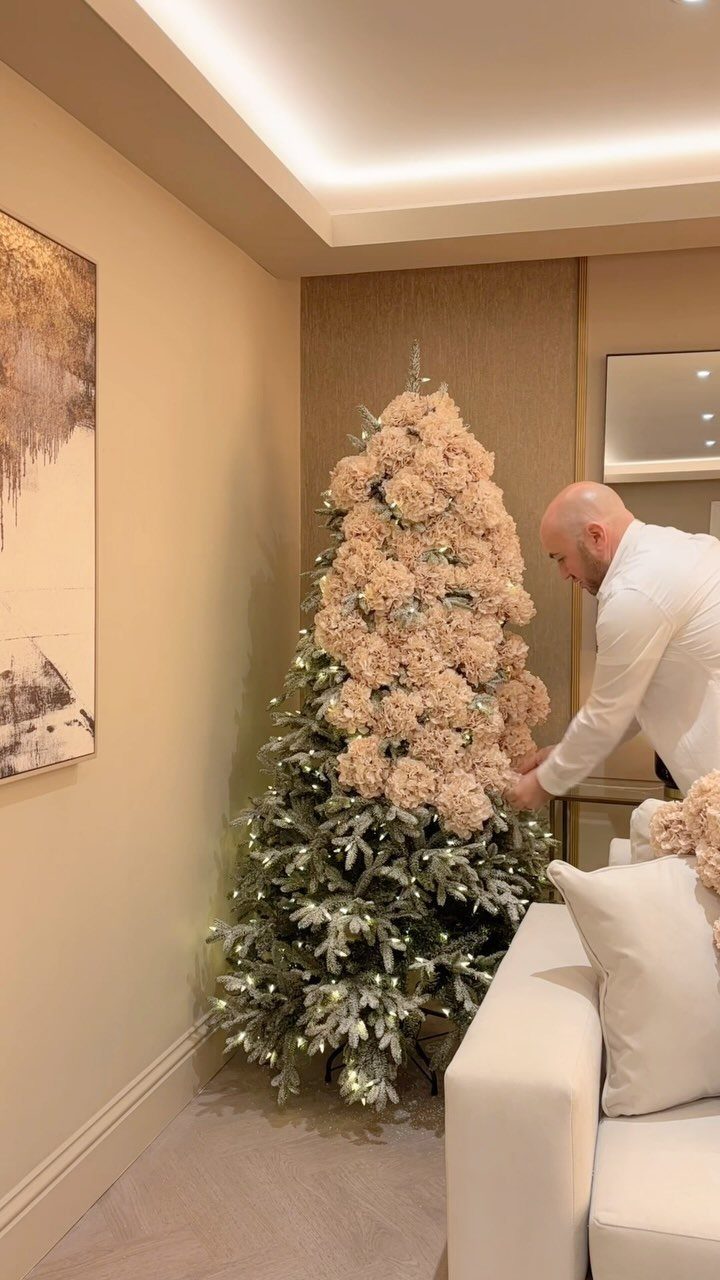
One large cluster of dried hydrangeas does more than a dozen small ornaments. Pale pink heads against white flocking add soft texture and color without any shine.
Tuck the stems deep into the branches so the blooms sit against the tree, not on top of it.
Dried flowers are fragile, so I’d place them where nobody brushes past, and use a few big clusters rather than many single stems.
11. Ombré Tree
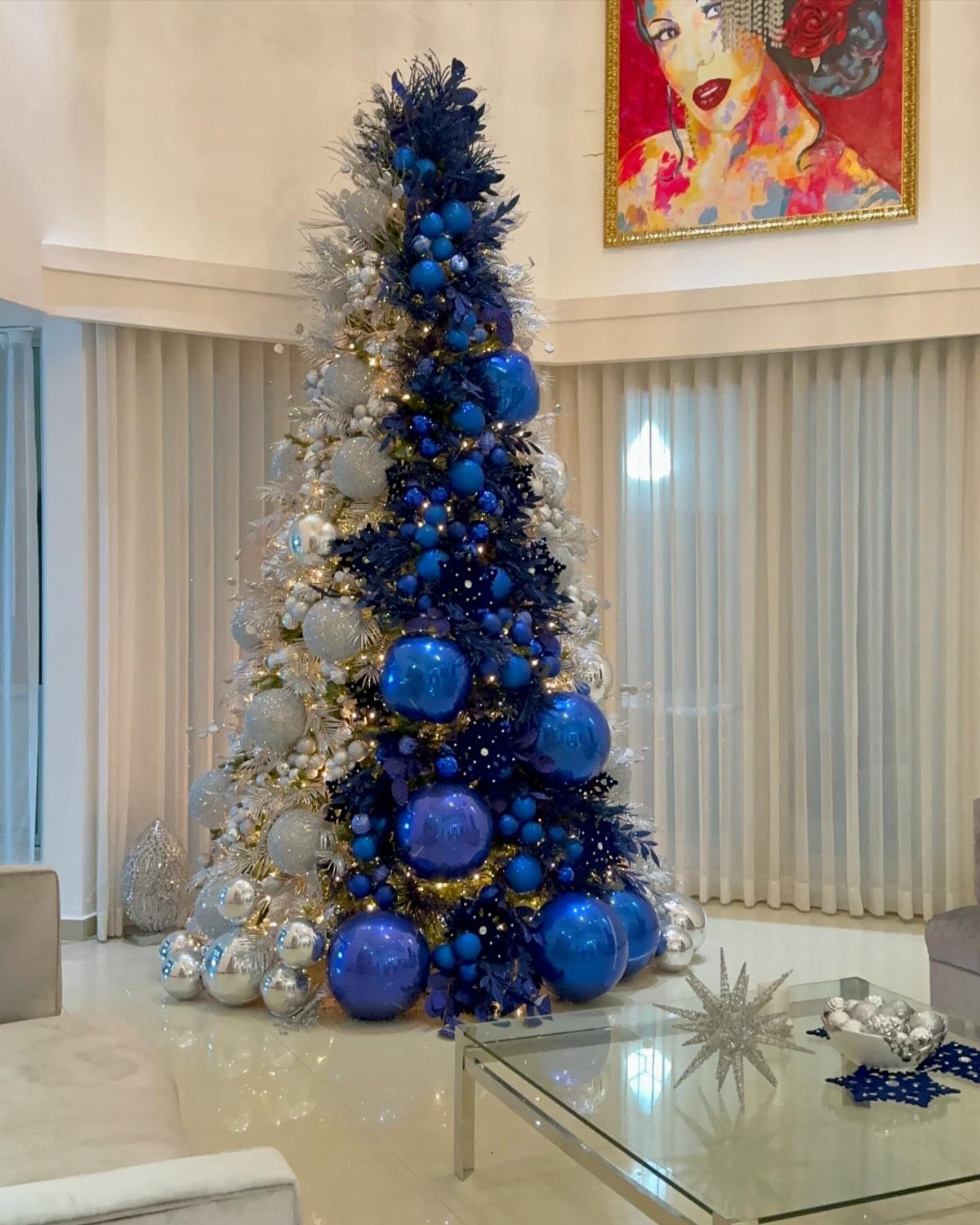
An ombré tree moves from one shade to the next in metallic ornaments, here blue fading into silver. Sort your ornaments by shade before you start, then hang them in bands from top to bottom.
Work one color band at a time and step back often, since gradients show gaps quickly.
Using a single finish, all shiny metallic, keeps the fade smooth. Mixing matte pieces in would break the effect.
12. Coastal Charm Tree
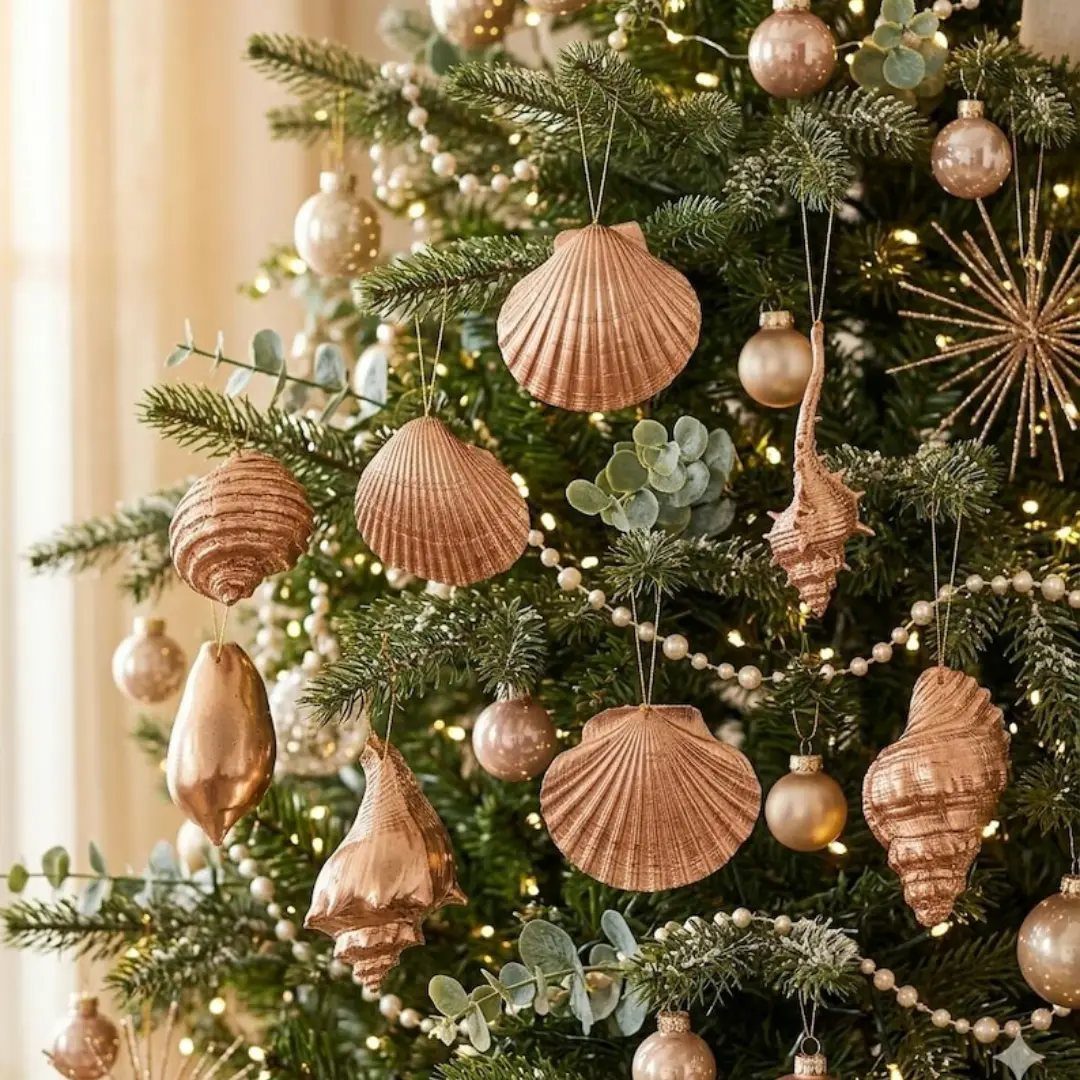
Rose gold seashell ornaments bring a beach feel without any blue or sand tones. Pearl bead garlands and gold baubles fill in around them, and small warm lights make the shells glow.
Hang the shells at the branch tips where their shape shows.
I like drooping the bead garland in loose loops, since the soft curves echo the shells. Choose one metal tone throughout so the shells look intentional.
13. Sugary Sweet Christmas Tree
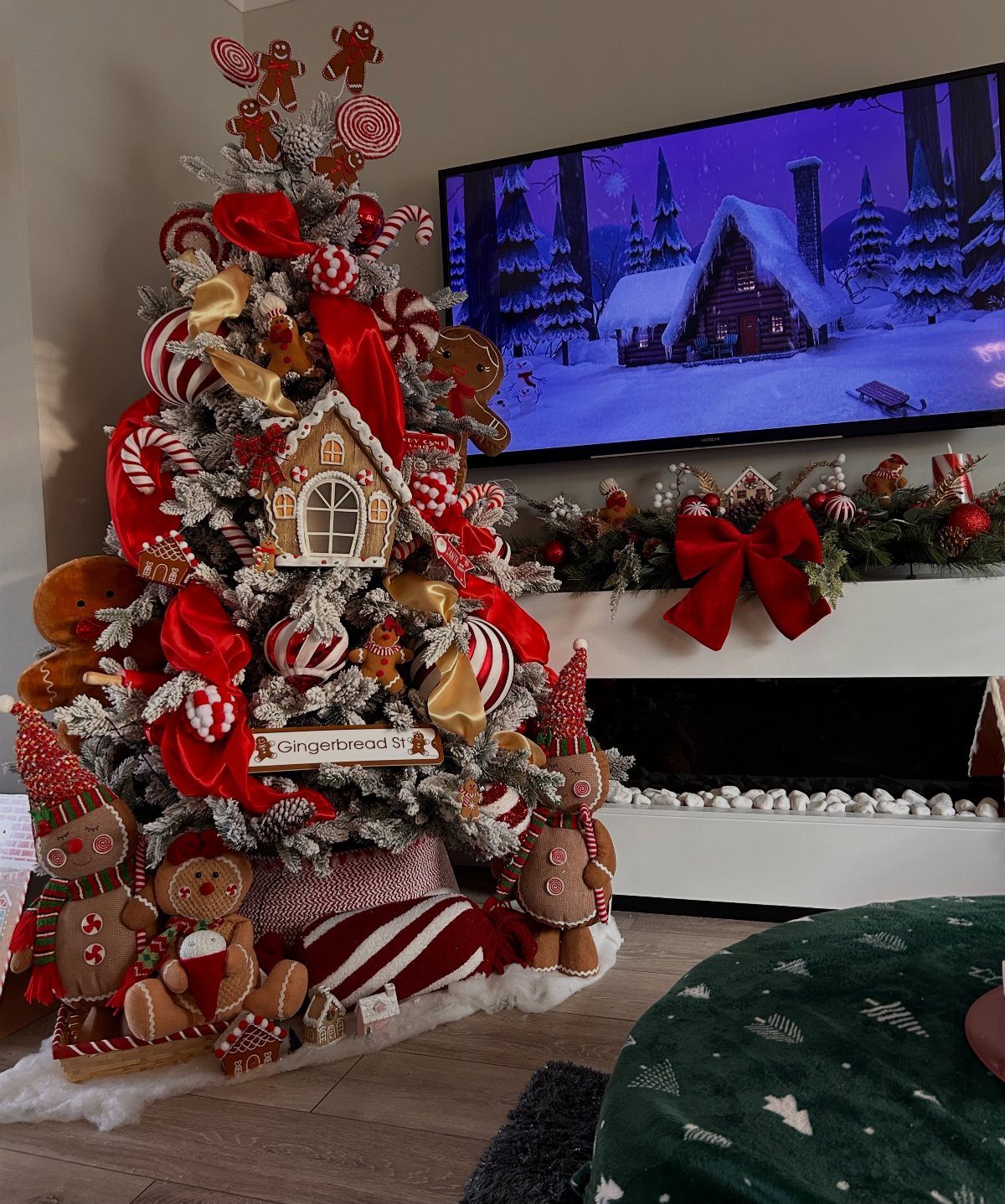
Gingerbread men, candy canes and red ribbon on a flocked tree make a dessert table you can hang on branches. The white flocking reads as frosting, so red and brown pieces stand out cleanly against it.
Faux sweets last the whole season, and they keep ants and sticky fingers out of the living room.
14. Retro Christmas Tree
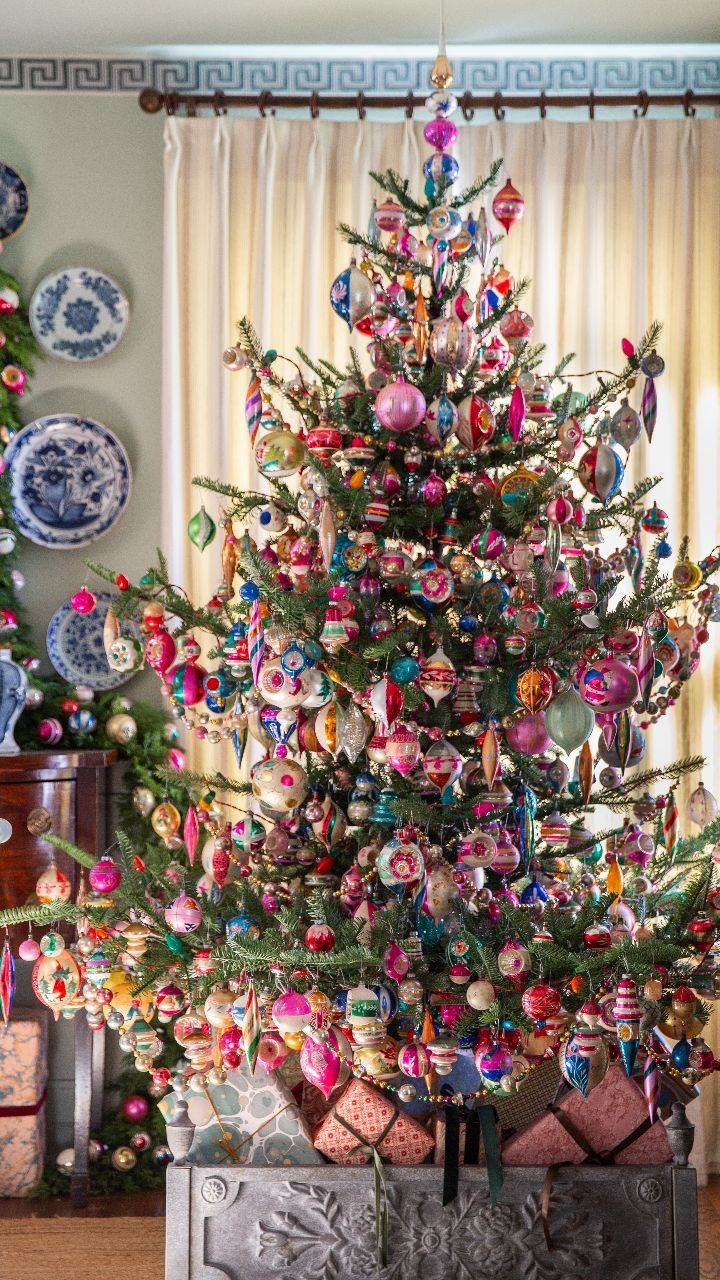
Retro comes down to a crowd of multicolored ornaments, packed in until the tree looks gloriously overfull. Mismatched shapes and colors are the point, so thrift stores and family boxes are better sources than a new matched set.
Hang larger pieces deep and smaller ones toward the tips, so the tree has depth. Wrapped gifts underneath finish the picture.
But even still, there are a few tips and tricks to making your Tannenbaum showstopping this year. Twin Cities–based designer Bria Hammel, for instance, recommends between 15 and 20 ornaments per foot of tree to achieve “a balanced look.”
15. Farmhouse Christmas Tree
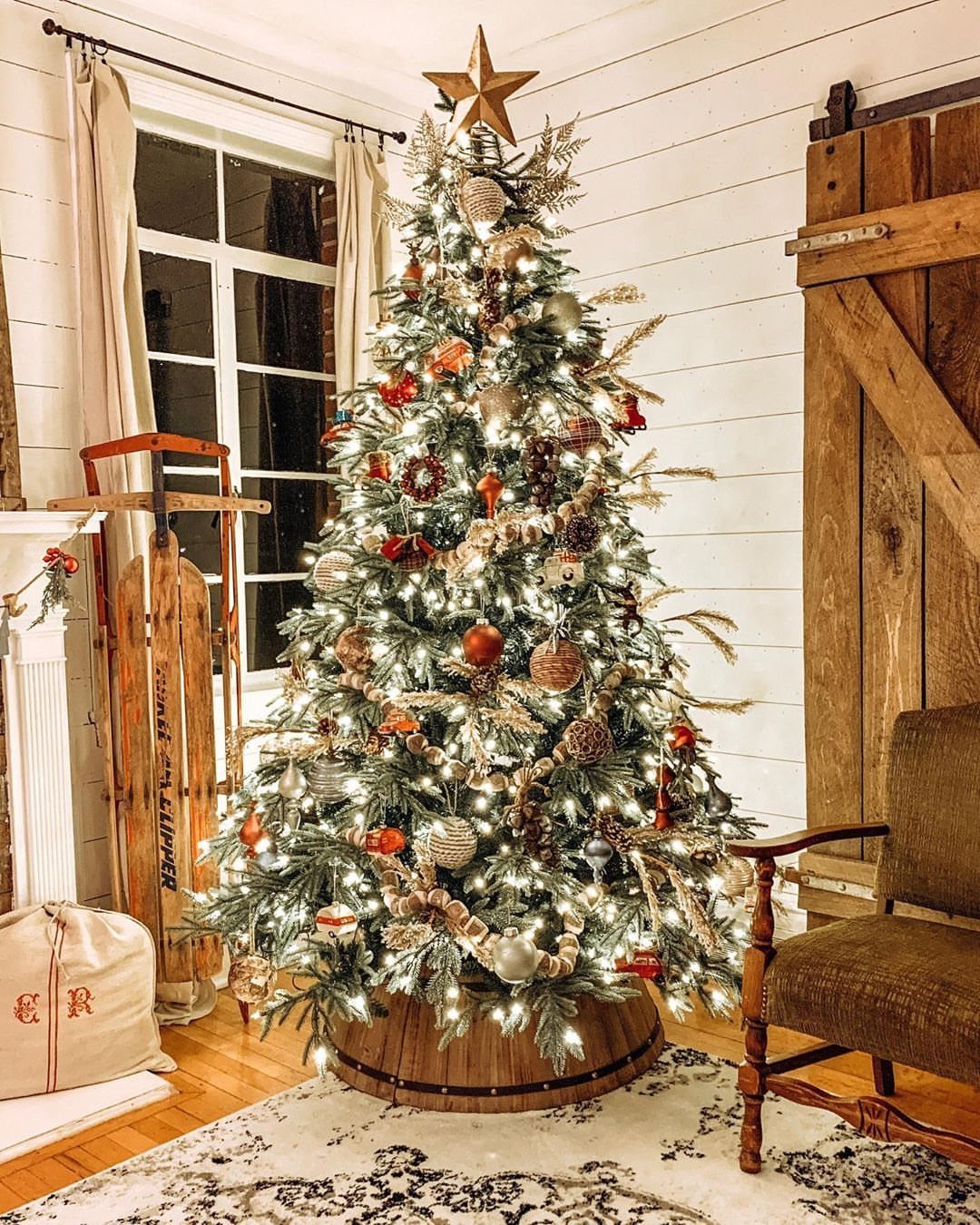
A wooden barrel base does the rustic work before a single ornament goes on, and it hides the tree stand at the same time.
Keep the topper simple: a star suits this look better than a bow. I’d choose natural materials for the ornaments, such as wood, twine and burlap, so nothing glossy fights the barrel.
16. Minimal Scandinavian Tree
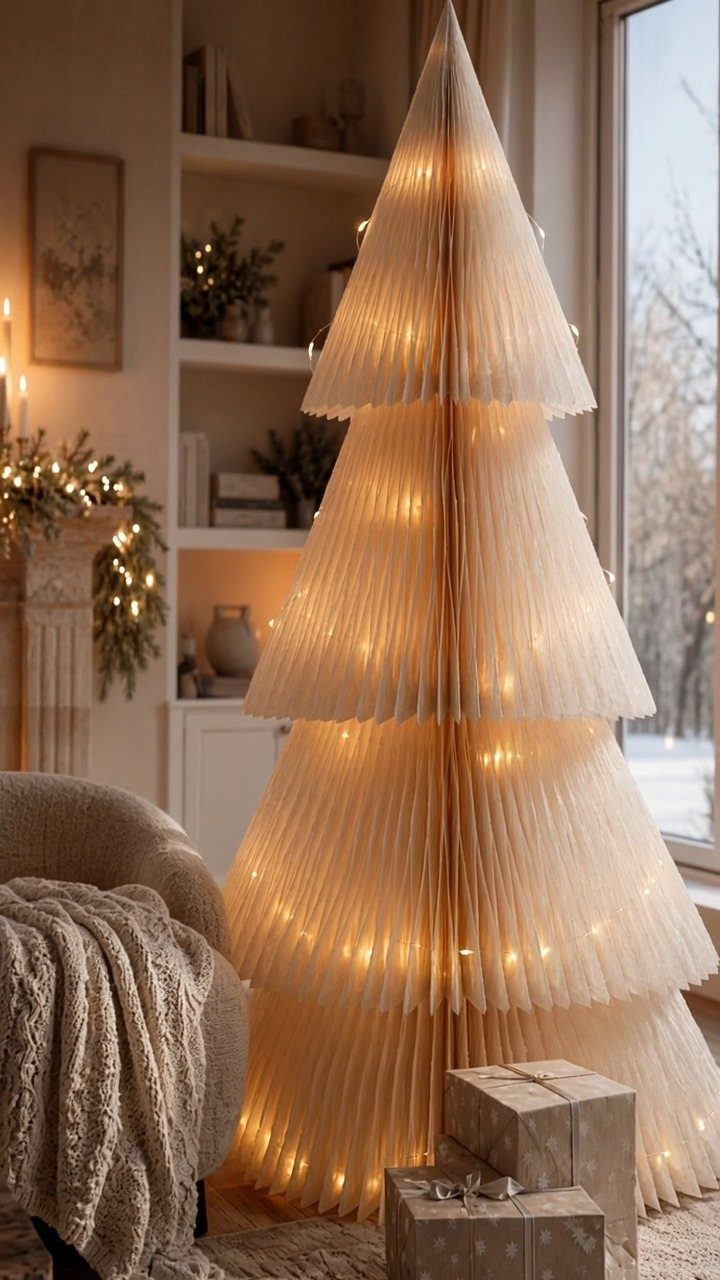
A pleated white paper tree with lights tucked inside is the simplest version of Scandinavian style, and it glows instead of sparkling. Folded paper costs little, and a string of warm white lights is the only other thing you need.
Place it by a window or beside a chair with a throw blanket. 2 wrapped gifts at the base are all the extras it wants.
17. Birch Logs in Christmas Tree
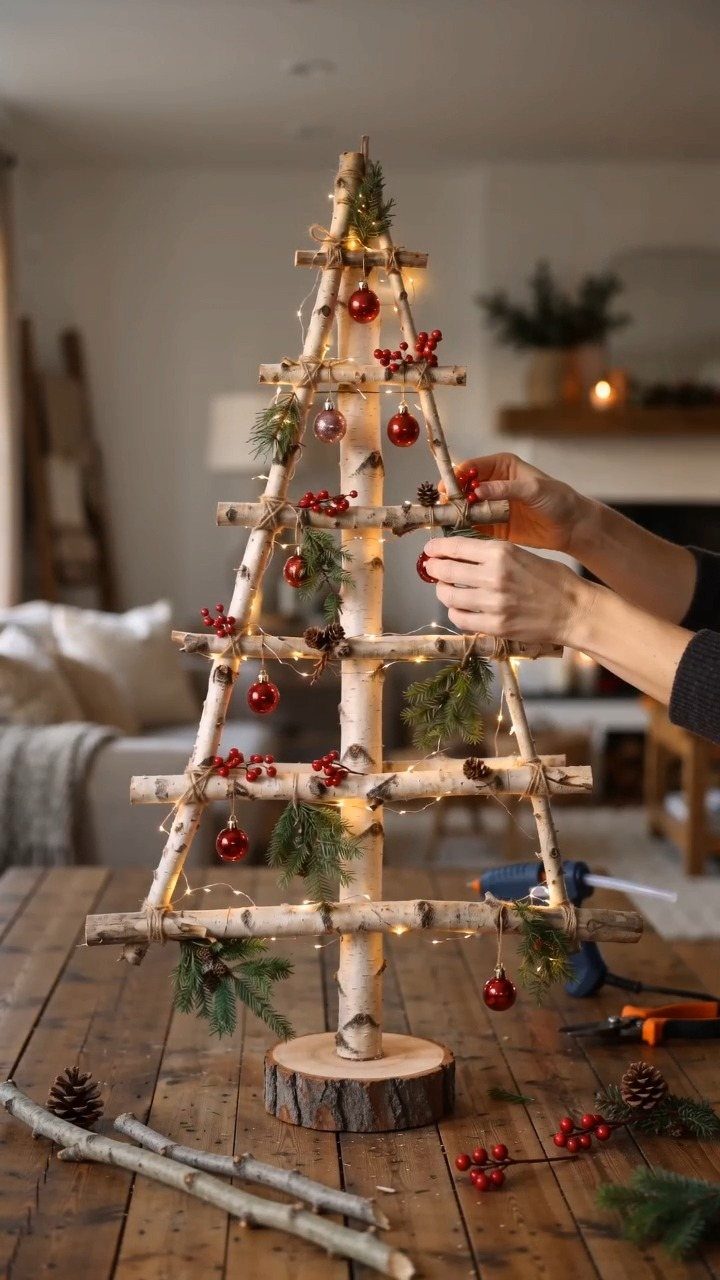
Birch logs stacked into a small tree turn a table into the centerpiece. Thread lights through the gaps, then add red ornaments and berries so the pale bark has something to play against.
Greenery tucked between the logs softens the edges. It’s a good pick for small spaces, since it needs only a tabletop and nothing like a full-size tree.
18. Maximalist Christmas Tree
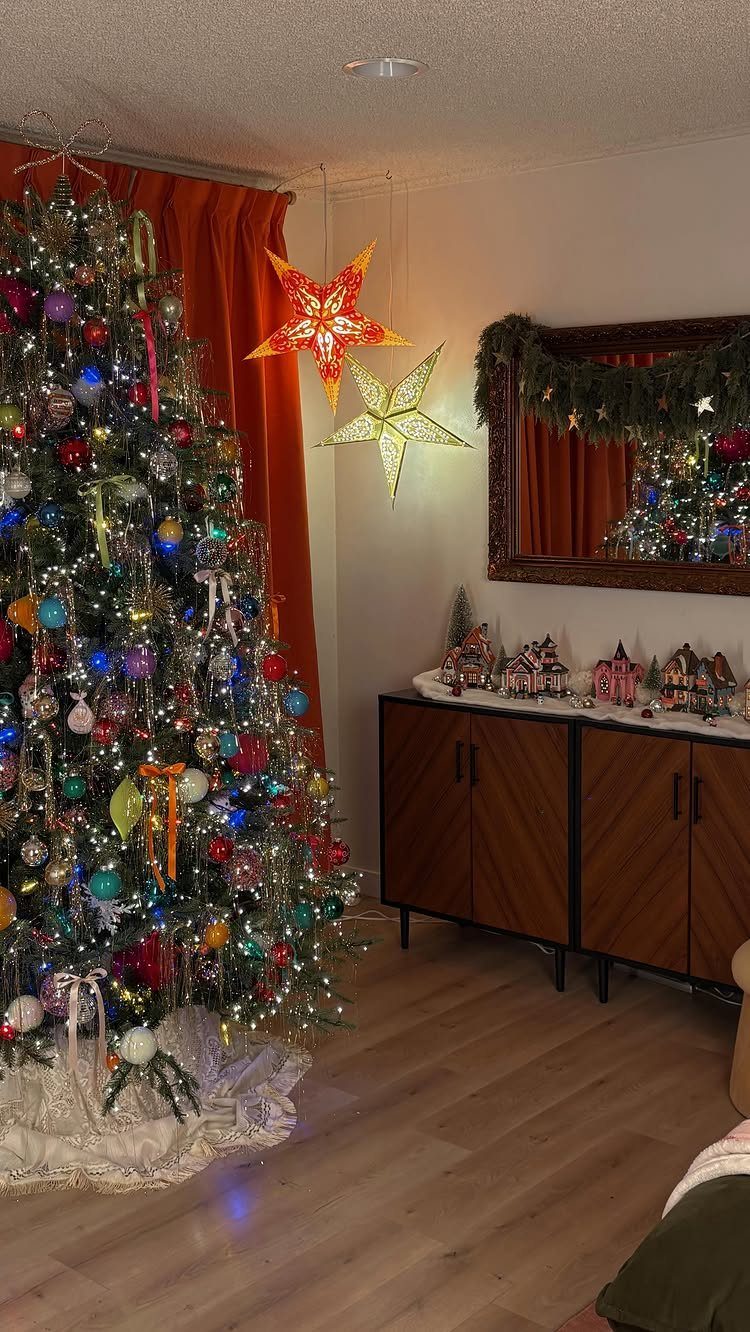
I’d let the room join in, with a miniature village on a sideboard and warm curtains, rather than stopping at the branches.
Fill every gap before adding the next layer, and repeat a shape, like stars, so the color doesn’t feel random.
19. Navy Blue and Gold Tree
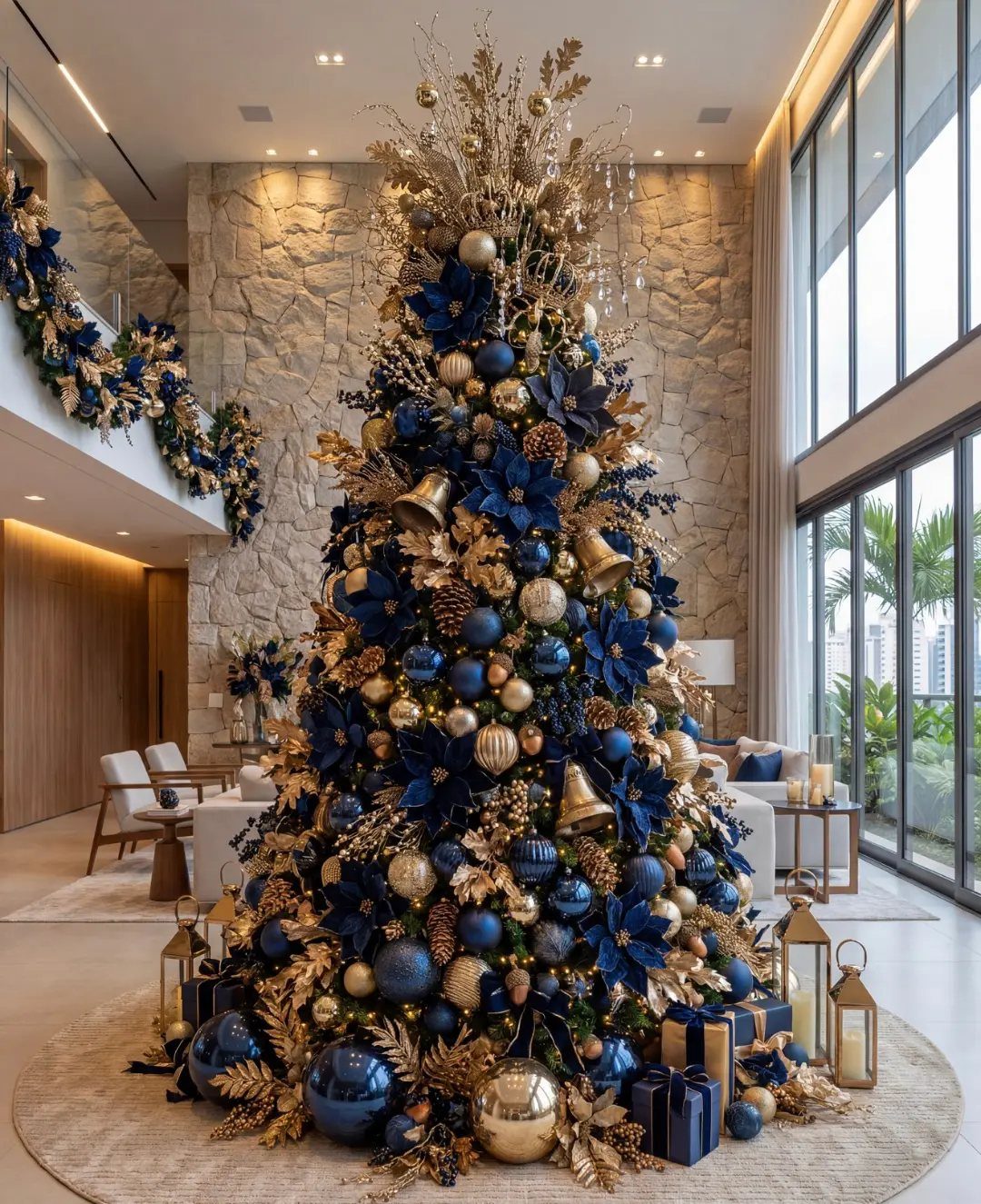
Oversized navy floral picks and gold bells make a tree that looks dressed for evening. Navy reads almost black against green, so the gold has to carry the sparkle.
Keep the bells in one metallic finish, and set the big blue flowers at even intervals so the eye travels around the tree. I’d leave the rest of the room plain; a tree this rich needs no help.
20. Sheer Fabric Draped Tree
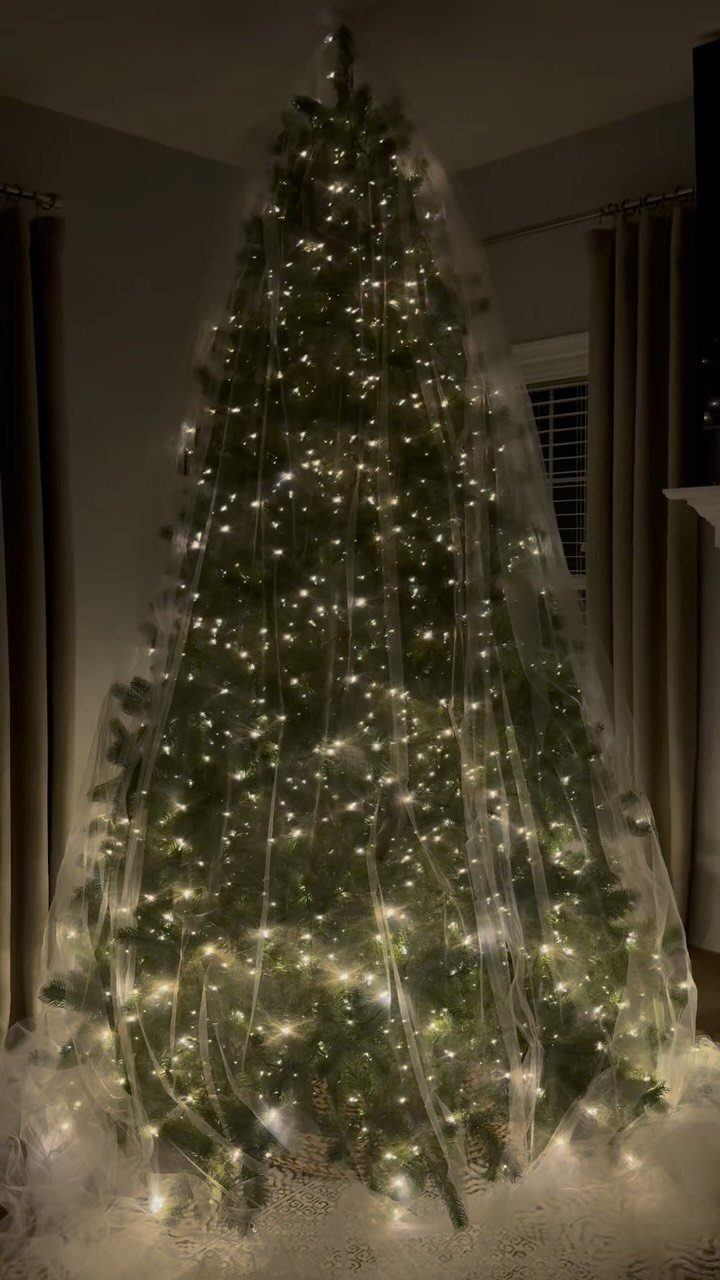
Sheer white fabric swept around a green tree softens the lights into a haze. Warm white fairy lights underneath do the glowing, so put them on first and drape the fabric after.
Let the fabric fall in loose swags instead of pulling it tight, since the folds catch light and tension flattens them.
Choose a translucent weight, because anything thicker blocks the glow. It’s an inexpensive way to change a tree without buying a single ornament.
21. Wicker Basket Tree Collar
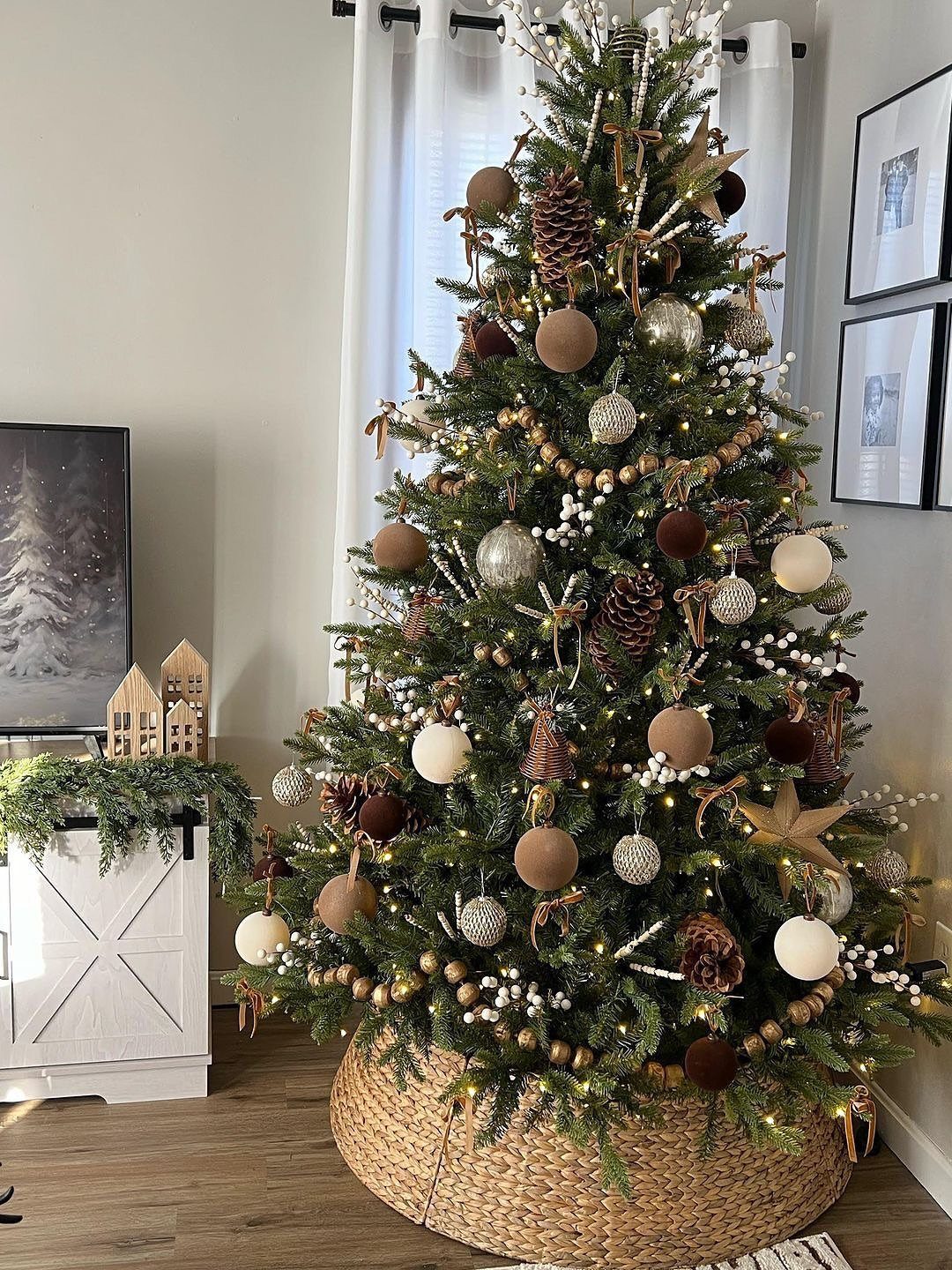
Hiding the stand is the first job of a woven wicker basket, and the second is warming up the whole tree. Brown baubles, pinecones and white berries all share the basket’s natural tone, so nothing competes with it.
I’d pick a basket wide enough to look generous around the trunk, then repeat the pinecones on the branches so the base and the tree feel related. Skip glossy ornaments; they fight the weave.
22. Silver Tinsel Tree
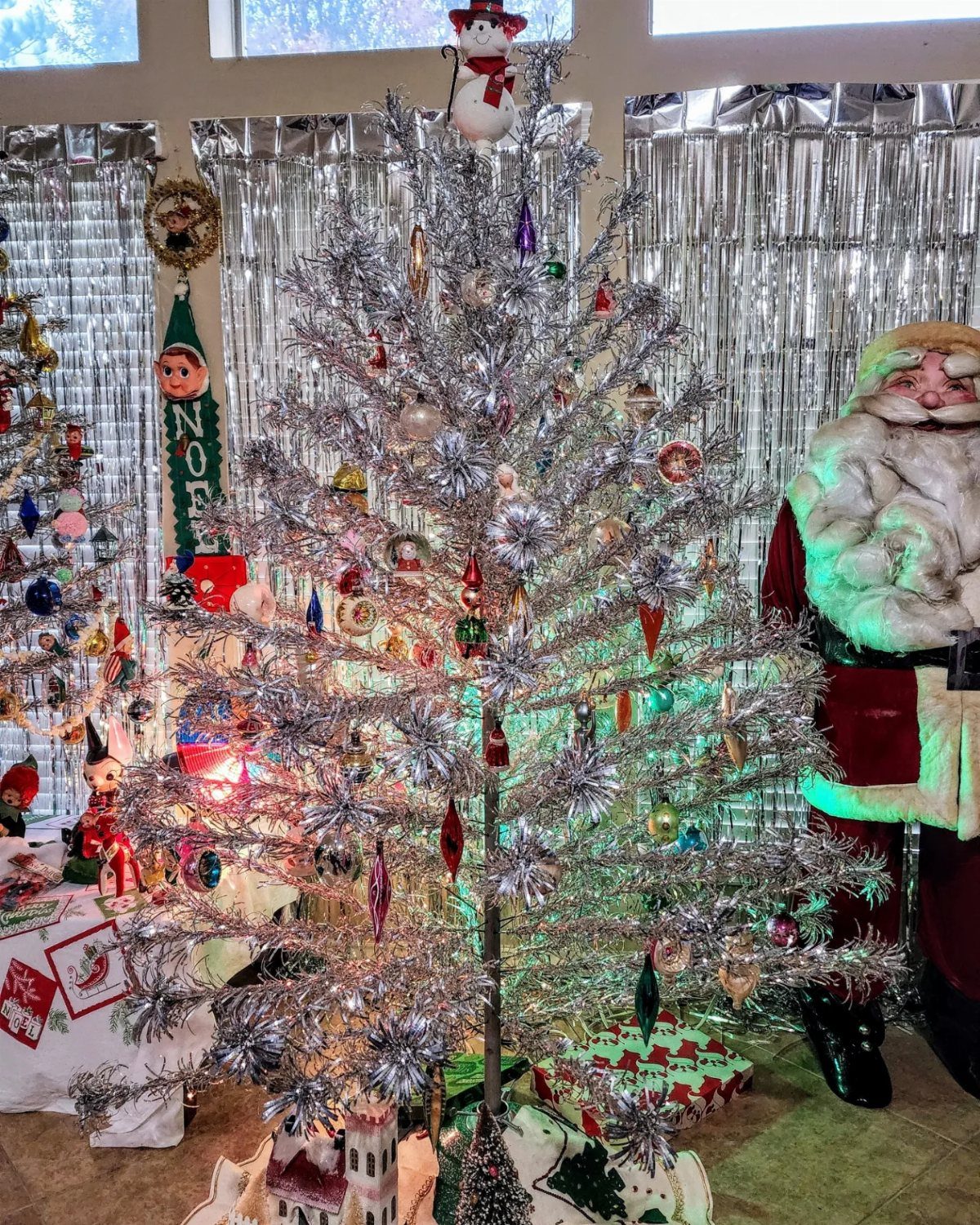
Silver tinsel makes a tree that sparkles from every angle, and colorful baubles turn that shine playful instead of icy. Space the bright ornaments evenly so the color doesn’t pool in one patch.
Silver bursts add sharp points of light between the baubles. A snowman topper keeps the mood cheerful, and I like it best with foil curtains behind, as the room and tree then share the same glint.
23. Bird-Themed Christmas Tree
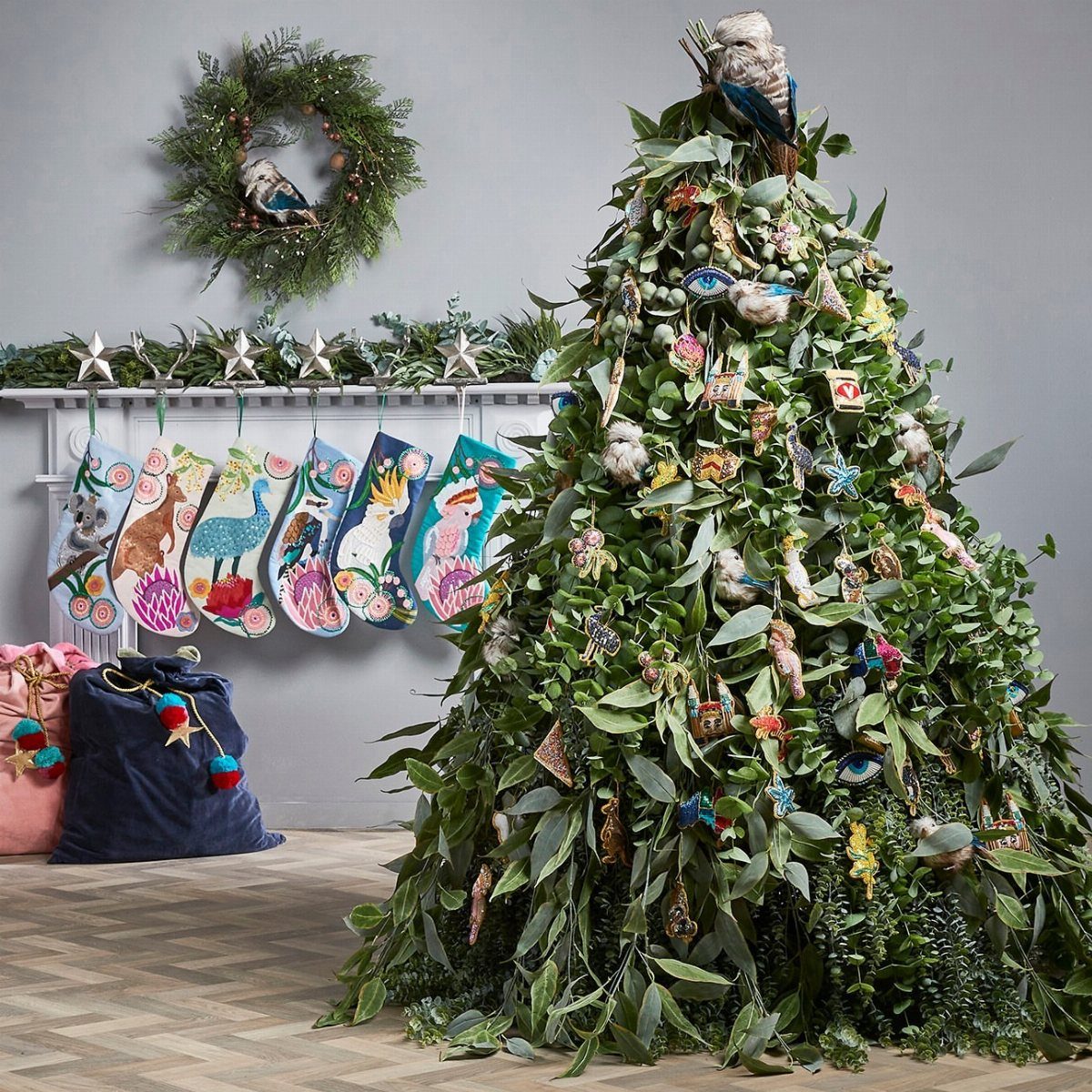
Small bird figurines perched among green branches give a tree a quiet, storybook feel. Set them on sturdy limbs where they can balance, and tuck sprigs of natural greenery around each one so they look nested.
A bird topper keeps the theme clear from the top down. If you want the idea to reach beyond the tree, bird stockings on the mantel and a wreath nearby carry it across the room.
24. Tabletop Wooden Branch Tree
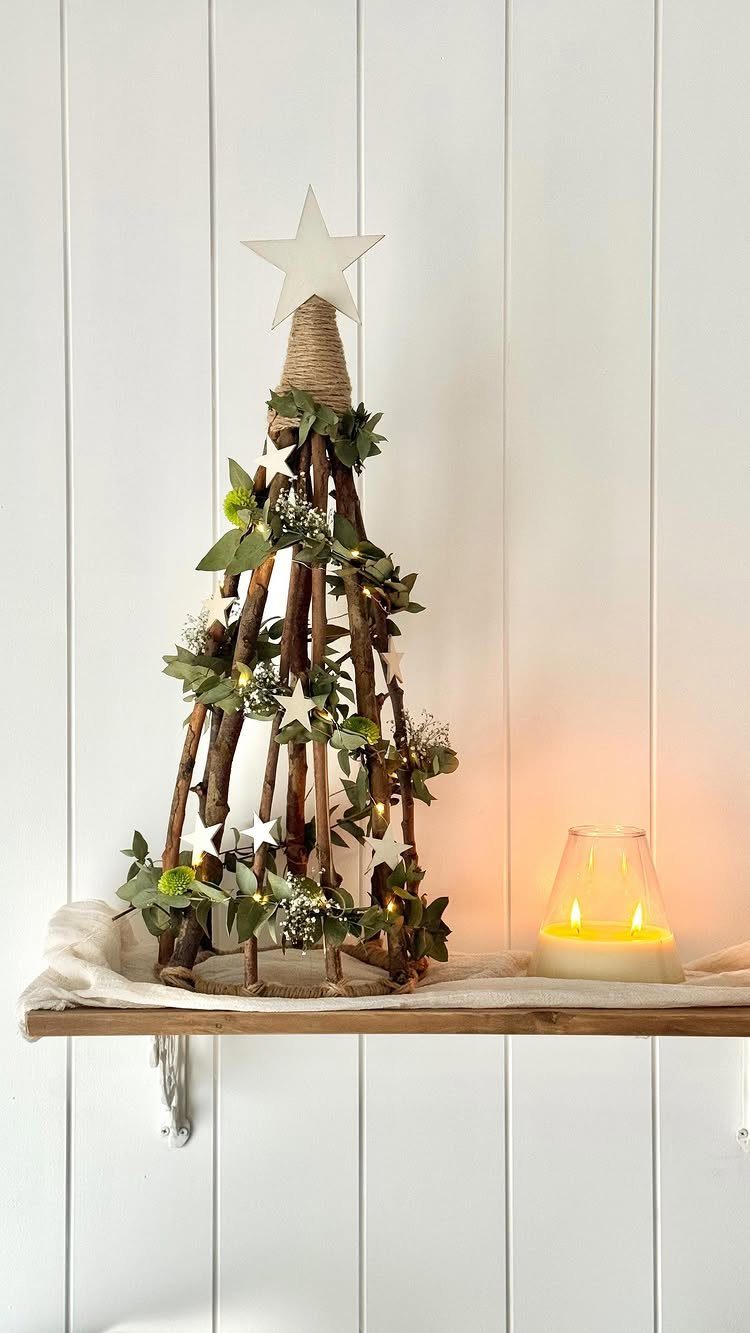
Vertical wooden branches bundled into a tree shape make a tabletop piece that costs little and fits a shelf. Weave fairy lights through the branches, then add greenery and white stars.
I’d keep the star count low, so the wood stays the main event.
Place it beside a candle for extra warmth. It suits anyone short on floor space who still wants a tree on display.
Incorporating Natural Elements
Eucalyptus is the easiest botanical to start with, because the stems stay green through the season. Fresh stems from a grocery store like Trader Joe’s work, and you can push them in among the branches like any other pick.
Faux berry picks and baby’s breath mix in well with it. Dried flower stems or faux ones are the simplest route to a naturalistic tree, and bunny tails make a good filler.
If you have a garden, cut your own flowers for the tree. That’s the cheapest way to get them.
Florists have trimmed trees with flowers and stems for a long time, so you can go all in or add just a few accents. A handful of stems is enough to make the tree feel more organic.
Frequently Asked Questions
How do you decorate a themed Christmas tree?
Pick one theme and one tight palette, then buy or gather only pieces that fit it.
Stick to one metal finish or one color family for the bows and ornaments, say brushed gold or deep burgundy, and the whole tree reads as planned.
Warm white lights suit most themes, and a matching base, like a basket collar, barrel, or tree skirt, finishes the look.
Which tree is decorated at Christmas?
Most people decorate a fir, spruce, or pine tree, either real or artificial. A tabletop tree made of birch logs or bundled wooden branches works when floor space is short.
What are the trends for Christmas tree decorating in 2026?
Big bows and ribbon, red and burgundy color schemes, maximalist trees, natural elements, and retro looks are the trends I’d watch.
Flocked branches carry oversized bows well, and a maximalist tree holds together when one shape, such as stars, shows up in every color.
Eucalyptus stems add a natural touch, since they hold their green through the whole season and slide easily between branches.
What are the things on a Christmas tree?
The usual pieces are lights, ornaments, garland, ribbon or bows, a topper, and a tree skirt or collar at the base.
String warm white lights first, then hang the big ornaments close to the trunk and save the small ones for the branch tips, which gives the tree depth.
A topper that matches the ornaments, such as a star, bow, or pom pom, makes the top look planned.