The material you pick for christmas tree bows, whether velvet, burlap, satin or striped grosgrain, decides how the bow behaves, so settle that before the color.
The bow ideas here run from rustic burlap with pinecones to gold satin, and the right one follows your tree: red velvet repeats red ornaments, gold satin suits a flocked tree, and a single big striped bow suits a host who wants almost nothing else around it.
1. Red Velvet Bows
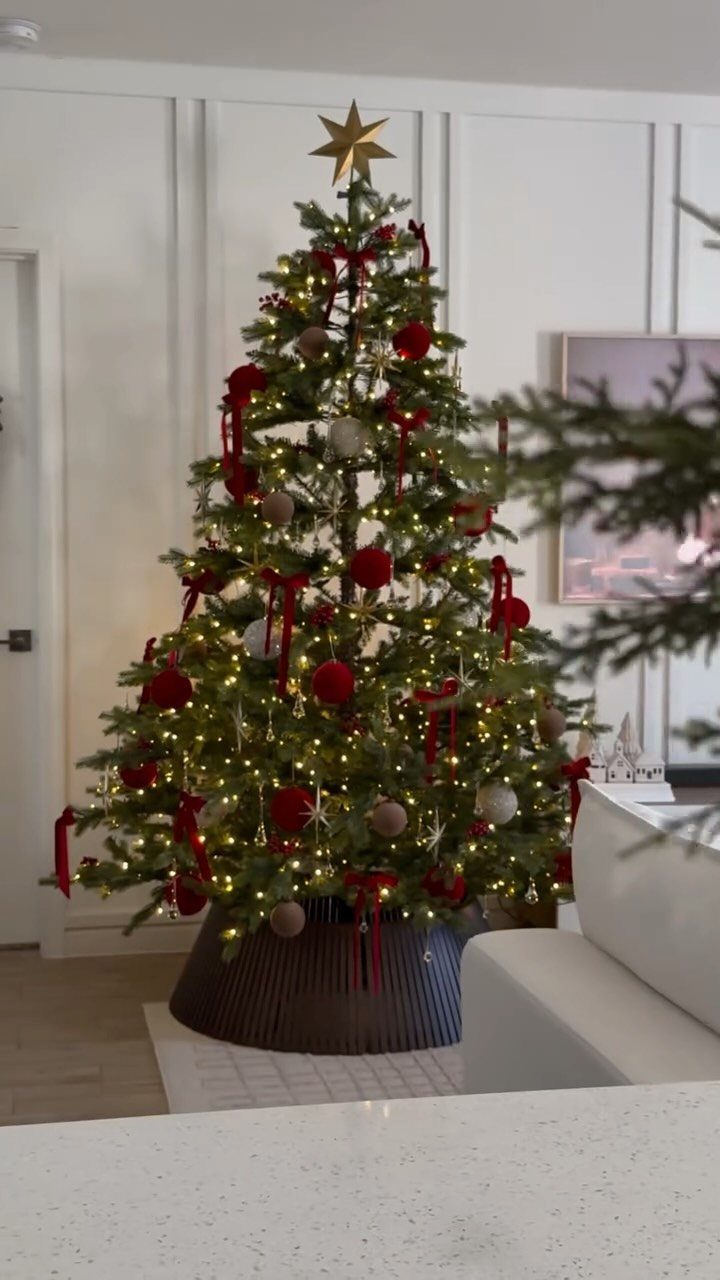
Red velvet gives a tree the classic, luxurious look, and it works best when the bows repeat the red of the ornaments.
Matching the shades keeps the tree calm instead of busy, so the bows read as part of one scheme.
Velvet ribbon has a soft pile that catches the lights, which is why I like it against plain white walls.
Tuck the bows deep among the branches as well as on the tips, and the tree gets depth. A gold star on top ties the whole look together.
2. Multi-loop Bows
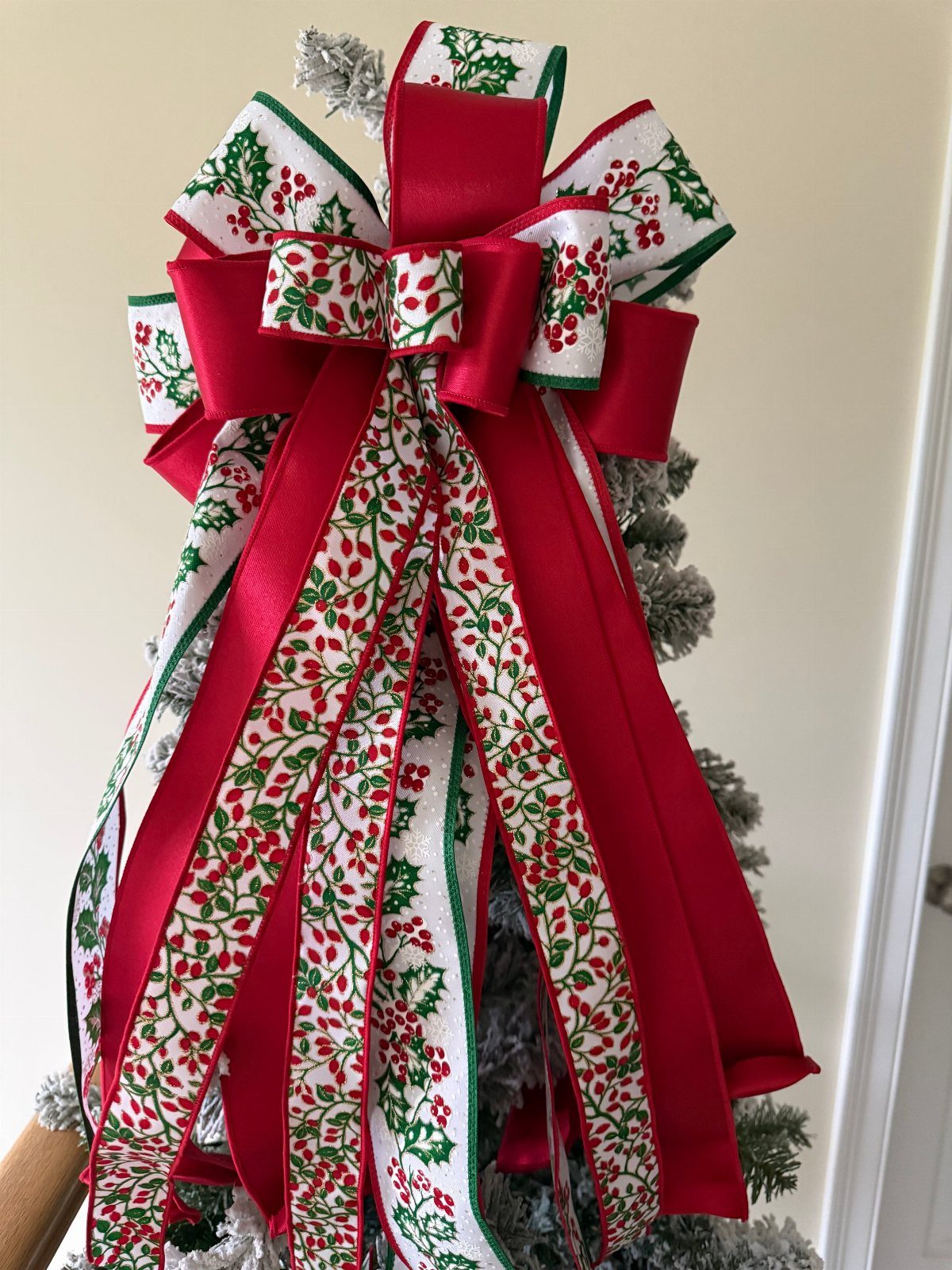
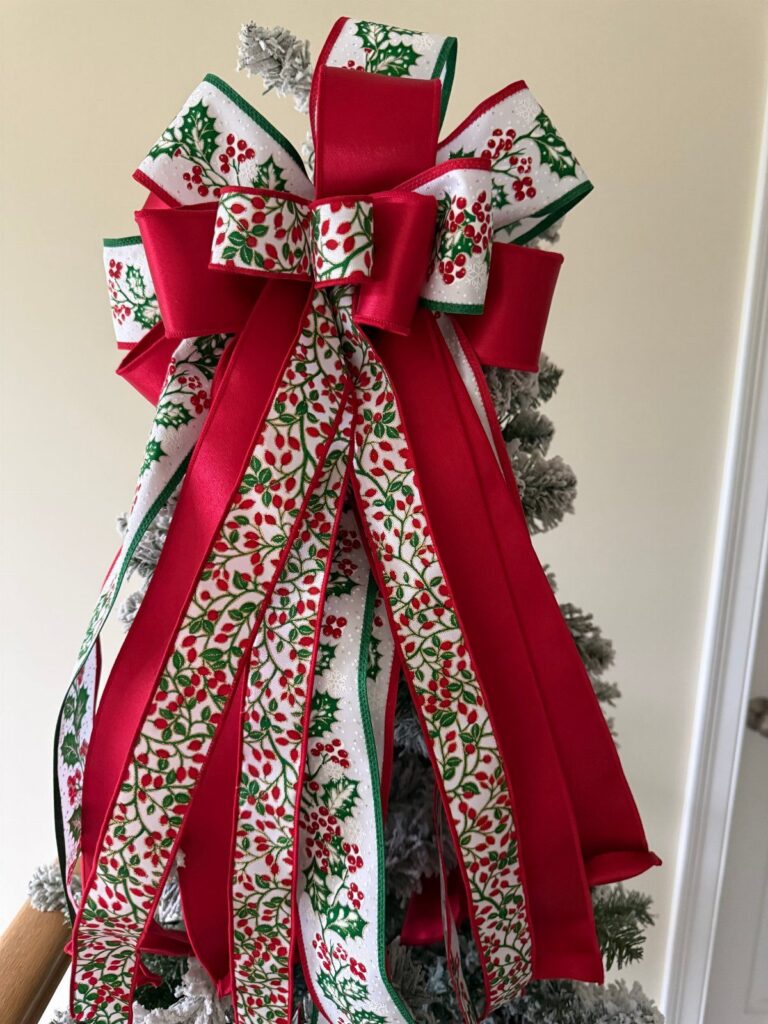
Volume is the draw here: a bow with many loops fills out into a full, fluffy shape that can stand in for a tree topper.
Red and white pattern against a frosted tree gives strong contrast, and the long streamers add movement down the branches.
For a bow this big, I would pick one pattern and skip busy ornaments nearby.
Let the streamers hang loose or tuck them into the branches, whichever you like better. Wired ribbon holds loops open best.
3. Burlap Bows Paired with Pinecones
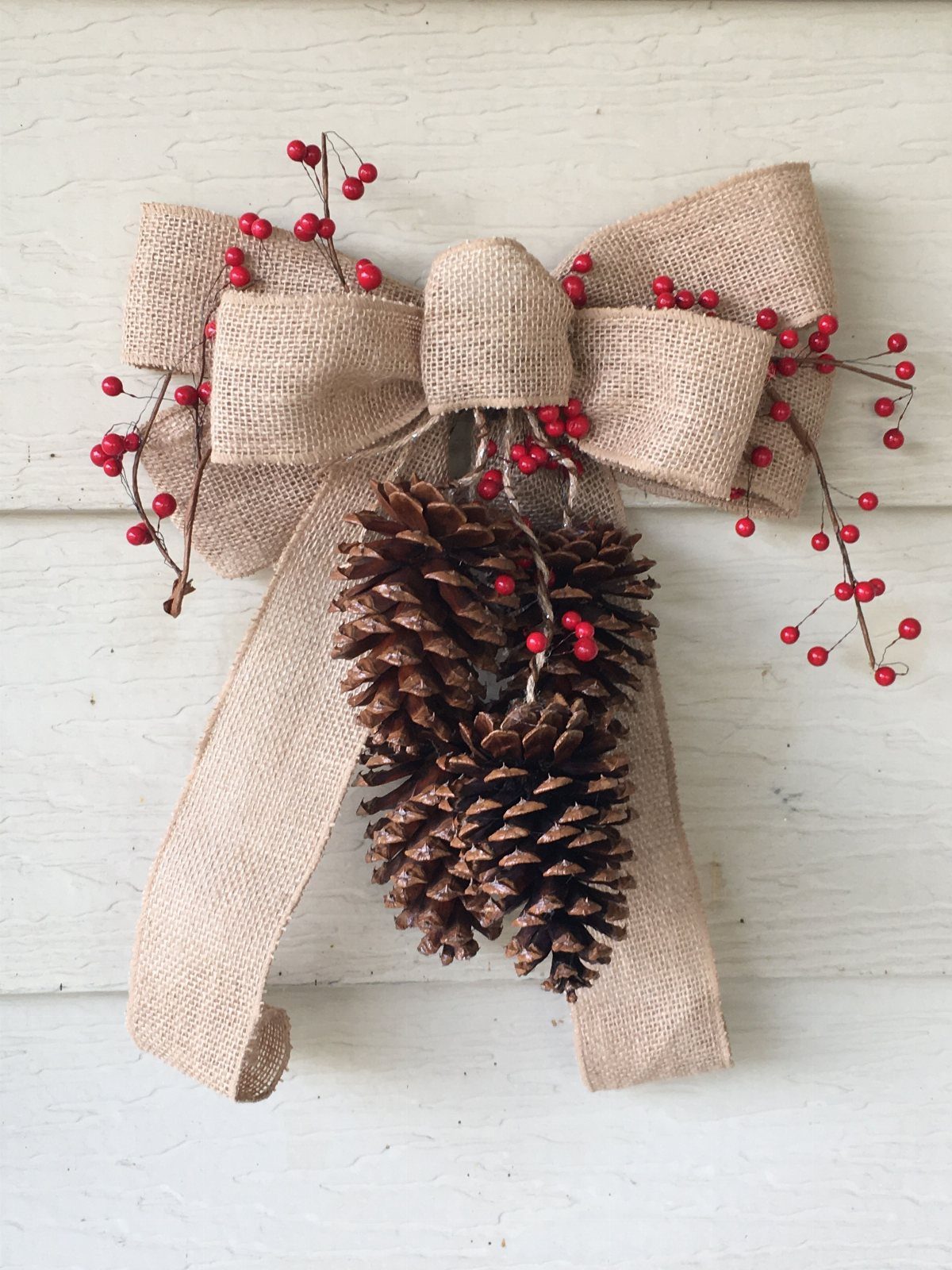
Burlap makes a relaxed, rustic bow, and pinecones are the obvious partner.
Wire 2 cones to the center knot, then add a few red berry picks for color. Both stay cheap and easy to find.
Burlap frays, so a little loose edge is part of the charm.
If it bothers you, fold the edges under before tying. Hang these on a tree with plain lights, and they look right at home on white wood walls too.
4. Striped Ribbon Bows
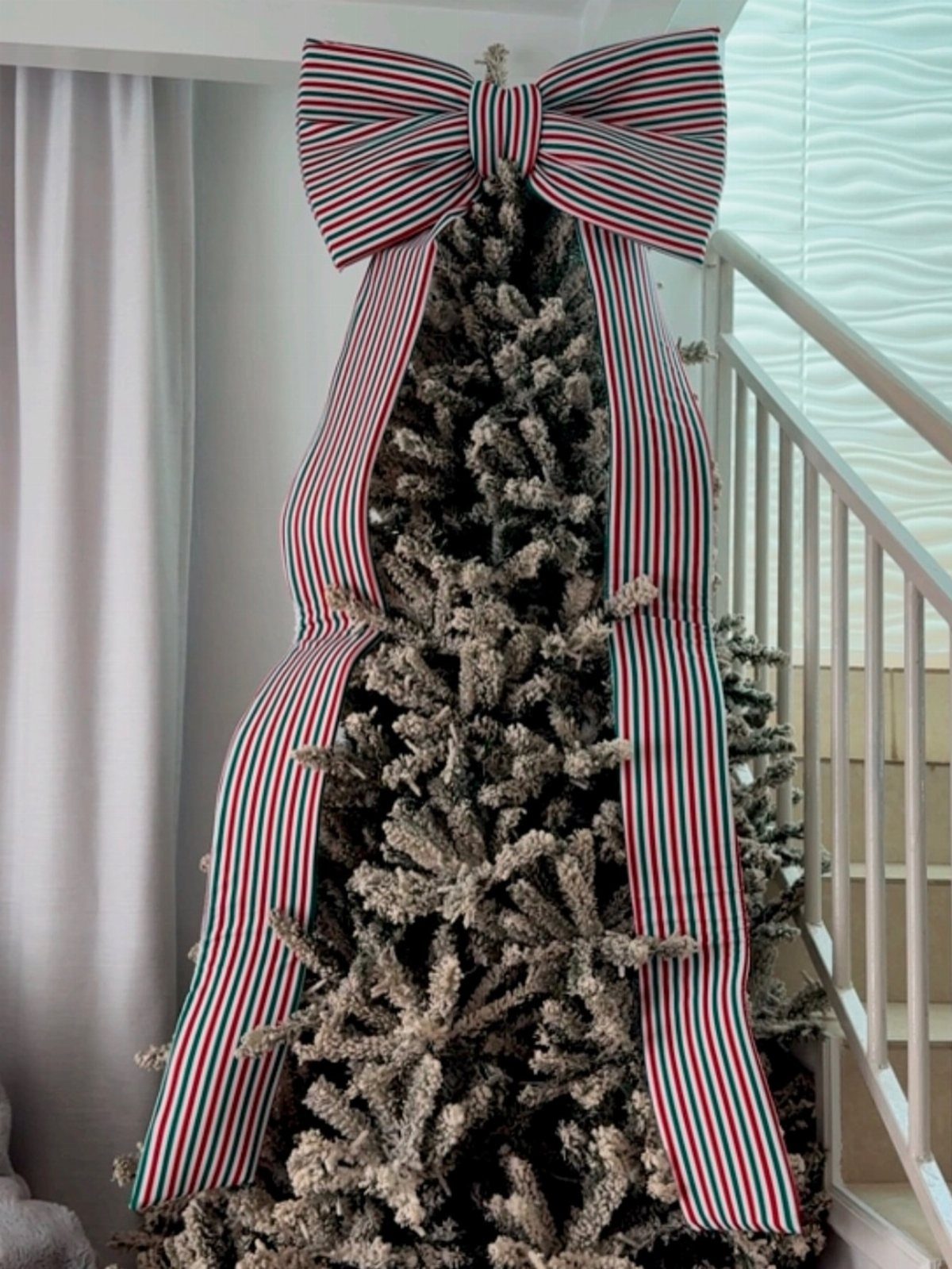
Bold stripes in red, white, and green turn a single bow into the tree’s focal point.
A large striped bow on top of a frosted tree needs almost nothing else around it, which makes it a good pick for a budget-minded host.
Choose a wide ribbon so the stripes stay readable from across the room.
I prefer one big bow over many small ones, because stripes get fussy when they repeat. Fasten it to the top branches with floral wire so it sits upright.
5. Gold Satin Bows
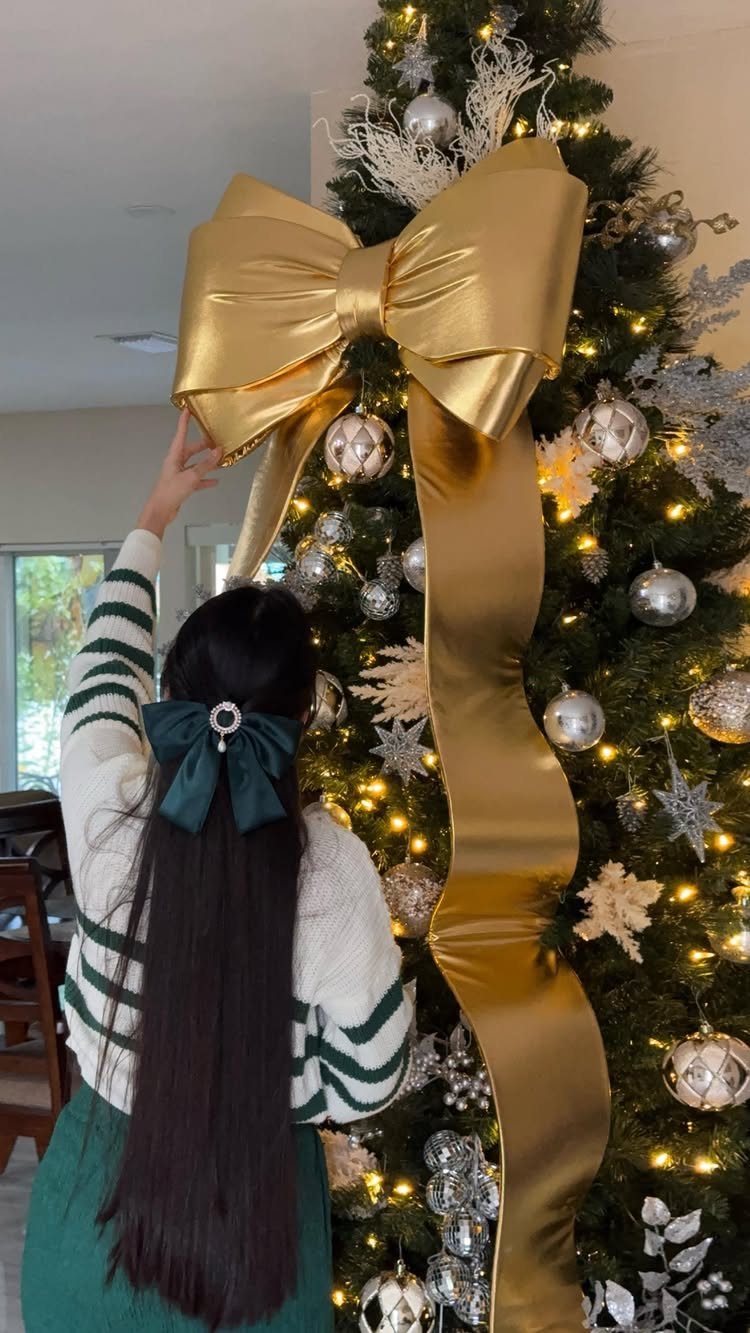
A large gold satin bow adds an elegant, festive touch, and satin’s sheen picks up tree lights nicely. Because it is big, one or two placed where the eye lands do more than a dozen small ones.
Shape the loops with your hands once the bow is on the tree, fluffing them until they sit evenly.
Satin slips, so secure each bow with wire or a twist tie around a sturdy branch rather than just hooking it on.
Easy Decorating Tips
Bows work best as gap fillers.
Scan the tree from a few steps back, find the dark holes between ornaments, and set a bow in each one. That adds interest without crowding the branches.
Mixing ribbons in one bow is an easy way to get a layered look. Red mesh, red and green plaid, and gold glittery burlap tied together make a single bow with plenty of texture.
Check the bow colors against your ornaments before you tie anything.
Pull one ornament off the tree and hold the ribbon next to it. If the two fight, swap the ribbon rather than adding more decorations to compensate.
The same bow also works on a mantel, door, or window, so one extra makes the whole room match.
Materials for Bows
Velvet, burlap, satin, and wired ribbon each behave differently, so pick the material before you pick the color. Velvet gives a soft, vintage texture.
Satin catches light. Wired ribbon holds a shape.
If shopping shortcuts appeal, premade sets exist. A 16-piece set of beige long-tail velvet bows is one example, and it saves you the tying.
Color should follow the tree. On a green tree, cream bows pair well with clusters of red berries, a few pinecones, and warm white lights, and the whole look stays soft instead of loud.
Champagne satin suits a flocked tree, especially with silver ribbon alongside it.
Buy a little more ribbon than your first measurement suggests, since the tails and the practice bows use up more than you expect.
Placement of Bows
Decide first whether the bows spread out or gather in one place.
Spacing them evenly through the tree gives a steady, balanced look. Grouping them near the top makes a more dramatic one.
An oversized bow can replace a star. For that bare stretch near the top, a big sage green velvet bow with long, trailing tails does the job: it fills the gap and still looks light and easy.
Long tails give you another option: let them fall straight down the branches. Champagne satin used this way, in cascading vertical swirls from a big topper bow, ties the top of the tree to the rest of it.
Frequently Asked Questions
What types of ribbons are best for Christmas tree bows?
Material comes first: velvet for texture, burlap for rustic weight, satin for shine, wired ribbon when you need the loops to hold their shape.
Velvet has a soft, vintage pile, satin catches the tree lights, burlap looks rustic, and wired ribbon holds open loops best. Each one behaves differently once it’s tied, so match the material to the look you want.
How can I make my own Christmas tree bows?
Tie them from ribbon you already like and fasten each one to a branch with floral wire. A cheap, no-glue method uses 5 1/2-inch burlap ribbon (or any ribbon without wire), floral wire, and safety pins.
For a big, fluffy multi-loop bow, wired ribbon is easiest because the loops stay open. Add 20% to your measured length for the tails and the bows that don’t come out right the first time.