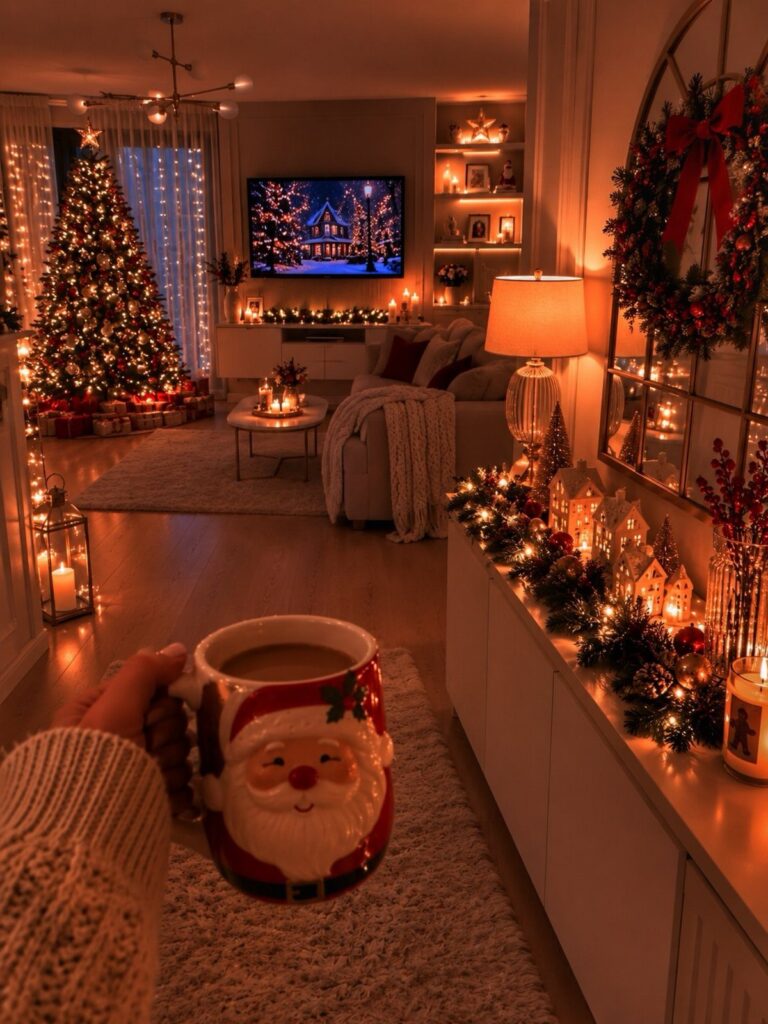
Room decides which of these classic decorations you use. A room can take a wreath on the door, stockings on the mantel, vintage ornaments on the tree, or all three.
The list runs from a single window candle to a full village display, and most of it sticks to red, green, and gold. Measure the floor space and ceiling height before you pick anything big.
1. Evergreen Wreaths
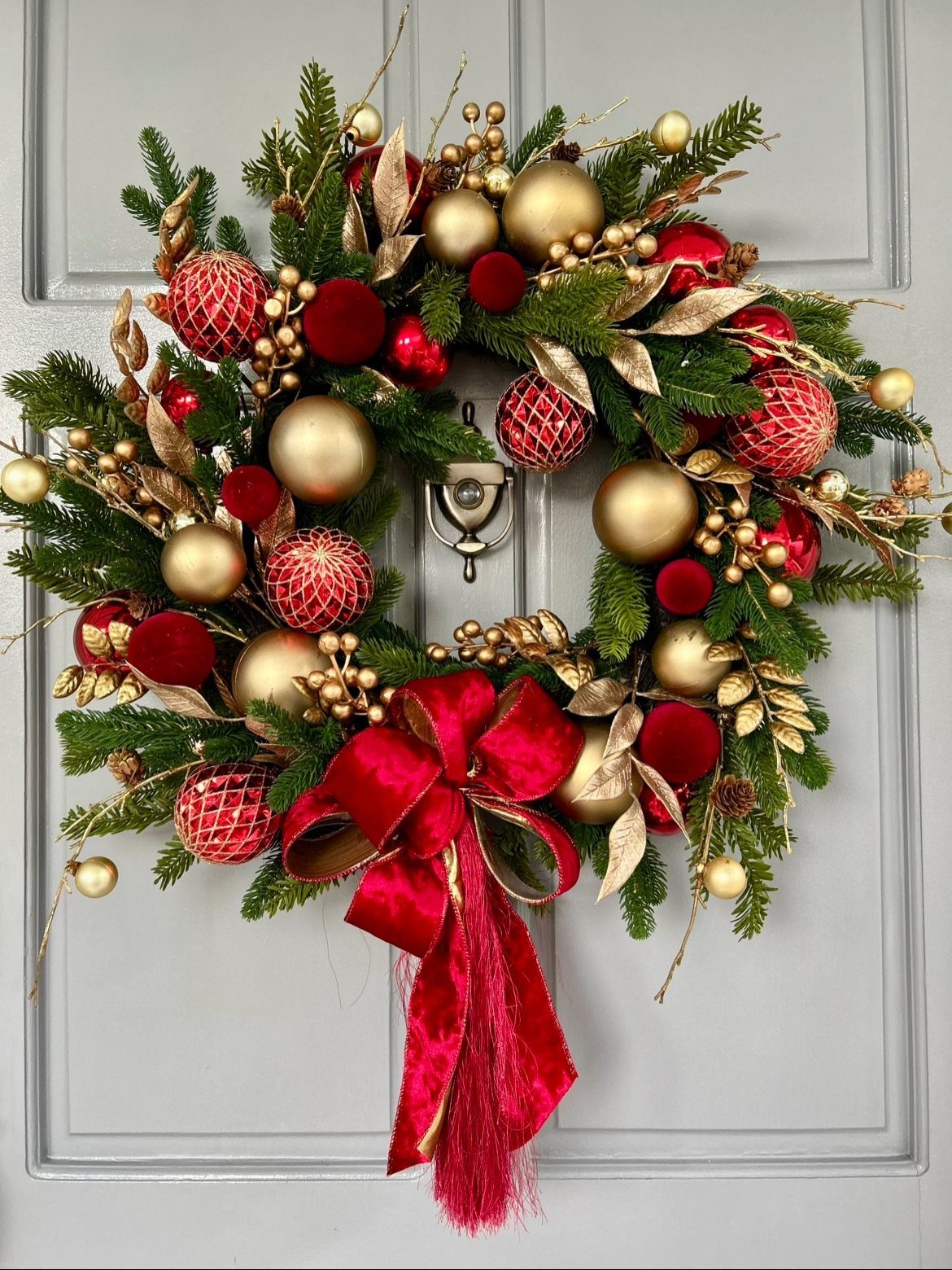
A wreath with a wide red velvet bow and a cluster of gold ornaments and red baubles gives a door its whole personality, and the bow does most of the work. Velvet reads richer than satin ribbon against grey paneling.
Tuck the baubles in among the greenery in small groups, with the gold set slightly apart from the red so neither color swallows the other.
Wire each ornament on, because a loose one will drop the first time the door swings shut.
2. Christmas Stockings
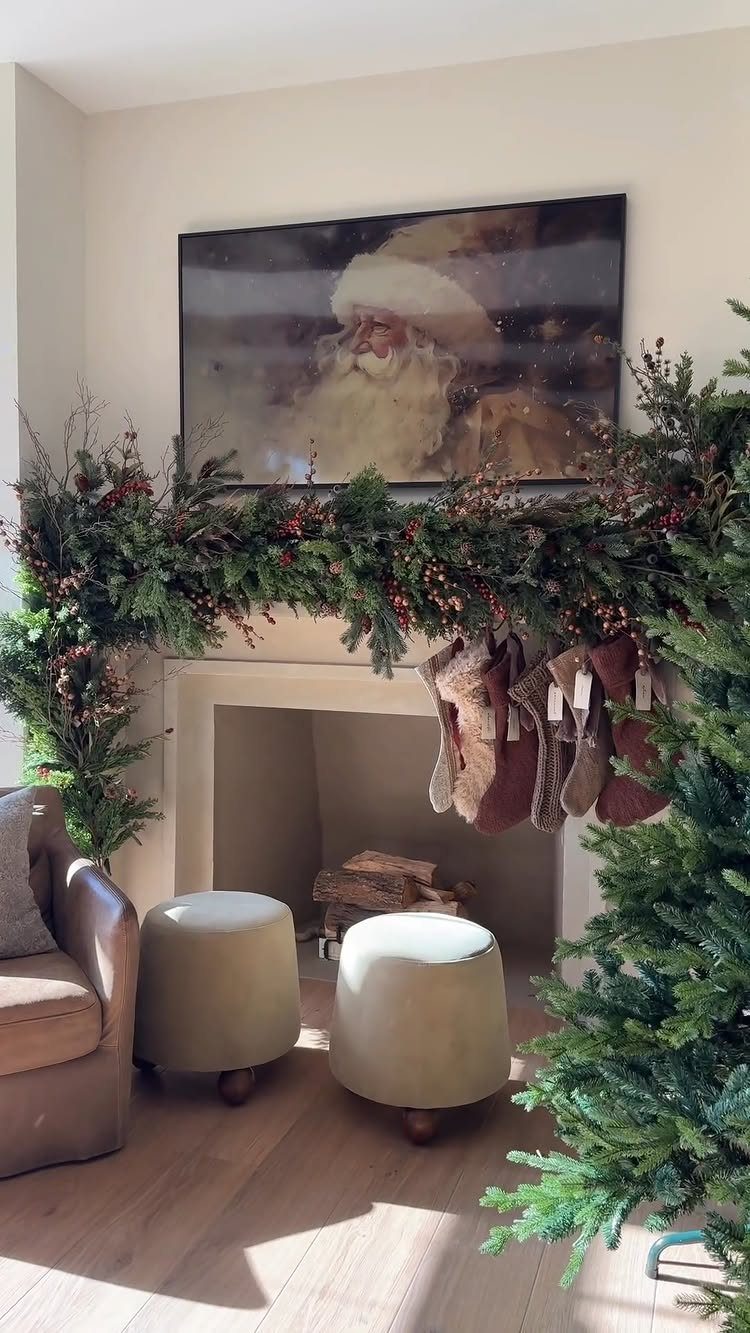
Stockings in a matching brown, hung in a row from a garland-covered mantel, look intentional in a way mismatched ones rarely do. Under a big painting, a row of stockings keeps the wall and the mantel in balance.
Weigh the garland down with red berry picks rather than adding more ornaments, and use sturdy mantel hooks so the stockings hang evenly.
Each stocking can carry a name tag or a small sprig of greenery. I would skip anything that competes with the painting.
3. Vintage Ornaments
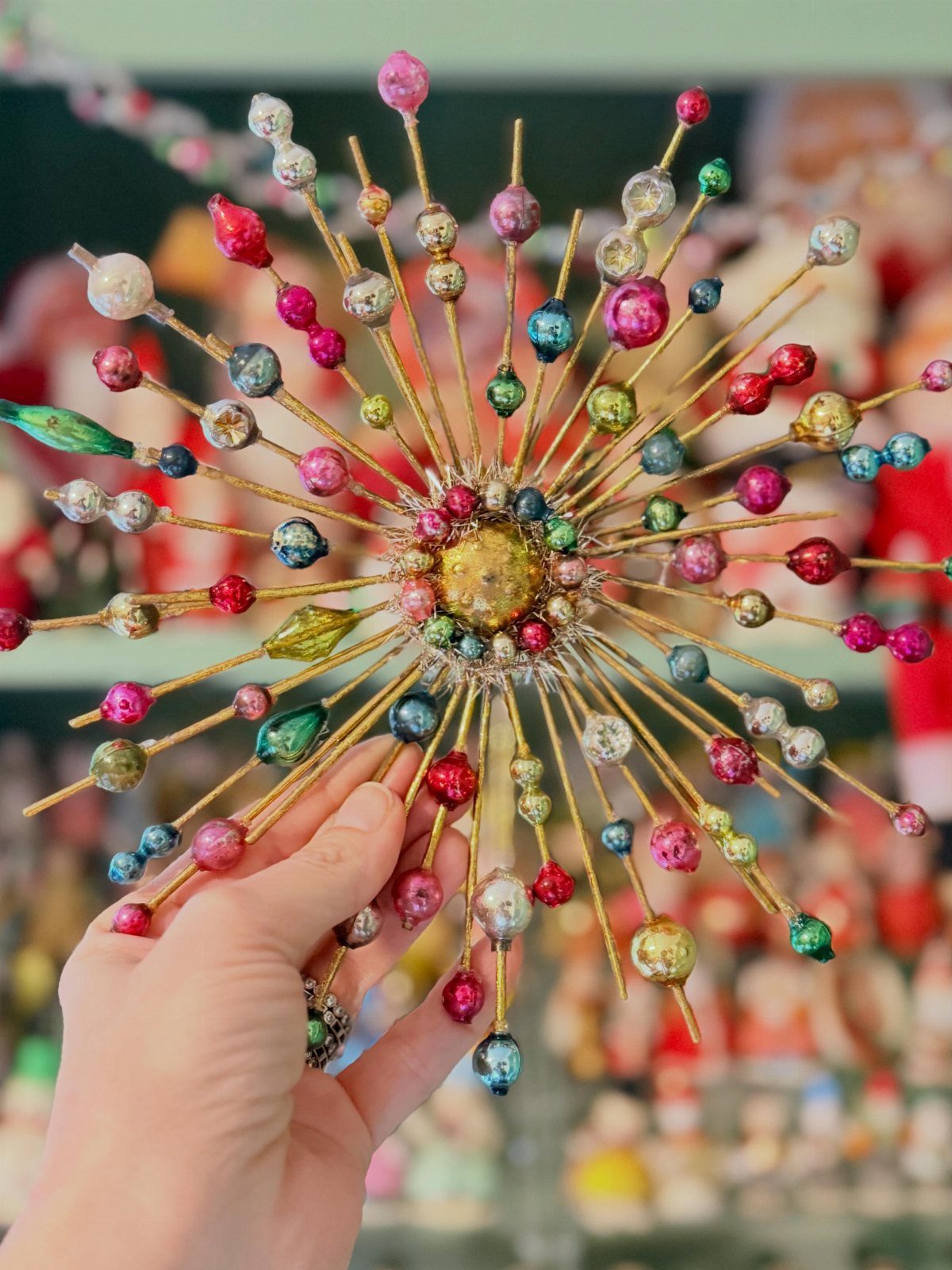
A starburst ornament with beaded glass spikes catches light from every angle, which is why one or two outshine a whole box of plain balls. The color mix is the charm: the beads give it a handmade, mid-century feel.
Hang these on sturdy branches near the front of the tree, where light reaches them and people can see the detail.
Thrift stores and estate sales are my first stop for old ones. Check the hanger and bead strands before you buy, since loose beads are hard to fix.
4. Nutcracker Displays
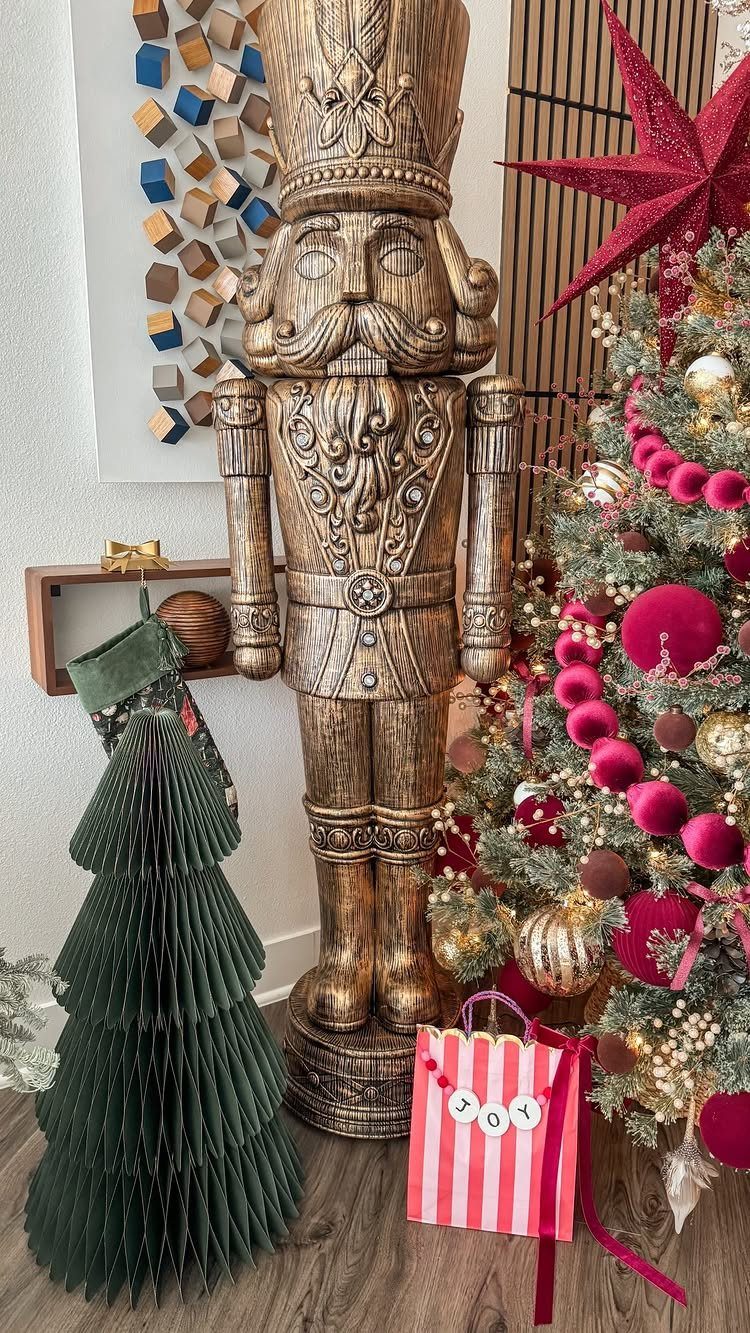
Placed beside a lit tree, a tall wooden nutcracker adds a standing figure that the tree alone cannot give, and it takes up only a corner of floor. One large figure beats a crowd of small ones.
Let it anchor a vignette: a stocking nearby, a small paper tree, a striped gift bag with "JOY" on it.
Odd numbers of items look best, and keeping the nutcracker’s red in step with the other pieces ties the corner together. Leave a little empty space around it.
5. Handmade Decorations

A reindeer made from twigs and twine costs almost nothing, and that is part of its appeal: the materials come from a backyard walk and a spool in the junk drawer.
The rough, natural look suits a plain tree or a package tied with brown paper.
Choose twigs of similar thickness so the antlers and body sit in proportion, and bind each joint with several tight wraps of twine. Make a batch of 6 or more in an afternoon, since the pieces look best as a group.
6. Festive Flowers and Foliage
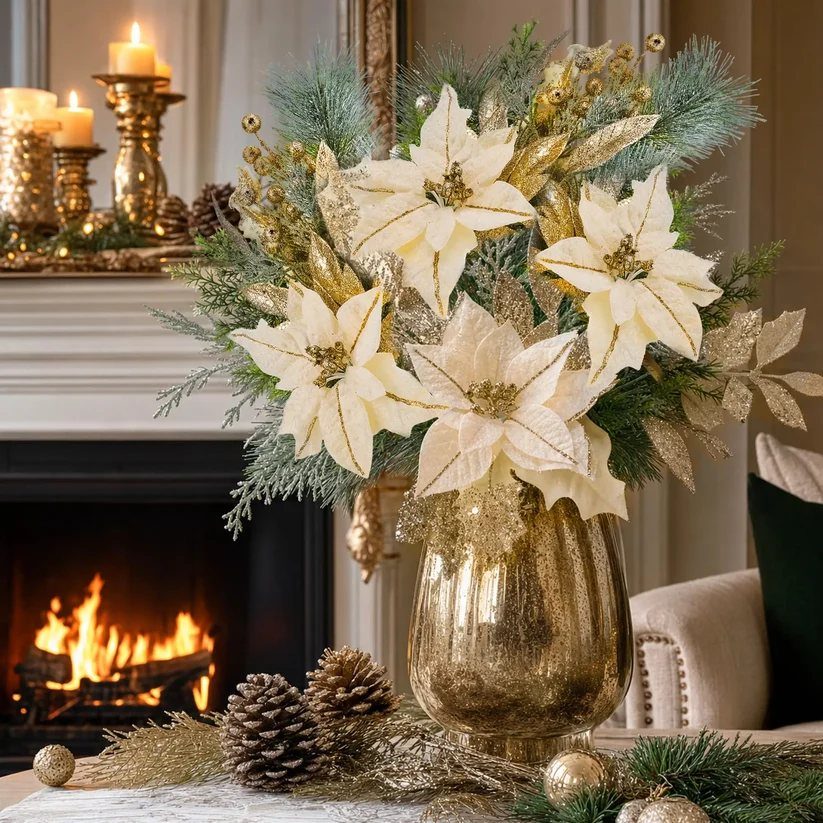
Cream poinsettias paired with evergreen foliage in a gold vase give a table a softer, quieter look than the usual red ones. The foliage fills out the arrangement and hides the stems.
Put the vase where firelight and candles can warm the metal, as on a mantel or a side table.
Cut the greens fresh and strip any needles that would sit below the water line. Poinsettias are sensitive to cold, so keep them away from drafty doors.
7. Window Candles
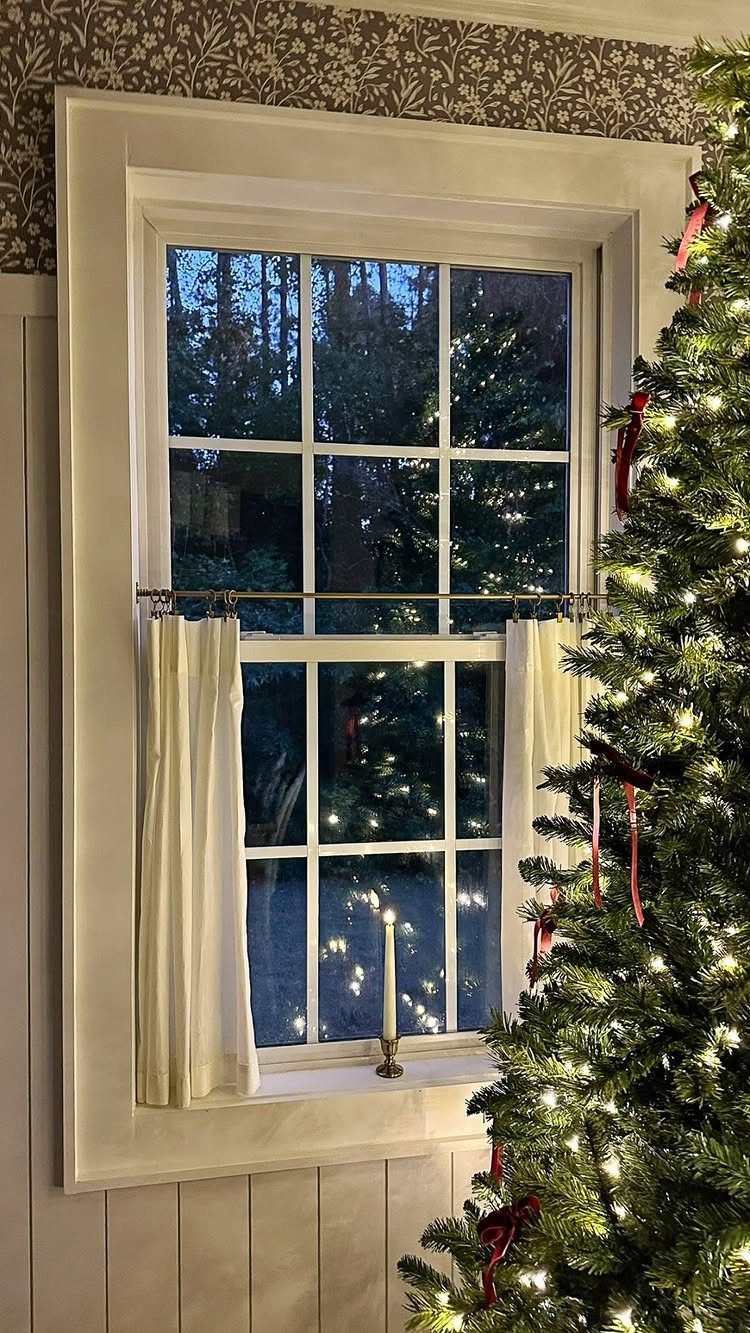
One white candle on a sill, lit at dusk beside the tree, does more than a row of them would. The single flame reads as a welcome to anyone walking up outside.
White curtains and trim keep the glow clean, so I would leave the sill otherwise bare. Set the candle well back from the fabric, and use a flameless one if the curtains hang close.
8. Cozy Classic Christmas Sofa Additions
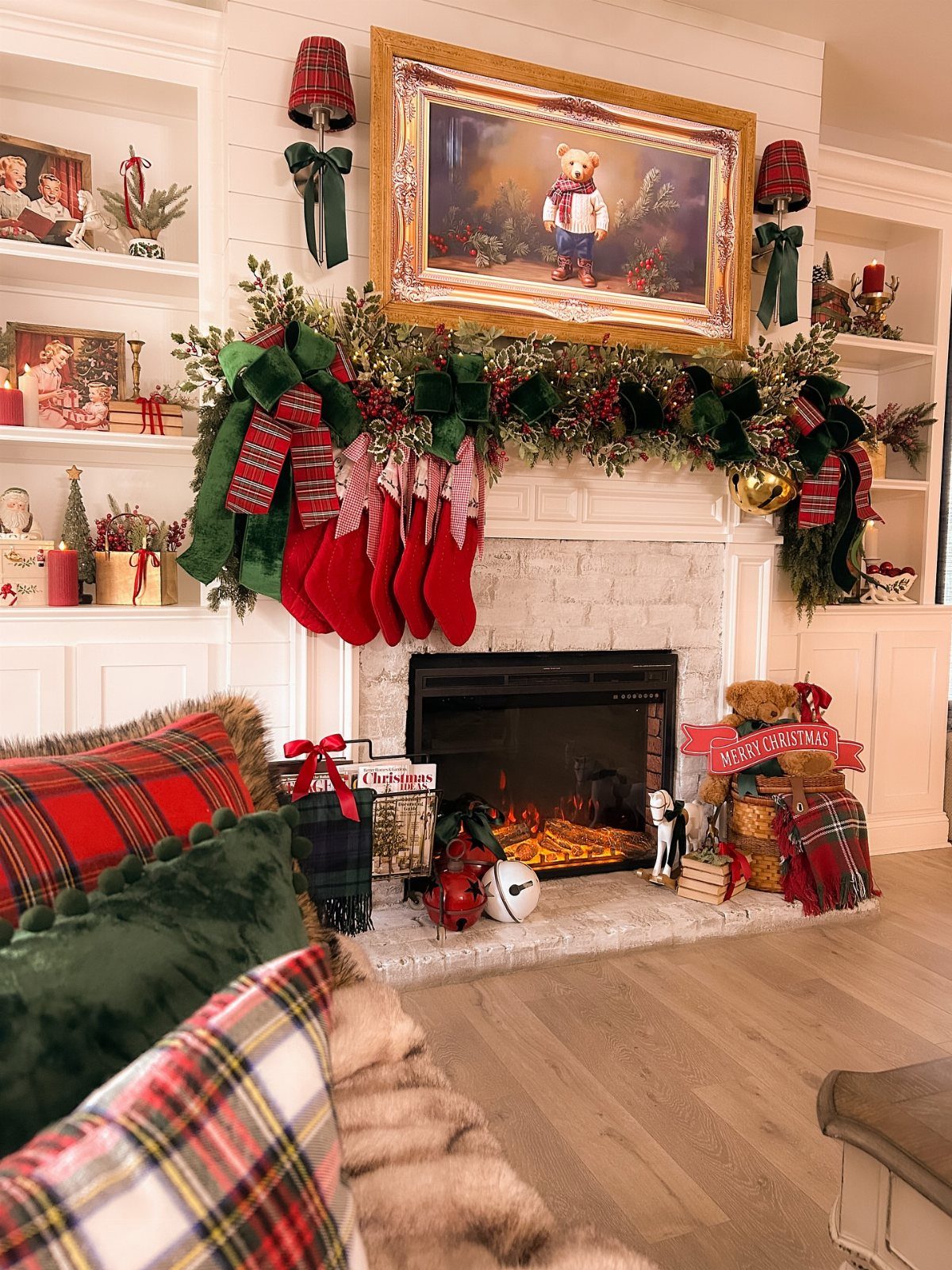
Red and green plaid pillows are the quickest way to make a sofa look Christmas-ready, and they cost far less than new furniture.
The pattern is traditional enough that it sits easily beside a fireplace, a sign, and a mantel full of greenery.
I would use 2 or 3 pillows and let the plaid be the one busy pattern on the sofa. Keep the rest of the cushions in solid colors, and the pillows will store flat for next year.
9. Traditional Christmas Tree
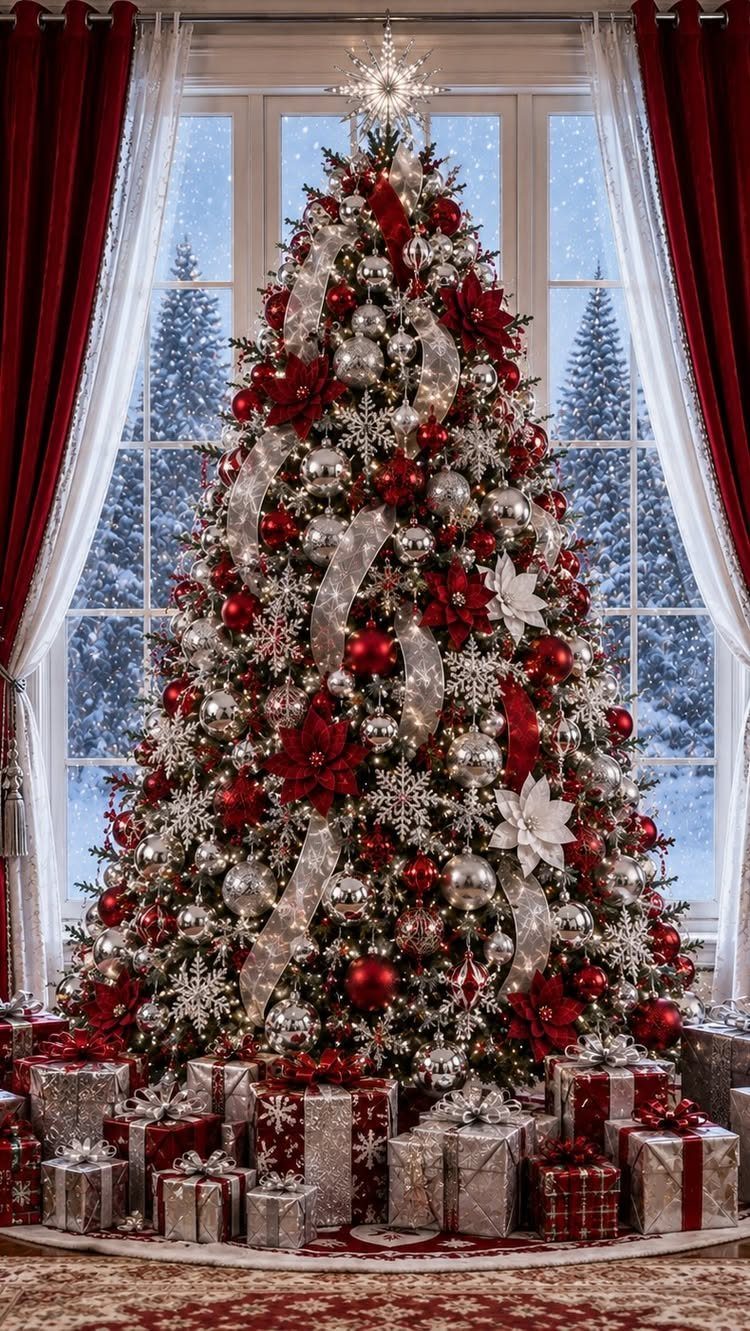
Red and silver ornaments with ribbon and a star topper give a tree a bright, polished look, and silver keeps all that red from feeling heavy. Gifts wrapped and stacked underneath finish the picture.
Place the ribbon in loops through the branches before the ornaments go on, then fill in with baubles.
Put the star on first if the tree is tall, since reaching over a full tree knocks things loose. A tree beside a window with red curtains is hard to beat.
10. Red, Green, and Gold Palette
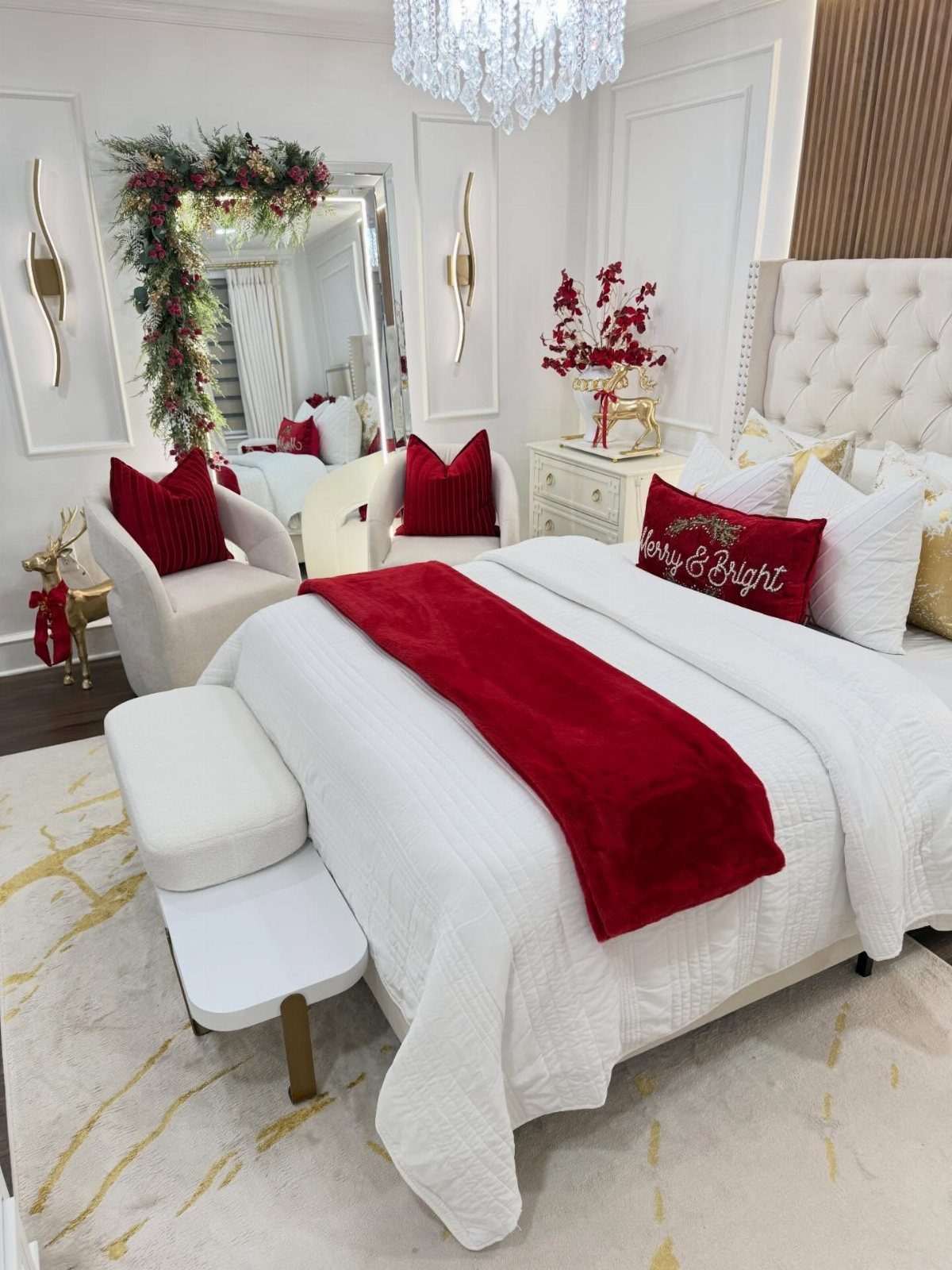
Red, green, and gold is the oldest Christmas color scheme for a reason: each color holds its own against white walls.
A red velvet blanket, a green garland over the mirror, and one gold deer is enough to do the job.
Give each color a different job.
Let red cover the soft things, green the greenery, and gold the small accents. Use gold sparingly, because 1 or 2 pieces glow while more start to compete.
11. Candlelit Centerpieces
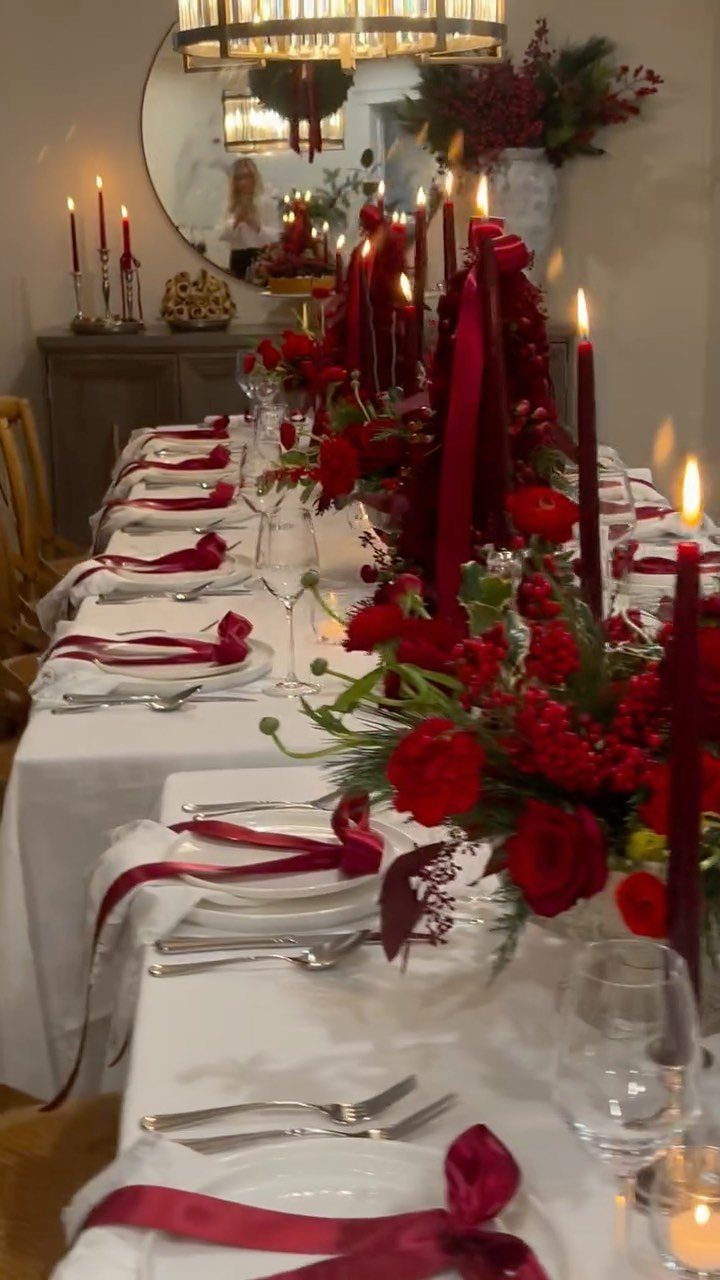
Red taper candles standing above a low arrangement of red flowers and green foliage give a long table a center line without blocking anyone’s view across it.
Tall candles put the flame near eye level, which is where the glow flatters faces.
Keep the flowers low so guests can talk over them.
A ribbon tied at each place setting echoes the red cheaply. Trim the wicks and set every taper in a holder that grips it firmly.
12. Garlands on Staircases
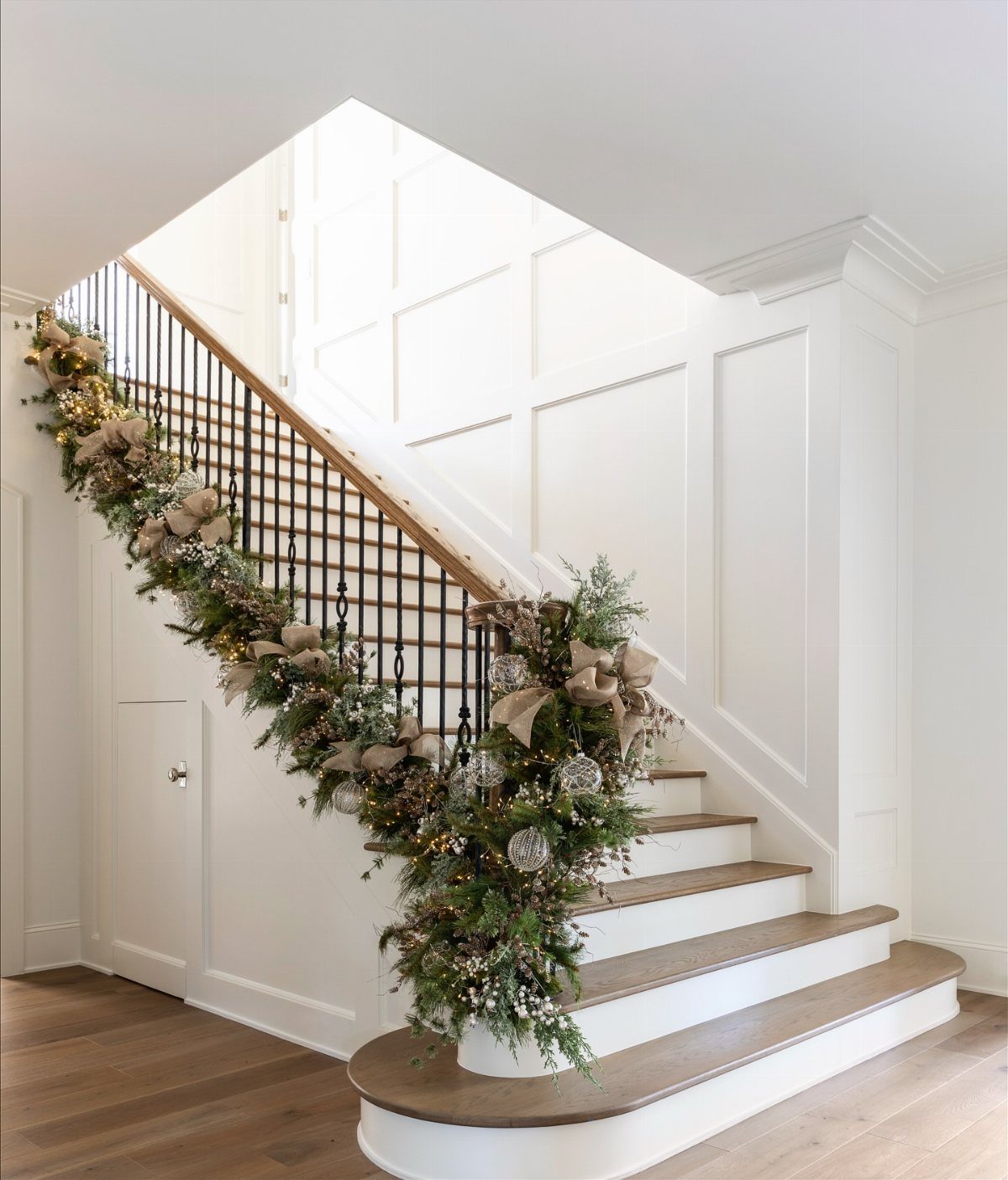
A full evergreen garland on a white staircase looks best when it follows the railing in generous swags rather than a straight line. Burlap bows and fairy lights keep it rustic and warm, and the wood treads add to that.
Fasten the garland at the top, then work down, securing it with wire or clear hooks so it holds its swag and doesn’t sag.
Tuck the light strand into the greenery as you go. Add the bows last, spacing them evenly.
13. Christmas Village Displays
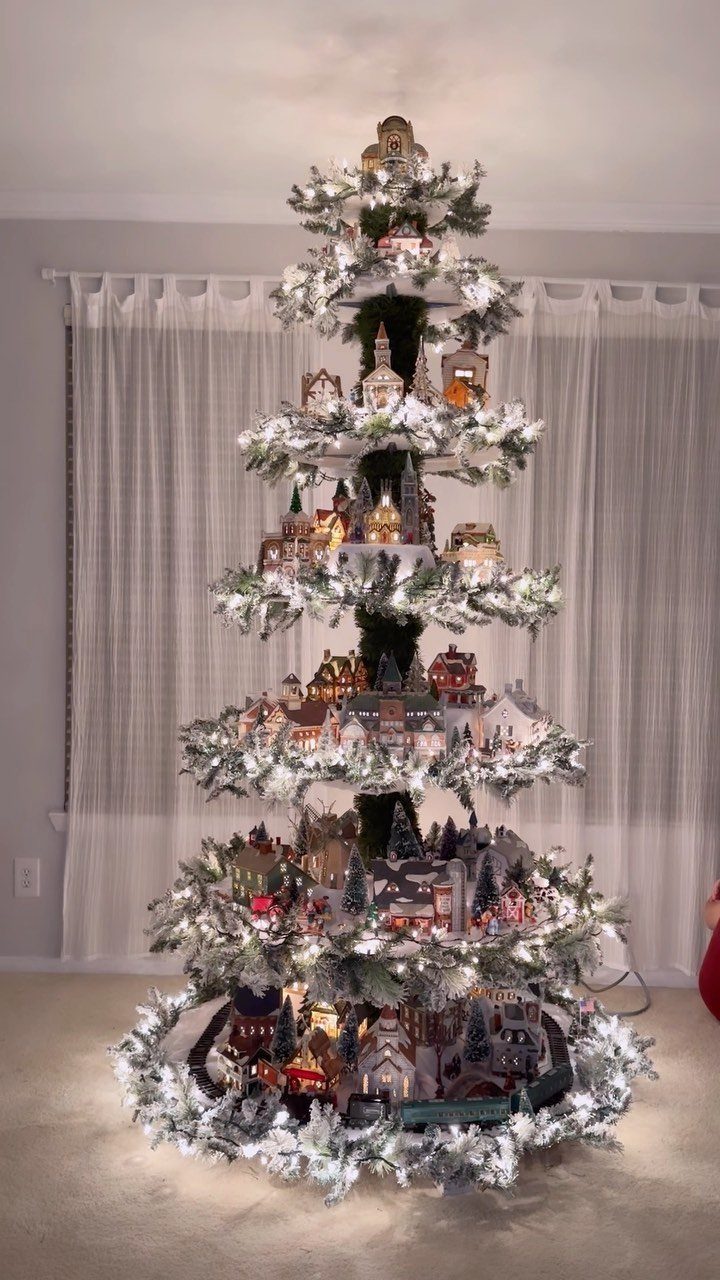
A tiered tree dressed in snowy branches, with a lit miniature house on every level and a train circling below, turns a corner of the room into a small town.
Houses are what make it feel nostalgic, and glowing windows do the most work after dark.
Give each tier its own cluster of houses and leave a little space between them, so the eye can travel down the levels. Run the train around the base, where it reads as the town’s edge.
Keep the lights warm and let the white curtains stay plain behind it. I would add nothing else to that corner.
Choosing a Christmas Tree
Real or artificial, the classic pick is a large fir, spruce, or pine, and a good faux tree can look just as good if a real one is impractical for your space.
Measure the room before you shop, including the ceiling height and the floor space around the spot you have in mind.
A big, classic fir suits a room with height to spare. In a small apartment or on a side table, a tabletop tree in a metallic champagne finish gives you the glow without eating the floor.
For a traditional look, I would dress a full fir with twinkling lights, beaded garlands in red, green, and silver or gold, and painted plaid ornaments. Set the lights before anything else, so the garland has something to sit against.
Creating a Festive Atmosphere
Scent does a lot of the work that objects can’t. A bowl of orange slices, a few dried sprigs, or a classic winter candle makes a room feel familiar and warm before anyone notices what is on the shelves.
Fresh flowers and plants add life too. Poinsettias, amaryllis, and holly berries all suit the season, and a few vases set at deliberate spots give the eye places to land.
Restraint helps. One wreath indoors, two bleached wood nutcrackers, and a handful of burnished bells say plenty, so you can skip the themed knickknack on every surface.
Real or realistic greenery both work, and either one gives a home an indoor-outdoor feel.
Incorporating Vintage Elements
Vintage-style pieces sit well in a classic scheme: retro tinsel, a satin tartan tree skirt, tartan ribbon woven through a garland. Layer that ribbon with greens, pine cones, and winterberry on a wreath for a full, finished look.
With no inherited collection to draw from, Etsy and eBay both list plenty of unusual vintage designs. Buy a few, not a boxful.
Keeping classic from looking dated comes down to editing. Pull one accessory off each surface; the greenery, candlelight, and heirloom pieces need that empty space to show.
I stick to one red, green, and gold palette and repeat it in every room. Favor materials that age well: wood, brass, glass, wool, velvet, and quality ribbon.
Frequently Asked Questions
What are some common Christmas decor items?
Trees, wreaths, ornaments, garlands, and stockings are the staples.
A bow-tied wreath, garland draped across the mantel, and stockings lined up along the fireplace give you the recognizable Christmas look without much else. Add candles, poinsettias, or a nutcracker for the finishing touches.
How to start decorating for Christmas?
Start with the tree, then build the rest of the rooms around one color scheme.
Measure the ceiling height and floor space before you choose a tree, and put the lights on before the garland or ornaments. Repeating the same palette in every room keeps everything looking connected.
What are some of the best vintage Christmas decorations?
Glass starburst ornaments, lengths of tinsel, and tartan fabric used as a tree skirt or woven into garland all read as mid-century vintage.
The faceted glass throws light in all directions, which means 2 or 3 starbursts do more visual work than a dozen solid-color ornaments.
Thrift stores, estate sales, Etsy, and eBay are good places to find them, and checking hangers and bead strands before buying saves frustration.
What are some classic and timeless Christmas themes?
Red paired with green and gold is the combination that predates most others, and it still works against neutral walls.
Give each color a job: red for soft things like blankets and pillows, green for garlands and greenery, and gold for small accents. Vintage-style pieces and natural materials such as wood, brass, glass, wool, and velvet also age well.