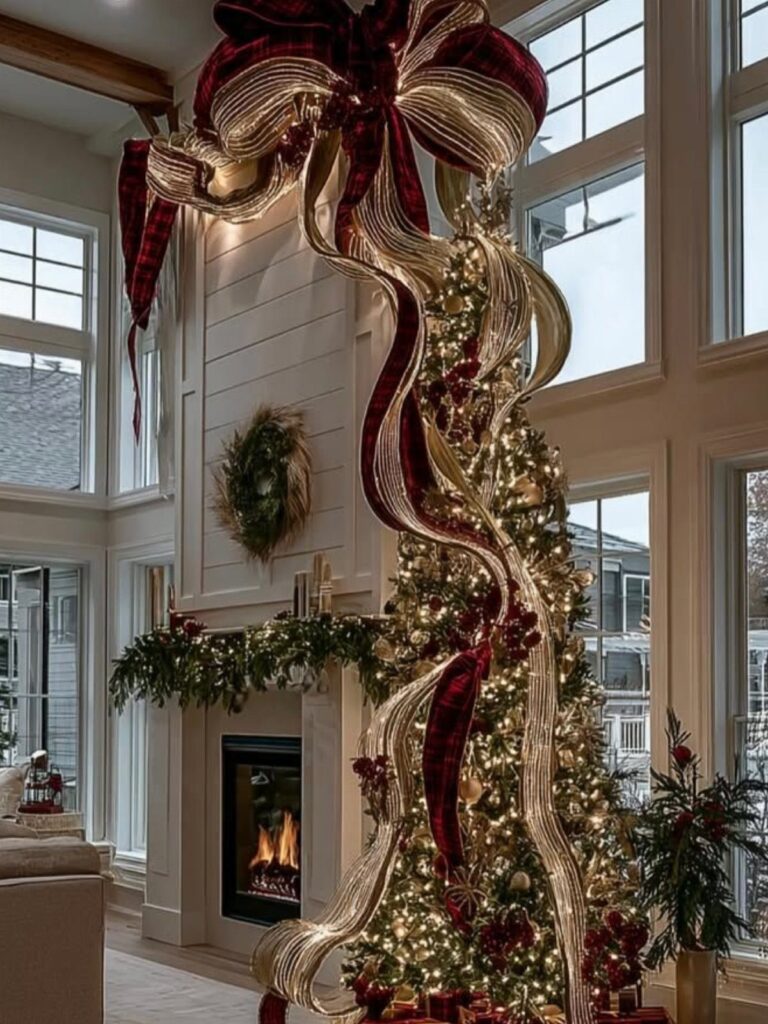
The ideas here run from simple vertical streamers and layered ribbons to oversized billows, a plaid weave and a sash bow at the center of the tree, and your pick depends on how much tree you have to fill and how much ribbon you can afford to buy.
A slim tree needs only a few spools, while a full-size tree swallows length fast, so buy extra of whichever style you choose.
1. Vertical Ribbon
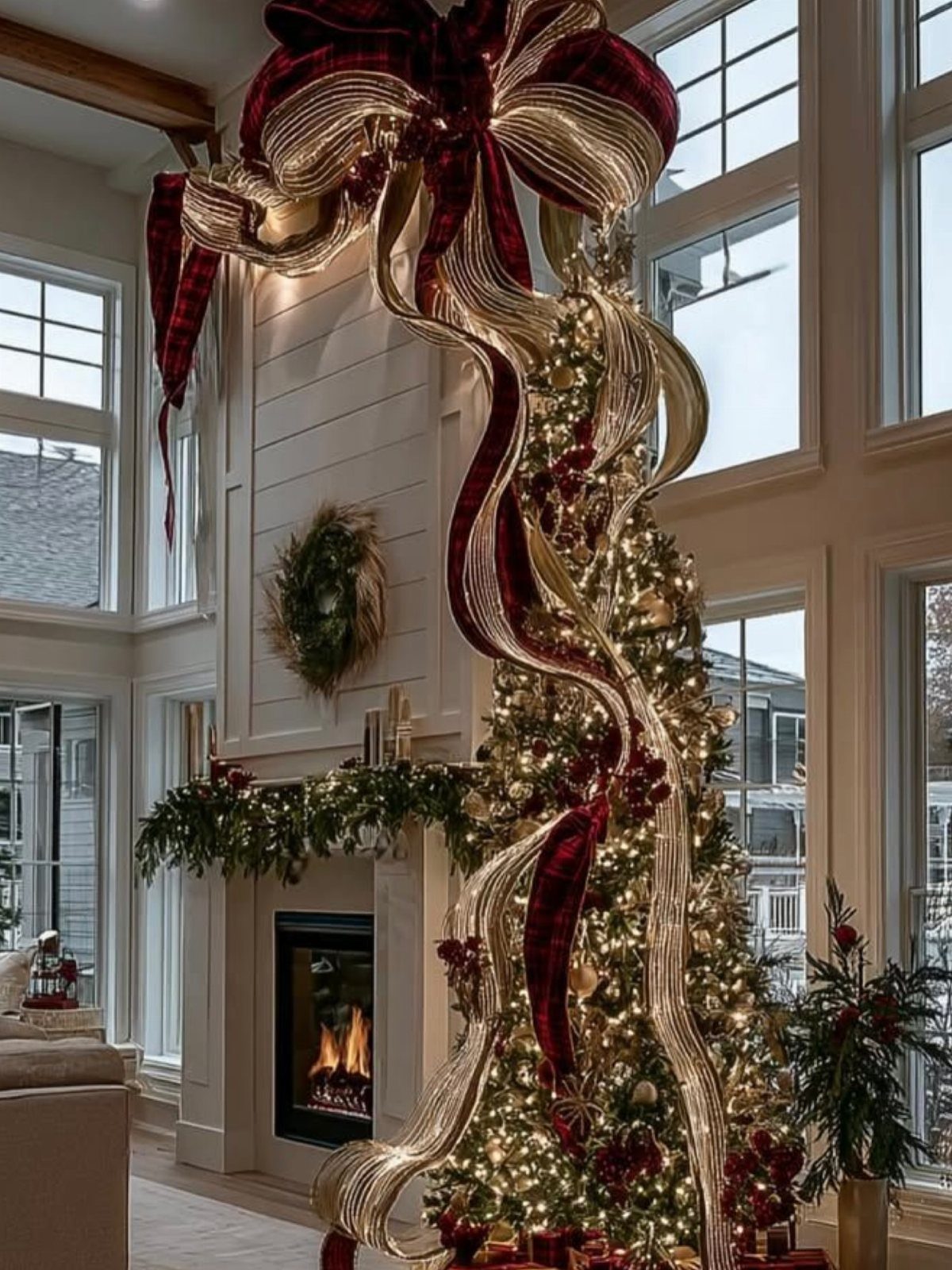
Ribbon that runs straight from the treetop to the bottom branches draws the eye upward and makes a tree look taller.
Wide burgundy ribbon with gold edging looks rich against green branches, and long, unbroken lines look cleaner than a lot of short ones.
Cut each length longer than you think you need, so the ends can tuck under the lowest branches. I prefer spacing the strands evenly around the tree, since one lopsided run is the first thing anyone notices.
2. Multiple Bows
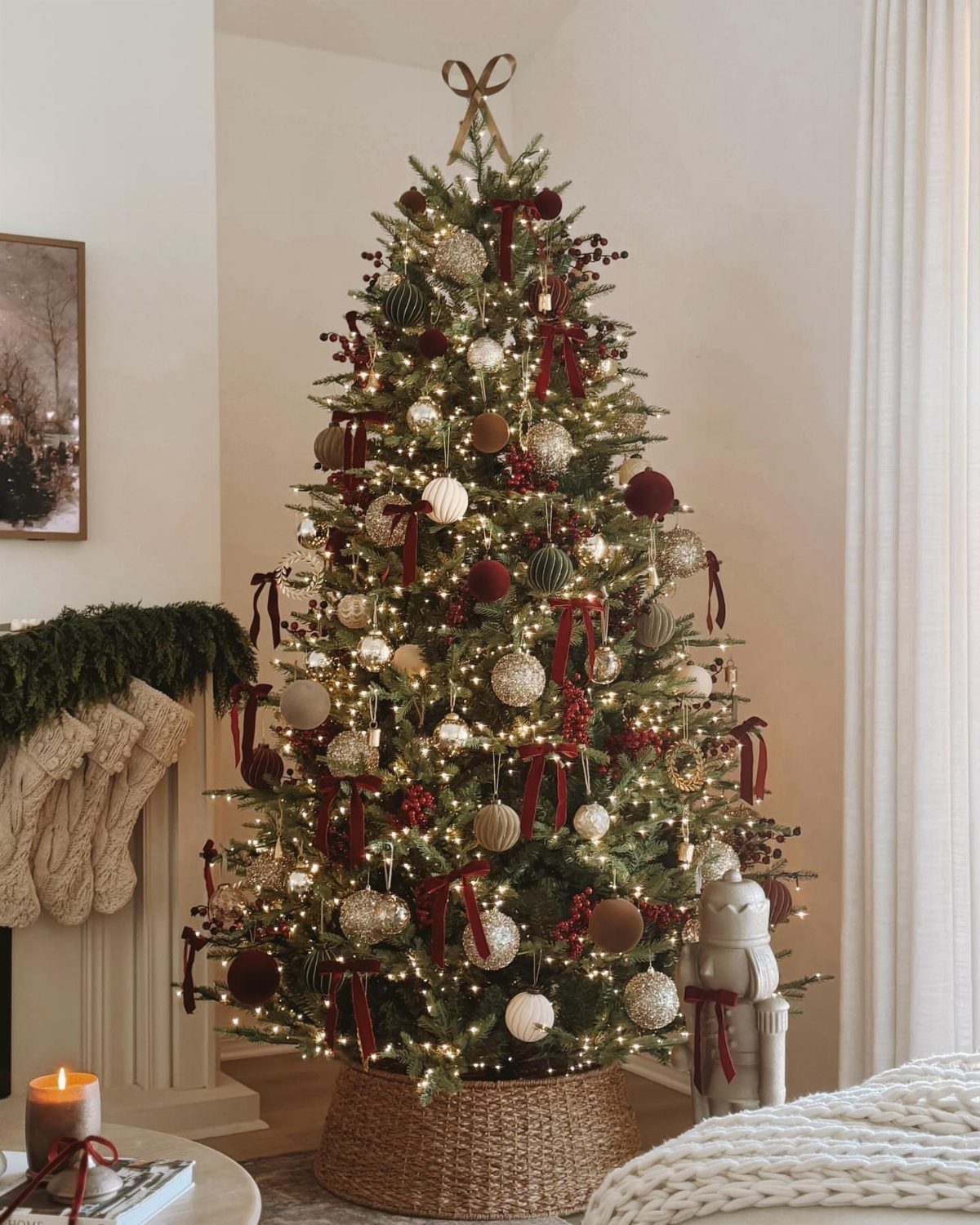
Red velvet bows scattered over the whole tree give it a tailored, gift-wrapped look.
Make every bow the same size, then spread them out, high, middle and low, so none clusters on one side.
Tie them on wired ribbon if you can, because it holds a full loop. A few more bows than seems right usually looks better than too few.
3. Layering Ribbons
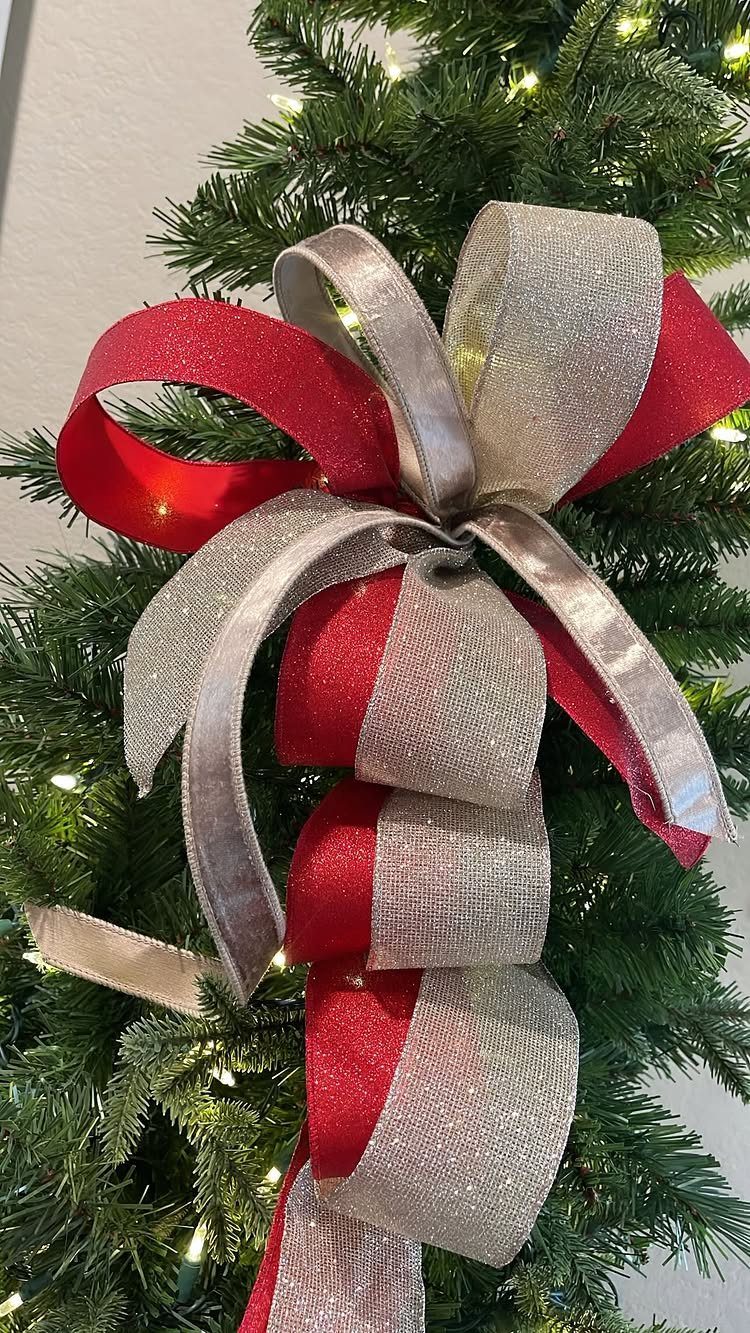
Stacking a wide ribbon over a narrower one, with one glittery and one plain, gives a single bow real depth. Red and silver is a simple pairing for layered ribbon, and the shimmer catches the lights.
Tie the wider ribbon first, set the thinner one on top, then knot them as one bow. Vary the width by at least a couple of inches so each layer shows.
I would keep the palette to 2 colors. Texture does the work here, so color doesn’t need to.
4. Ribbon Between Ornaments
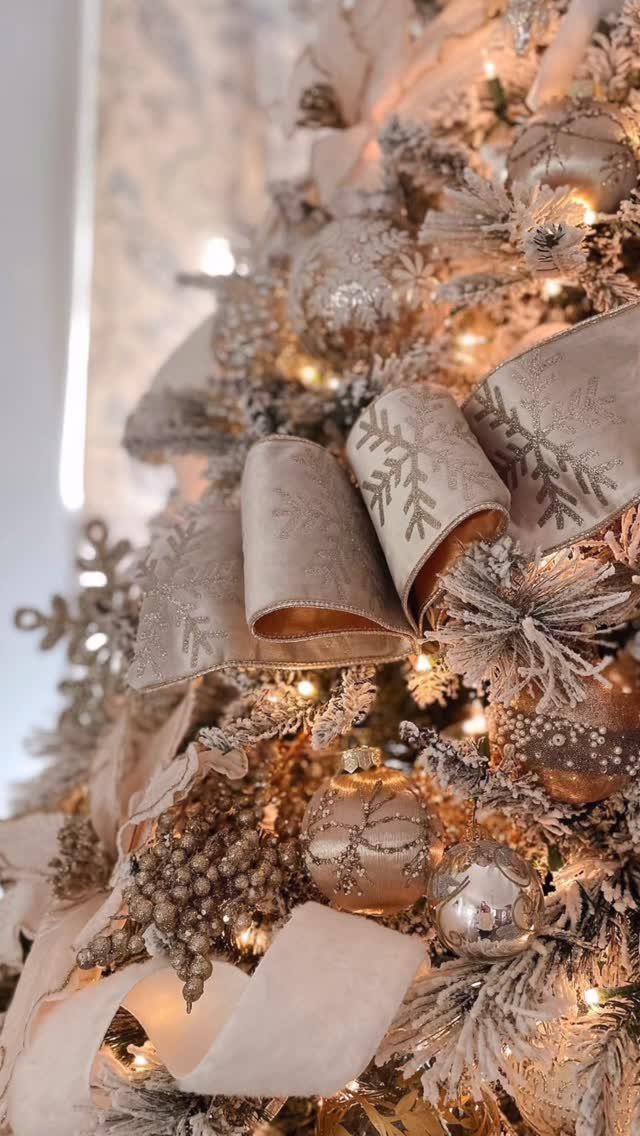
Gaps between ornaments are where a tree starts to look sparse, and ribbon fills them better than more baubles. On a flocked tree, wide champagne ribbon with a snowflake pattern adds pattern without crowding the ornaments.
Tuck the ribbon into the branches so it dips and rises between ornaments, rather than pulling it tight.
Use a ribbon that matches the ornament color, and it reads as part of one scheme. This is also a cheap fix when you’re short on ornaments.
5. Ribbon Matching Ornaments
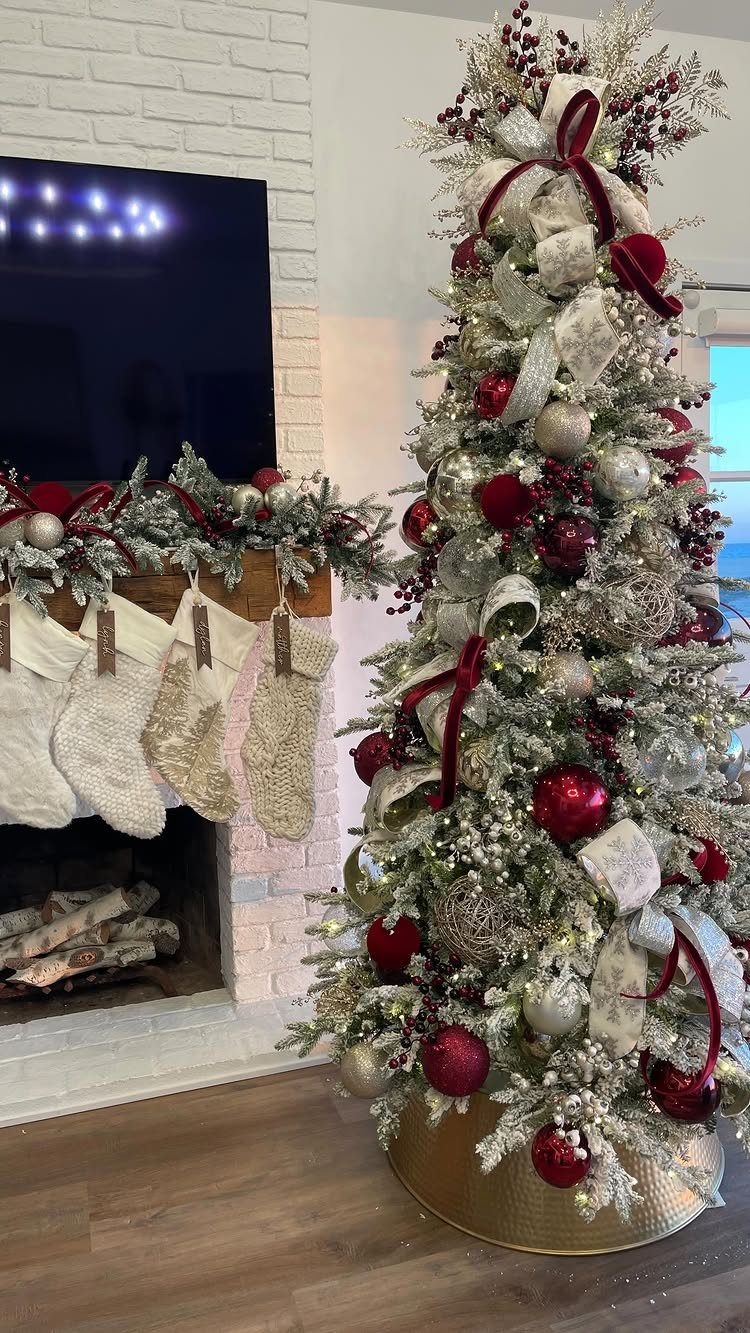
Choosing ribbon in the same colors as your ornaments is the easiest way to get a tree that looks planned. Red and silver ornaments with red and silver ribbon feel unified, and the tree pairs well with matching garland nearby.
Take an ornament to the store and hold it against the ribbon spools, since reds vary a lot from orange-leaning to blue-leaning. Buy the ribbon last, once the ornaments are chosen, so you match to something fixed.
6. Burlap Ribbon
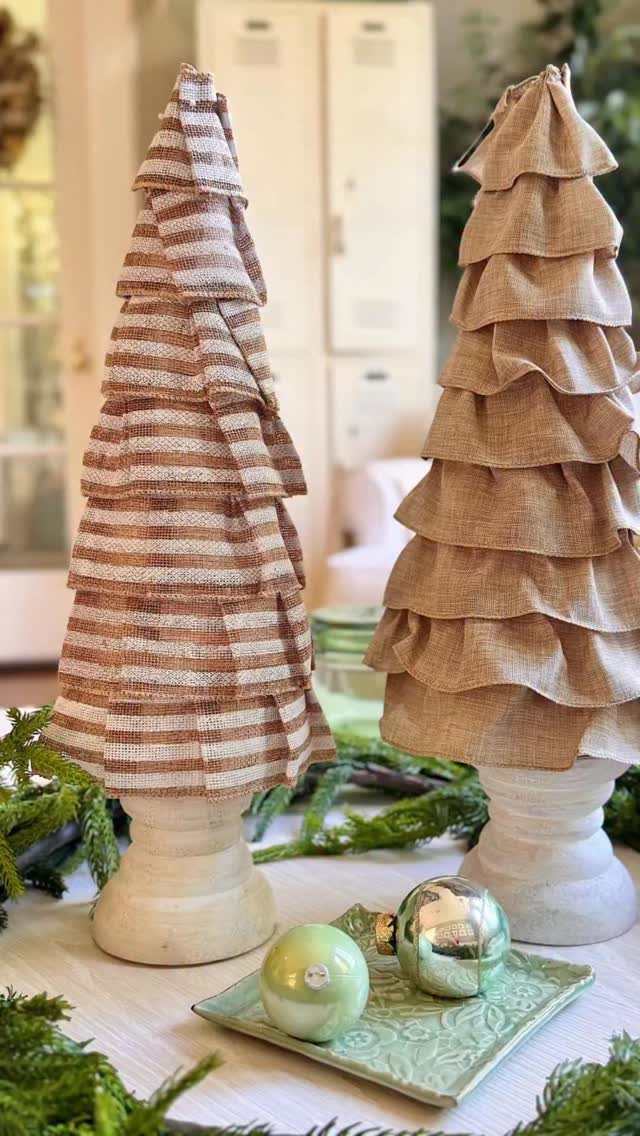
Burlap ribbon brings a rustic, woven texture that suits small tabletop trees as much as full-size ones. The striped and solid tan versions look good together, and cones wrapped in them make a pair of decorations that cost little.
For a real tree, run burlap in loose swags or bows rather than tight lines, because the coarse weave looks best relaxed.
Wired edges hold shape better and fray less. Pair it with plain green ornaments to keep the look natural.
7. Mixing Ribbon Materials
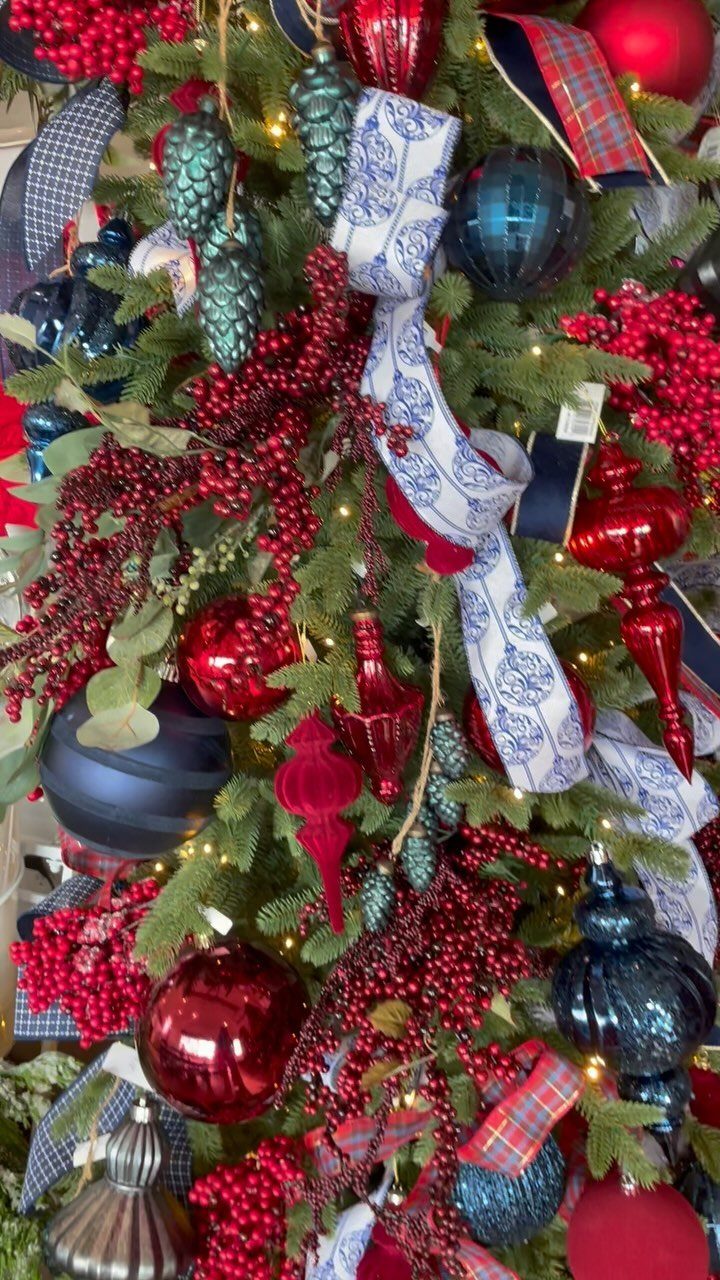
Plaid, solid and patterned ribbon on one tree only works when something ties them together, and here the blue, white and red repeat the ornaments and berries.
Stick to one color family, such as cream, champagne and gold, and vary the textures within it: velvet, satin, burlap, sheer organza.
Start with a plaid you love, then add a solid and a smaller pattern in shades pulled from it.
Bring the spools together in the store, or hold them up in daylight near a window, since colors that match under shop lights can drift apart at home.
I would use 3 ribbons at most. A fourth tends to look like leftovers.
8. Statement Ribbon
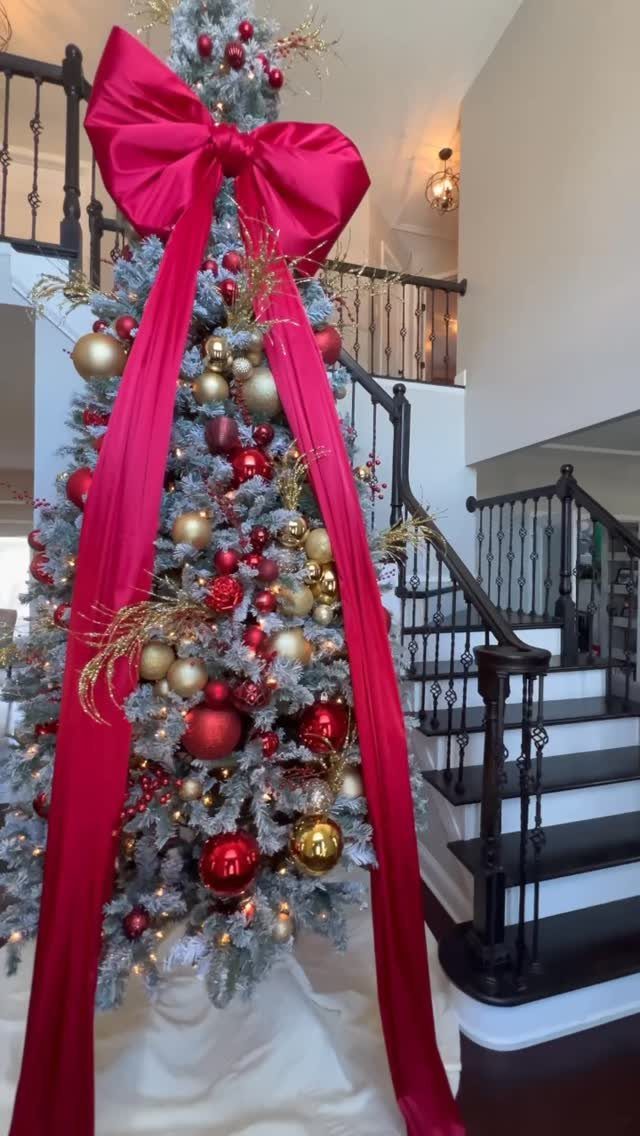
A single oversized red ribbon can anchor a whole tree, especially a flocked one where the white background gives it plenty of contrast. Red and gold ornaments then play a supporting role.
Choose the widest ribbon you can find, since width is what makes it read as a statement. Keep the rest of the decor quieter so the ribbon stays the focus.
Buy more than one roll. Running short halfway down the tree is a bigger problem than leftover ribbon.
9. Twisted Ribbon
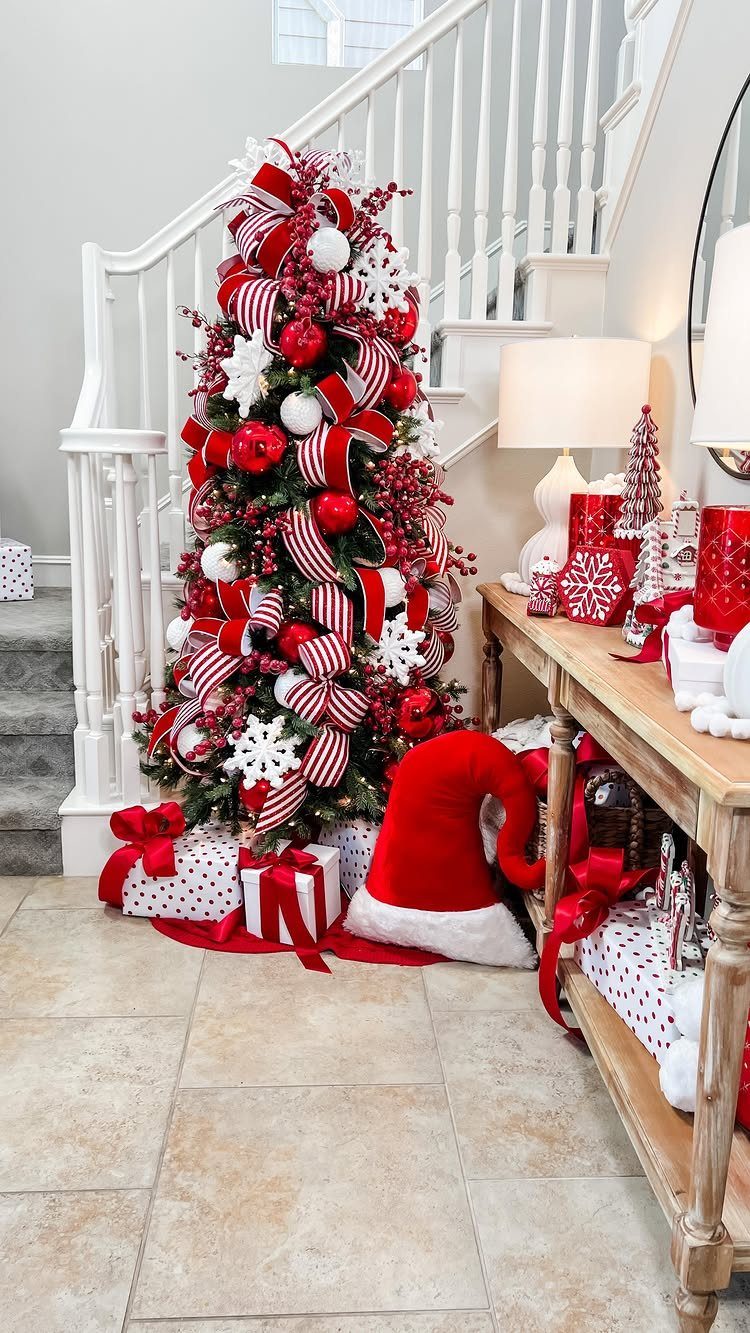
Red and white striped ribbon, spiraled around the branches instead of laid flat, gives the tree a candy-cane feel.
Hold the ribbon loosely and turn it as you wind it, so the twist stays visible from the front.
Push the cut end of each length well in toward the trunk and anchor it with floral wire so no tail shows. Red ornaments set between the twists keep the palette tight.
Stripes show the twist better than solid ribbon does, which is why I would choose them for this idea.
10. Velvet Ribbon

Velvet ribbon folded into loops can build a tiny tree all on its own, as in this blue and cream version with crystals and a star on top.
Velvet is soft and drapes well, so loops stay rounded rather than stiff.
Stack them in rows that shrink toward the top, and set the piece on a wood slice for a base. Candles and lights nearby make the crystals sparkle.
It suits a mantel or table better than a floor.
11. Individual Ribbon Billows
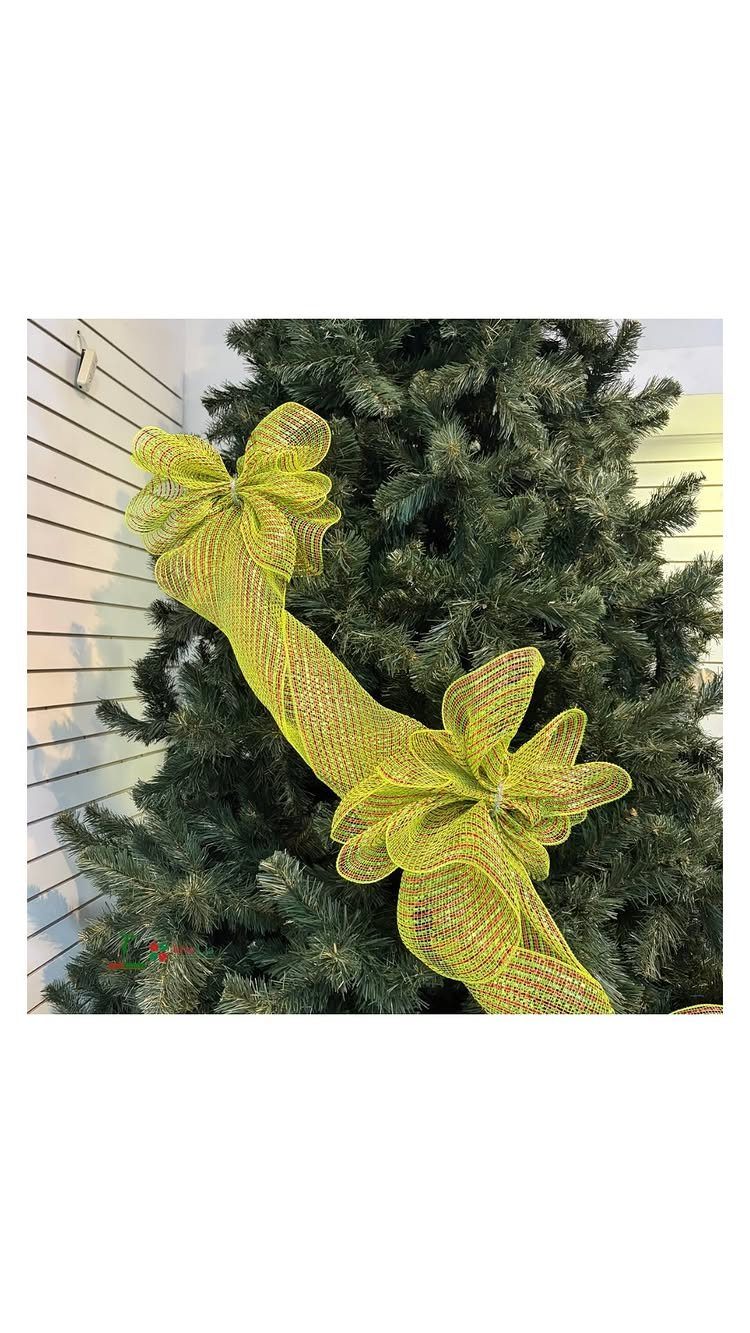
Cutting ribbon into separate lengths and shaping each into its own billow lets you place the volume exactly where the tree needs it.
Cut each piece long, gather the center, and pinch it into the branches so the loops puff out.
Mesh is light, so it takes more length than you would expect to look full.
12. Cover the Tree with Wide Ribbon

Make large loops that stand out from the branches rather than wrapping the ribbon flat around the tree; the loops give it a fuller, polished look.
Wider ribbon holds its loop better, so choose the widest you can afford. Wired edges help the loops stay upright.
Space the loops evenly down the tree and tuck each one in firmly. Loose ones sag by morning.
13. Oversize Christmas Tree Ribbon
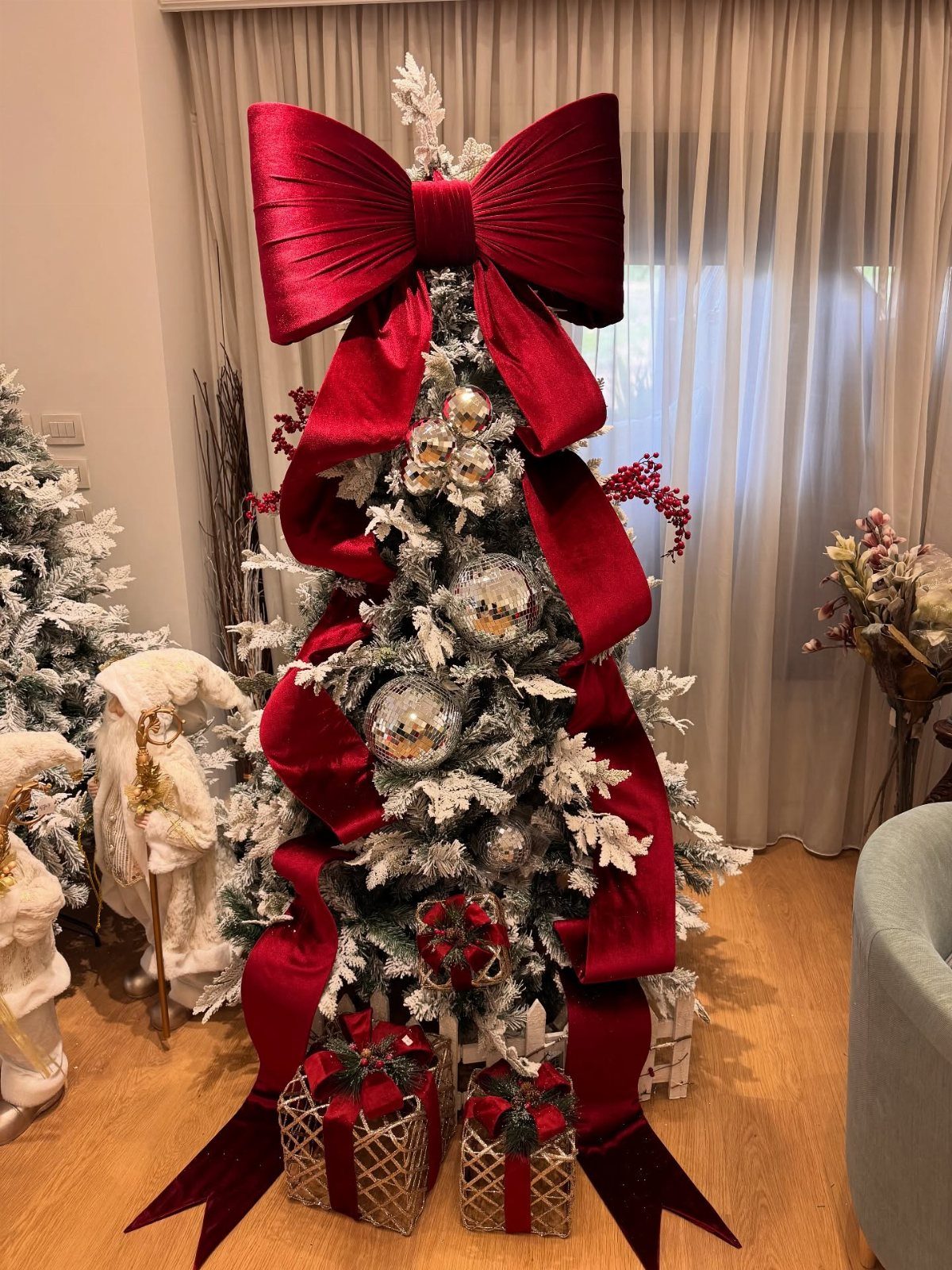
Choose the widest velvet ribbon you can find and make the loops large, since a small bow vanishes up there. Let the tails fall down the branches in long, loose streamers.
I would buy extra ribbon, because a topper bow eats length fast.
14. Ribbon and Rose Garland
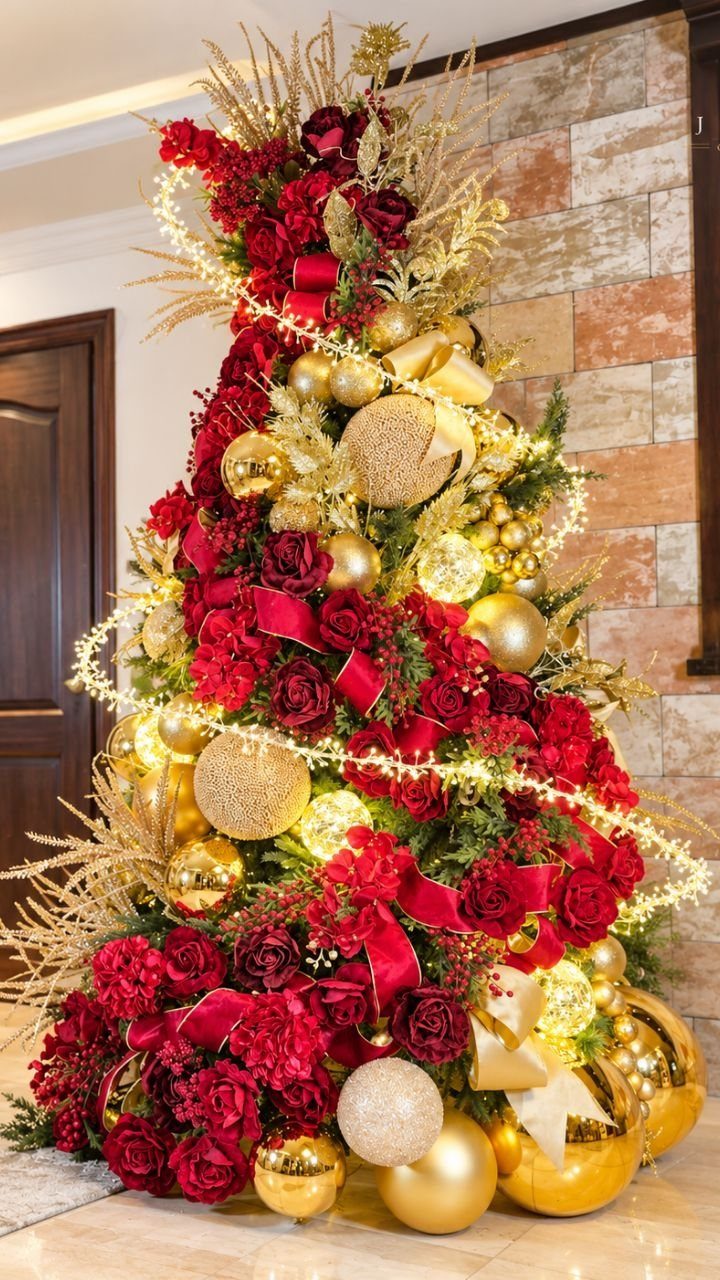
Red roses worked into the branches give a tree a floral, almost wreath-like richness that ornaments alone can’t match.
Realistic roses are the way to go here, since fresh ones would wilt on the tree. Wire each stem into a branch, then weave red ribbon between the blooms so it links them like a garland.
Gold baubles and warm lights suit the red, and I would keep the roses all one shade. Spread them unevenly, in loose clusters, rather than in a row.
15. Tied Candle Ribbon Accents
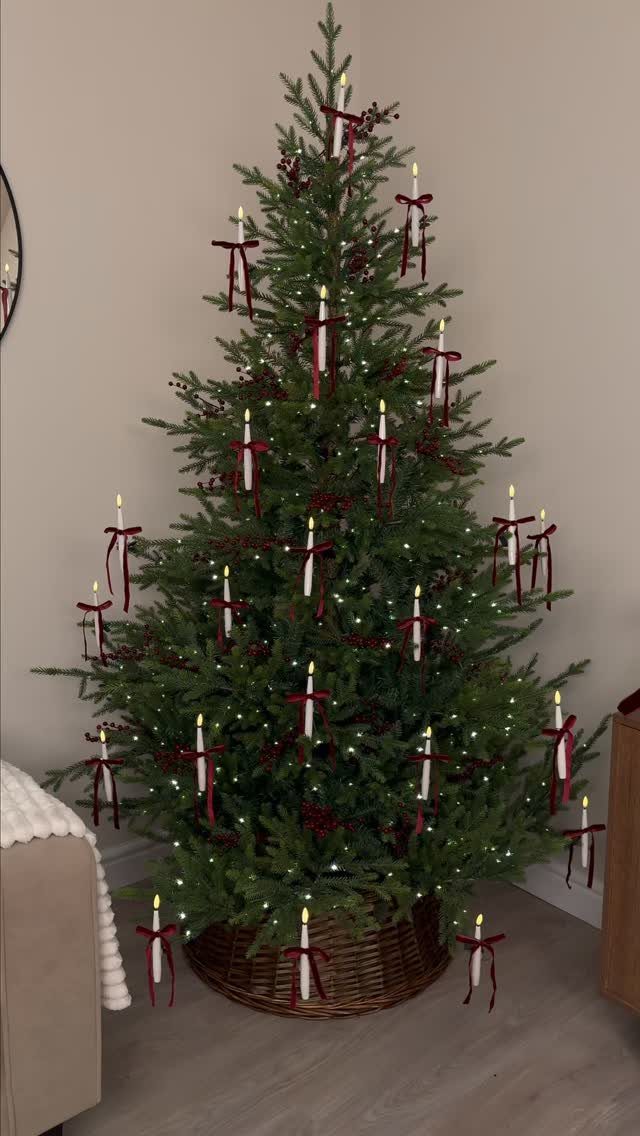
White clip-on candles look quiet and old-fashioned, and a small red ribbon bow tied around each base ties them into the rest of the tree.
Use thin ribbon so the bows stay delicate, and tie each one before you clip the candle on. Small red berries tucked nearby repeat the color.
Space the candles through the branches so they sit level and out in the open, not buried. Red and white is a tight palette, and it needs no extra ornaments.
16. Plaid Ribbon Weave
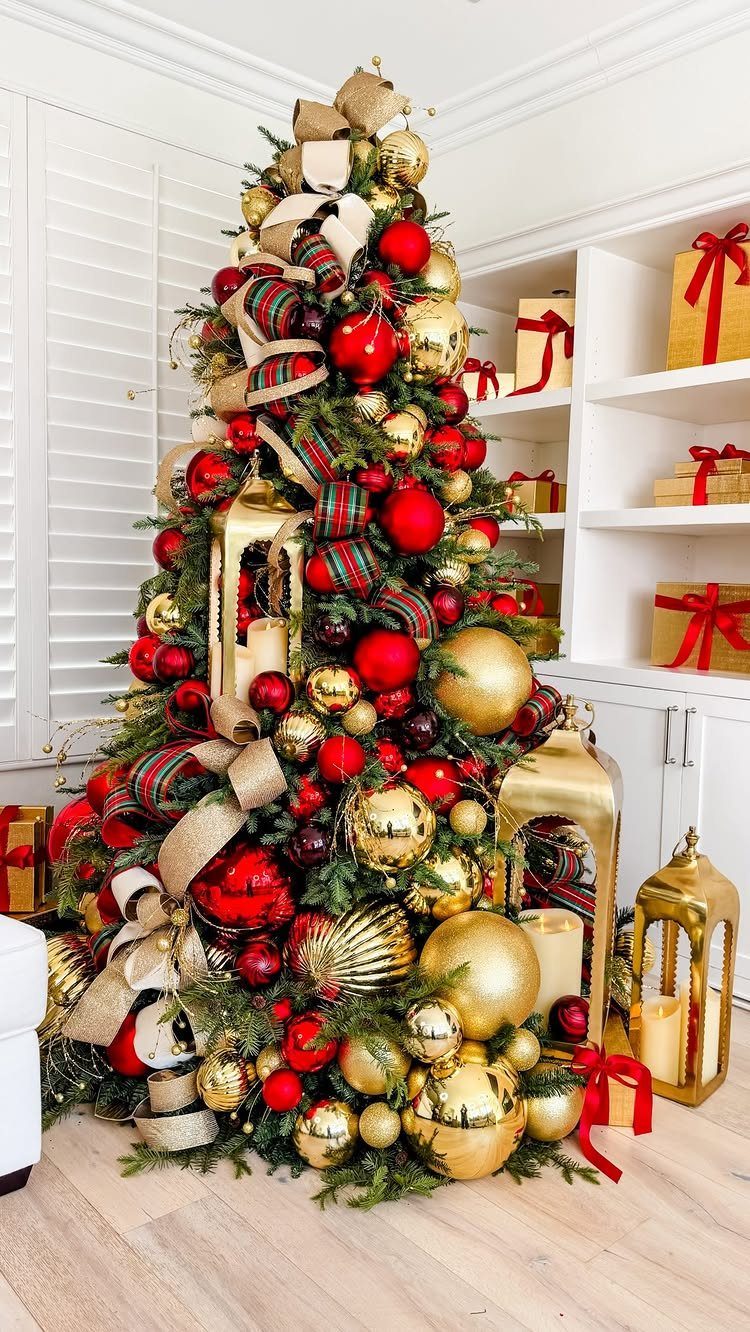
Weave wide plaid ribbon in red and gold through the branches in loose waves, tucking it in and out, and the tree looks layered and cozy rather than simply wrapped.
Push the ribbon behind one branch, bring it forward over the next, and repeat all the way around so the plaid shows in gentle waves. Pick wire-edged ribbon for this, since it keeps its curves instead of sagging between branches.
Pull the ribbon’s red and gold into the rest of the tree with matching ornaments and a few gold lanterns. I would match the ornaments to the plaid, not the other way around.
17. Tree Centerpiece Sash Bow
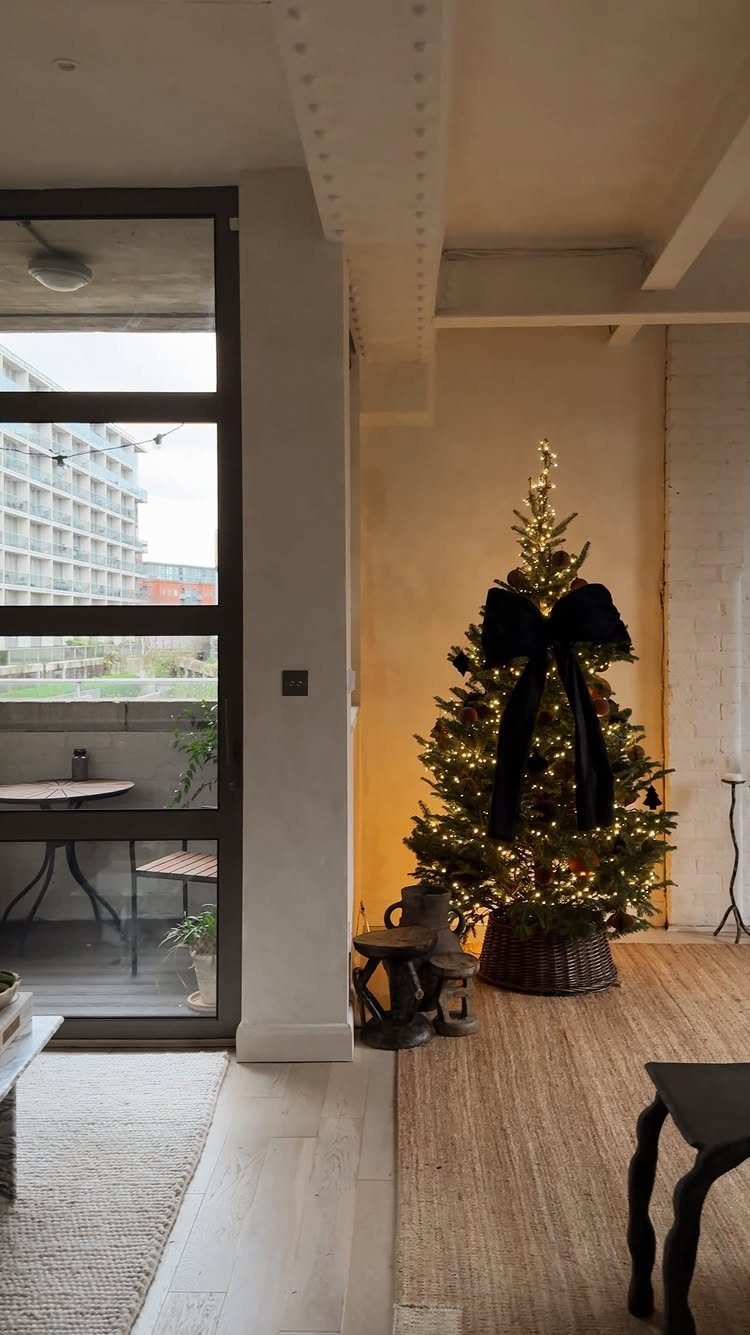
One oversized black ribbon tied around the middle of the tree reads like a sash, and it turns a plain lit tree into a bold, modern one.
Velvet gives the best drape. Pick a ribbon wide enough to stand out from the branches, and tie a full bow in front rather than at the side.
Keep everything else simple, with just warm white lights, so the bow stays the only statement. Cut the ribbon long, since fixing a short one is hard.
Best Ribbon Types
Wired ribbon is the one I reach for first. The wire lets you shape loops and cascades so they hold, and nobody wants droopy loops.
Ribbon between 2 and 4 inches wide is the easiest range to work with. Narrower ribbon gets lost in the branches, and very wide ribbon is harder to handle.
Michaels, Hobby Lobby and JoAnn Fabrics all stock wired ribbon in more colors, finishes and prints than you’ll want to sort through, and one of them nearly always has a coupon or sale going.
Amazon carries a wide selection too, but prices tend to run a little higher than the craft stores.
If you fall for a non-wired ribbon, it can still work.
Placement Techniques
Start at the top of the tree and work toward the bottom, forming loops as you go.
After you’ve mastered anchoring one loop, the path is your call: straight up and down, side to side, zigzagging, or spiraling around the tree.
To build a fuller, layered look, combine 3 simple moves:
- Twist and repeat: work section by section, giving the ribbon a twist and forming a new loop each time.
Save your leftover scraps. Pinch a short piece in the middle, cut a fishtail into each end, and tuck it into any gap.
Small bow ties like these add a spot of color and hide the places where one piece of ribbon ends and the next begins.
Color Coordination
Nothing sets a tree’s color scheme faster than ribbon. Change it and the tree looks new, without buying a single ornament.
Contrast does the opposite: it pushes the ribbon forward as its own feature.
I would pick one approach per tree. Ribbon also makes a tree look fuller and more lush at a fairly low cost, so it earns its place either way.
Frequently Asked Questions
How can I decorate my Christmas tree with ribbon?
Begin at the crown and move down the tree, shaping each loop by hand and pushing the base of it deep between the branches so it stays put.
From there you can run the ribbon straight down, side to side, in a zigzag, or in a spiral. Wired ribbon holds the loops best, and loops spaced evenly down the tree keep them from sagging by morning.
Do you put ribbon on a Christmas tree before or after the ornaments?
Put the ribbon on first, while the tree is bare. You’ll be moving branches around a lot, and a bare tree means you won’t knock off any ornaments while you work.
Pick the ribbon color before anything else goes on the tree, since the ribbon is easier to hang while the branches are bare and the ornaments can then be chosen to match it.